
IMF proposal: appointment of a 'tsar' to complete the European single market
The Monetary Fund's number one, Kristalina Georgieva, proposes that Europe appoint a special envoy 'with real authority' to implement reforms, and chastises the Twenty-Seven: 'Enough rhetoric, it's time to act'. The global economy is holding up better than expected, also because a trade war has been avoided on tariffs. Reminder to the United States: 'Lower the public deficit

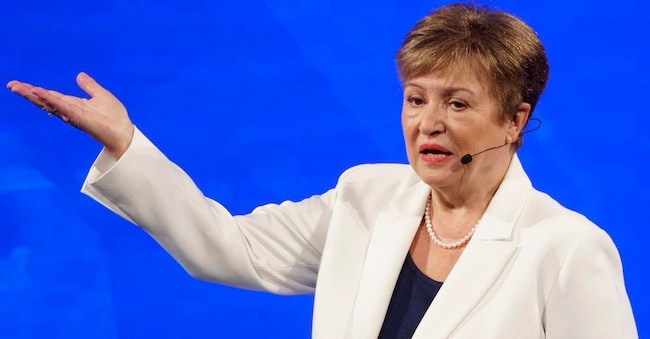
"A 'tsar' to relaunch Europe: this is the proposal, or perhaps the provocation, of the number one of the International Monetary Fund, Kristalina Georgieva, to shake up a Union that is too passive and risks falling further and further behind in the new and turbulent international context.
Complete European Project
On 8 October, in her customary speech preceding the October meetings of the IMF and the World Bank, scheduled for next week, Georgieva scolded Europe: "Enough with the rhetoric on how to increase competitiveness, you know what needs to be done. It is time to act," and called for consideration of "the appointment of a single market czar," who would, however, be "endowed with real authority to carry out reforms," Georgieva stressed, "the ones long suggested by the IMF: "Lifting border restrictions on the labour market, on trade in goods and services, on energy and finance," and "Building a single European financial system. Building an energy union.
In a nutshell: 'Completing the European project' and catching up with the dynamic US private sector. The Fund's number one does not mention them explicitly, but the reference to the much-discussed and acclaimed plans drawn up by Mario Draghi and Enrico Letta is quite obvious.
"A picture can say more than a thousand words: that of the seven US mega-companies, none of which existed 51 years ago, outperforming similar European companies in terms of market capitalisation".
Just two days earlier, on 6 October, the president of the ECB, Christine Lagarde, who preceded Georgieva at the helm of the IMF, had in turn reprimanded the Union, speaking at the Europarliament, pointing out that one year after the presentation of the Draghi report on competitiveness, the reforms have remained a dead letter. And on 30 September, she had affirmed that "an increase of only 2% in internal trade in the Eurozone would be sufficient to compensate for the loss of exports to the United States caused by tariffs". Governments, she had added, "must implement the reforms outlined in the Draghi and Letta reports".


