Sabotage

New drones spotted in European skies: so hybrid warfare takes a leap forward

On the eastern flank of the EU and NATO, the arsenal of hybrid warfare is deploying even more rapidly than in recent months, and the repercussions are being felt throughout Europe

by Antonio Talia

Aggiornato il 27 settembre alle 15:03

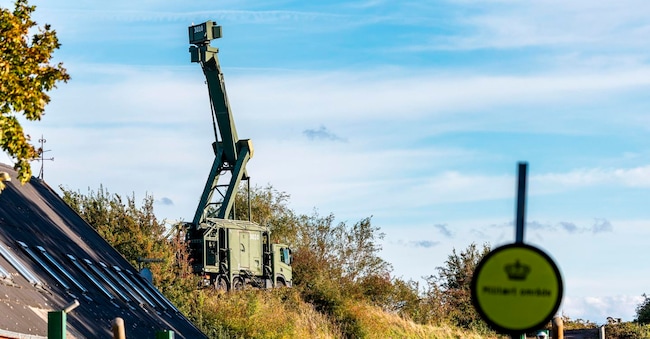
epa12408392 Un’installazione radar mobile si trova nell’area militare danese di Amager, Pionegaarden, vicino al villaggio di Dragoer e sulla costa di Oresund, il mare tra Danimarca e Svezia, a Dragoer, Danimarca, il 26 settembre 2025. L’installazione del radar è avvenuta dopo che la sera del 22 settembre sono stati avvistati dei droni nei pressi dell’aeroporto di Copenaghen, costringendo lo spazio aereo sopra Copenaghen a rimanere chiuso per quattro ore nella notte che ha preceduto il 23 settembre. EPA/Steven Knap

3' min read

3' min read

One of the six runways at Amsterdam's Schiphol Airport in the Netherlands was closed for about 45 minutes in the early afternoon today, after a drone sighting was reported around noon. This was reported to Associated Press by military police spokesman Doron Wallin. The planes were diverted to another runway. Wallin later clarified that neither drones nor drone pilots were found and that the runway had been reopened. He added that such sightings are a recurring event, with 22 reports so far this year.

The drone came within 50 metres of a Transavia airliner landing. Several pilots spotted the drone at an altitude of about 150 metres. Dutch authorities speculate that the drone was a hobby platform since there are no traces of its arrival in the area where it was reported.

Loading...

Drones in European skies

"Danes should expect more such attacks, should prepare for new acts of sabotage, new cyber-attacks and more damage to submarine cables": in a video speech broadcast on Thursday evening, Danish Prime Minister Mette Frederiksen warned her country against hybrid threats by explicitly pointing the finger at Russia, and within hours events confirmed her alarm not only in Denmark, but throughout the Nordic chessboard.

During the night between Thursday and Friday, the airport of Aalborg - in southern Denmark - was again closed due to an unspecified threat, but according to rumours gathered by the Finnish national news agency Stt, it would once again concern unidentified drones, just like the ones that about twenty-four hours earlier had interfered with air traffic in Aalborg itself, the military base of Skrydstrup, and the airports of Esbjerg and Sonderborg. .

For Denmark this is the third drone swarm in less than a week, following the first wave that flew over Copenhagen airport on Monday night in parallel with a similar incident at Oslo airport in Norway. Just as the Danish Prime Minister recorded her message, the threat moved further north to Sweden, where at around 20:30 on Thursday another swarm flew over the Styrkoe och Tjurkoe navy base.

On Saturday morning, finally, Danish authorities said that unidentified drones were spotted over Denmark's largest military base, Karup, and several drones were also spotted in the German region of Schleswig-Holstein, on the Danish border, reports German broadcaster Ndr.

Sabotage, cyber attacks, damage: on the eastern flank of the EU and NATO, the arsenal of hybrid warfare is deploying even more rapidly than in recent months, and the repercussions are being felt throughout Europe.

Eccasional spies
On Friday morning, police in the Netherlands arrested two 17-year-olds on charges of espionage: according to a report in the Dutch newspaper De Telegraaf, the boys were allegedly recruited through a Telegram channel by a pro-Russian agent, who urged them to introduce a wiretapping device into the Hague offices of Europol (the European Union's anti-crime agency) , Eurojust (the agency for criminal judicial cooperation) and the Embassy of Canada, one of the countries most involved in the management of NATO bases on its eastern flank.

 The use of espionage freelancers contacted through Telegram channels, amateurs willing to carry out acts of disruption and sabotage in exchange for cryptocurrency payments, is on the rise across the European continent, even beyond the Union's borders: "We are seeing an increase in what we can call 'proxies', recruited by foreign intelligence services."said Scotland Yard commander Dominic Murphy on 18 September, on the occasion of the arrest of two men who had set fire to a logistics centre for products destined for Ukraine located in Birmingham. A similar alarm was also raised by the German police with a campaign spread in early September entitled "Do not become an expendable agent of foreign powers".

Murphy directly accused the Wagner Group, the Russian contractor agency with interests from Africa to Eastern Europe: According to an exclusive by Radio Free Europe, after the death of founder Evgenij Prigozhin, the Wagner veterans came under the control of the GRU - the Russian military secret service - and the person responsible for the recruitment campaign via Telegram was identified as Evgenij Rasskazov, a Russian neo-Nazi blogger linked to various ultras supporters who fought in Ukraine and today allegedly runs the so-called 'Melodiya Intelligence Center', a service of Telegram recruitment channels in various European languages. According to rumours in various Scandinavian media, the drones that interfered at airports in Denmark, Norway and Sweden - as well as the 40-year-old man arrested in West Sussex for the cyber-attack on Heathrow, Brussels and Berlin airports on Friday 19 September - could be "amateur agents" recruited via Telegram by Russian intelligence operatives who use them as expendable pawns.

But in addition to sabotage, drones and cyber attacks, there is another front of concern, and it is not for amateurs: the submarine front.

Moscow Spy Ship As we told in our specialson the hybrid war in the Baltic republics, since October 2023 there have been more than a dozen incidents in the Baltic Sea, including severed telecommunication cables and gas pipelines, ships of the 'ghost fleet' that Moscow employs to circumvent sanctions, and air violations by the Russian air force.

According to a Financial Times exclusive, the activities of the Yantar, a Russian navy spy-ship that has been moving between the Baltic, the North Sea, the English Channel and the Irish Sea hunting for submarine cables that EU and NATO countries use for internet access, military communications and financial transactions.

Brand connect

Loading...

Newsletter

Notizie e approfondimenti sugli avvenimenti politici, economici e finanziari.

Iscriviti