
The new grammar of brands communicates in emoji strokes
Icons drive engagement and emotional connection, but for brands using them in the right way is complex: the same symbols can have different interpretations, with the risk of slips
by Giampaolo Colletti and Fabio Grattagliano
Key points
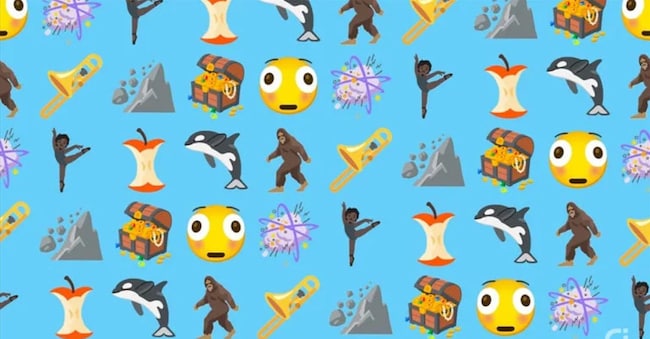
A ballet dancer, a distorted face, an orca, a trombone, a treasure chest and more. These are not tarot cards to consult, but some of the images behind the new emoji available in Apple's update last March. Even controversial icons, headlined the New York Post. Precisely the distorted face recalled the Cupertino giant's advertisement on the i-Pad that depicted musical instruments, objects, books being crushed. We will have to get used to more and more visual storytelling with the explosion of emoji-telling, i.e. storytelling by emoji that allows brands to enter everyday informal conversations. Because what was once intended as a niche language has become mainstream.
Today, 92% of users use emoji and 71% of Generation Z are more likely to buy from brands that adopt them. A recent Farfield University research certifies this. But are we facing a universal language or a fragile negotiated code that exposes the reputational capital of companies? Maximum diffusion and minimum stability: in fact, the same research shows that 81% of users admit to having misunderstood the meaning of an emoji at least once.
"They are a form of visual writing, certainly not new as they have accompanied us for many years. They are colourful graphic images, technically pictograms representing faces with various facial expressions, but also objects, places, foods, people and concepts. They originated in Japan in the 1990s and have been integrated into operating systems around the world, especially since Apple included them in the iPhone keyboard in 2011. Today they constitute a standard of expression that functions in a variety of semiotic modes. They can be used as metaphors, synecdochs and visual metonyms for a wide range of communicative and relational purposes. They add emotional tone, create closeness, draw attention and help build complicity, sharing and cooperation,' says Giovanna Cosenza, semiotician and professor of philosophy and language theory at the University of Bologna.
Everyday Symbolisms
Among brands, the cases multiply. Chevrolet issued a press release entirely in emoji, McDonald's constructed an outdoor campaign made of symbols and without words, Ikea created a series of emoji dedicated to domestic life, Taco Bell promoted a signature collection to launch the taco emoji. But there's more. A few weeks ago, Microsoft released new functionality by including reactions in emoji for videocalls.
"Emoji are now part of everyday language at all levels, so it is natural that companies have started to incorporate them into communication projects, exploiting the immediacy of their visual component. In some cases, it is also a strategy to reach a certain target group. They are born to make up for a lack, to circumvent a limitation. They do something that the written text struggles to do: they restore the paralinguistic dimension of speech, i.e. tone, emotional or ironic nuance. They also serve to modulate intensity: soften a criticism, reinforce a compliment, signal that one is not serious. Over time they have also produced specific aesthetics and linguistic codes that often vary according to culture and generation,' argues Valentina Tanni, lecturer in meme culture and aesthetics at John Cabot University in Rome and author of 'Antimacchine> published by Einaudi.

