Marketing

Lagarde, the youtuber and the 10 golden rules for investing in the creator economy

If the ECB asks an Italian youtuber to be interviewed, it means there is a revolution in the media: here's how brands must adapt

by Enrico Marro

5' min read

Translated by AI
Versione italiana

5' min read

Translated by AI
Versione italiana

When he read the email Marcello Ascani, a long-standing Italian youtuber with over a million followers, his heart sank: Christine Lagarde in person was asking him, a humble Italian youtuber, to be interviewed.

The president of the European Central Bank. For the first time in Europe, probably.But it was no joke.

Loading...
Loading...

'If the ECB calls you for an interview, you realise that something has changed forever,' Marcello told Il Sole 24 Ore. Lagarde did not need visibility, he needed credibility with young people. And to obtain it, he chose YouTube'.

"It is proof that creators have become an infrastructure, the mainstream, rather than an alternative tactic. Authentic bridges between brands, institutions and the audiences that really matter," explains the youtuber who co-founded one of the most important vertical influencer marketing agencies in Italia (Flatmates).

I NUMERI DEI CREATOR IN EUROPA

Loading...

Why be surprised? Goldman Sachs estimates that globally by 2027 the creator economy will reach a $480 billion turnover, up almost 50% from 2023.

A far higher figure than the entire broadcasting industry (TV, radio, streaming, cinema and so on), estimated at 415 billion in 2029.

The numbers of Italian creators

In Italia the creator economy is worth over 4 billion euro, with 18 thousand active creators and over 51 thousand jobs generated (source: I-Com 2024 report for AICDC 'Creator Economy in Italia').

We are talking about a sector that surpasses all Italian book publishing, which is worth 1.44 billion euros, recording music with its 422 million and even cinema at the box office with 573 million.

Secondo il rapporto I-Com 2024, la media dei ricavi annui dei creator italiani su tutte le piattaforme ammonta a circa 84mila euro: due volte e mezzo il reddito medio nazionale.

"These numbers tell a radical transformation of the cultural and economic landscape in Italia," emphasises Alessandro Mininno, Head of Expansion at Flatmates.

I RICAVI COMPLESSIVI DEI CREATOR ITALIANI

Loading...

The paradox of contemporary marketing is that while companies spend billions on communication, 57% of young people would rather trust a youtuber than a TV commercial (source: research by Activate Consulting).

This is not a generational whim but a paradigm shift, where authenticity has replaced authority and conversation has replaced the one-way broadcasting of traditional media.

From control to collaboration

"The brands that thrive in this new paradigm are those that abandon the mentality of control to embrace the logic of collaboration, that invest in authentic relationships instead of empty impressions, that understand that every brand, after all, must learn to think and act like a creator," explains Michele Pagani, co-founder and ceo of Flatmates.

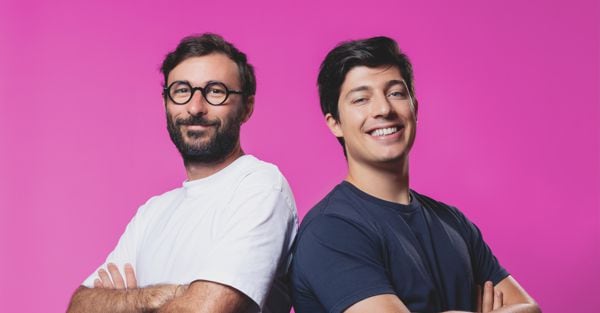
Michele Pagani e Marcello Ascani, co-fondatori di Flatmates.

"And when creators themselves build the infrastructure for collaboration with brands, the result is a more effective, more sustainable, more authentic model".

The Ten Golden Tips for Brands

Here, then, are some author's tips (from the team at Flatmates, which has also dedicated a beautiful book to the subject, just published, entitled "Every brand is a creator") for companies that want to invest in the creator economy.

1. Abandon the logic of 'gifting' and embrace strategic investment 

Gifting - that primitive practice of sending free products hoping for a mention - is dead. Professional creators are no longer enthusiastic bloggers who settle for a gift pack.

They are digital entrepreneurs with structured business models, loyal audiences and professional expectations.

Investing in the creator economy means allocatingreal budgets, with long-term strategies.

It is not a matter of 'trying' influencer marketing with leftover budgets, but of rethinking the entire marketing mix on the assumption thatcreators are media owners in their own right.

2. Prioritise cultural resonance over numerical reach

A creator with 50,000 loyal followers in a specific niche is worth more than a celebrity with two million passive followers.

The temptation of large numbers is understandable but misleading.What matters is the density of the connection: how deeply does that creator resonate with his community? How often does its content generate genuine conversations?

Cultural resonance is measured in comments, not likes; in conversions, not impressions.

3. Co-create, don't dictate: the brief is dead, long live collaboration

The traditional model of the detailed brief to be executed by the creator is obsolete. Successful creators are authors, not actors. They know their audience better than any brand manager.

The process must be collaborative: present the strategic goals and values of the brand, then let the creator interpret and translate them into its native language.

Il modello tradizionale del brief dettagliato che il creator deve eseguire è obsoleto: i creator di successo sono autori, non attori. E conoscono il loro pubblico meglio di qualsiasi brand manager.

The magic happens when brand identity and creator voice come together organically, not when the latter is forced into the former.

4. Think in ecosystems, not campaigns

A three-week campaign with five creators is tactical. An ecosystem of ongoing relationships with strategically selected creators is strategy.

Effective influencer marketing is not episodic but systemic. Build lists of talent that become authentic ambassadors over time, not temporary spokespersons.

Trust - the most valuable asset in the creator economy - is built through consistency and continuity, not with spot appearances.

5. Diversify platforms as an investment portfolio

YouTube for narrative depth, TikTok for algorithmic virality, Instagram for aspirational aesthetics, Twitch for real-time engagement, podcasts for conversational intimacy.

Each platform has its grammar, its rhythm, its audience.

Do not replicate the same content everywhere: orchestrate a multi-channel presence where each platform contributes its specific value to the overall strategy.

6. Measure the 'unmeasurable': from Roi to Roe (Return on Engagement)

Traditional metrics are necessary but insufficient. In addition to Cpm (cost per thousand) and conversion rate, develop Kpi (key performance indicators) that capture qualitative value: sophisticated sentiment analysis, share of voice in organic conversations, creator-specific brand lift studies.

The true Roi (return on investment) in influencer marketing often manifests itself in intangible assets - brand affinity, spontaneous consideration, organic advocacy - that require more sophisticated metrics to be captured.

7. Invest in internal 'creator literacy'

The biggest obstacle to success in influencer marketing is not external but internal: marketing teams that do not understand the dynamics of the creator economy.

Train your teams not only on platforms and tools, but on the culture and ethics of the creator world.

A brand manager who has never seen a complete YouTube video or does not understand why BeReal is different from Instagram cannot effectively manage relationships with creators.

8. Anticipate and navigate regulatory complexity

The regulation of influencer marketing is evolving rapidly.

Transparency in business partnerships, disclosure of agreements, protection of minors, intellectual property of content: every aspect requires previous legal attention.

Do not wait for the first sanction from Agcom to structure legally correct processes. The professionalisation of the sector also passes through strict compliance with the regulatory framework.

9. Create shared value, not one-sided extraction

Successful creators seek not only financial rewards but growth opportunities.

Offer access to market data and insights, product co-creation opportunities, visibility on proprietary brand channels, professional training.
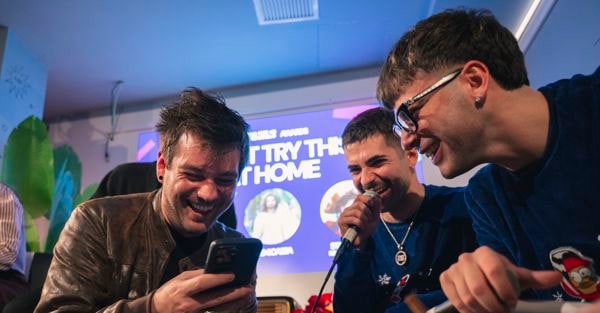
I creator di successo non cercano solo compensi economici ma opportunità di crescita: per esempio opportunità di co-creazione prodotto, visibilità su canali proprietari del brand, formazione professionale.

When the creator grows, the value it can generate for the brand also increases. It is a virtuous circle that turns suppliers into strategic partners.

10. Be ready to become your own creator

The future is not only working with creators but becoming creators.

The most innovative brands are building their own in-house media companies, producing native content for social platforms as skillfully as professional creators.

It is not about replacing influencers but about speaking their language, inhabiting their ecosystem, contributing to the conversation. Instead of just sponsoring it.

Copyright reserved ©
Loading...

Brand connect

Loading...

Newsletter

Notizie e approfondimenti sugli avvenimenti politici, economici e finanziari.

Iscriviti