
AI speeds up work but does not always improve it. Here are the critical points
Although AI increases work speed, much of the time saved is spent on corrections, highlighting the need for organisational and training change
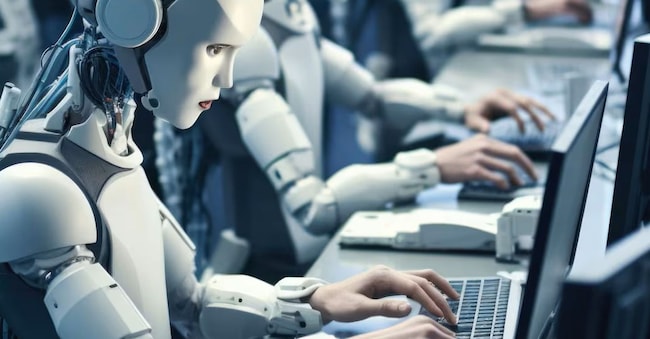
Four out of ten Italian workers claim to save up to one day a week thanks to artificial intelligence. Yet, behind this seemingly unequivocal data hides a paradox: a significant share of that time (about half) is reabsorbed by activities of correction, verification and rewriting of imperfect output. This is what emerges from Workday's global research 'Beyond Productivity: Measuring the Real Value of AI', presented a few weeks ago at the opening of the Californian multinational's Innovation Lab in Milan. The trends to reflect on are well expressed by two percentages and are as follows: while 92% of employees claim to be more productive thanks to AI, up to 40% of the time saved is, however, spent on rework, with one employee in two spending between one and two hours a week correcting results generated by algorithms deemed to be of inadequate quality. In other words, we are in the presence of a kind of 'apparent productivity', in which the speed of task execution increases, but does not always translate into a real improvement in the work process.
From enthusiasm to maturity of use
Italia is still at an early stage in the AI adoption cycle, and this is confirmed by the fact that only 29% of workers use this technology on a daily basis, although the perception of its benefits is generally very high. However, according to Fabrizio Rotondi, Country Manager of Workday Italia, a cautious reading of these indicators is necessary. "Comparing Italian data with global and US data, we can say that in our country we are still in the hype phase, while in the US there is already a higher level of scepticism towards artificial intelligence. In Italia,' the manager continues, 'we are mainly intercepting the most enthusiastic users, often young people, who have not yet developed a full awareness in the management of productivity increased by technology'.
Loading...
This imbalance is bound to diminish over time, as adoption becomes more mature, but it brings with it a first critical issue: the widespread use of AI does not automatically coincide with an effective use of these tools. In fact, it is always the quality of the data that determines its value, so much so that one of the main risks associated with the massive adoption of generative models is what Rotondi calls 'shallow AI', i.e. systems that generate fast but insufficiently reliable outputs. If many projects fail, this is Workday's conviction, it is because they work on unclean or unstructured databases; it is no coincidence that one of the American company's 'musts' is to avoid this phenomenon, and the recipe for doing so is to resort to a cloud-based database built on the platform's more than 11,000 customers and the approximately 1,400 billion transactions managed each year. Without a solid database, ultimately, the risk that companies run is that of multiplying productivity without increasing accuracy, highlighting all the limitations (and the problem of reprocessing is obviously among them) of an incomplete integration between technology, processes and information.
Organisation does not keep pace with technology
Another key element of the issue concerns the misalignment between tools and organisational models. In most companies, roles and processes have not evolved at the same speed as technologies, and this is made clear by the comparison that sees employees today using tools released on the market in 2025 within organisational structures anchored to 2015 screens. A dichotomy that only increases the cognitive load and individual responsibility of people, who are forced despite themselves to more outputs to manage and more controls to carry out.
The subjects most exposed to the rework phenomenon are in fact the youngest workers (and theoretically the most prepared), while at the same time the most assiduous users turn out to be also those under the greatest pressure, with over 77 per cent of the sample of workers interviewed declaring that they check the results produced by AI with the same, if not greater, attention than human work. "The real issue," Rotondi pointed out in this regard, "is the change management. Companies often fail to grasp the opportunities of AI due to inertia or the difficulty of rethinking models and processes, and this confirms that the turning point is organisational before being technological'.


Brand connect
Loading...
