
Landslide-prone areas increase by 15% from 2021 to 2024
This is what emerges from the fourth Dissesto idrogeologico report, prepared by Ispra. The most significant cases in the Province of Bolzano, Tuscany, Sardinia and Sicily

3' min read
3' min read
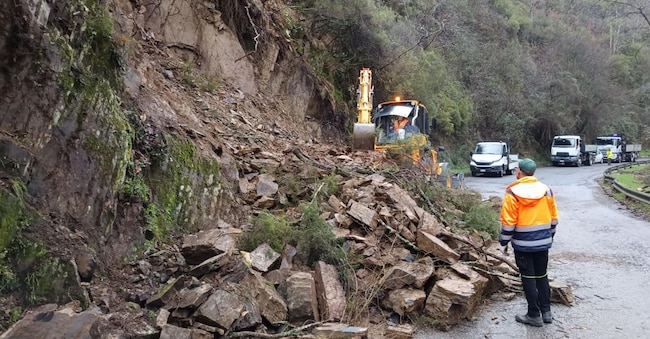
From the Province of Bolzano to Tuscany, via Sicily and Sardinia: the area of national territory at risk from landslides in hydrogeological planning is growing. There has been a 15% increase since 2021, as the surface area affected has risen from 55,400 thousand square kilometres in 2021 to 69,500 thousand square kilometres in 2024, "equal to 23% of the national territory".
Report details
.These are just some of the elements that emerge from the fourth Ispra report on 'Hydrogeological instability' 2024 edition. The most significant increases, as underlined by Ispra, "are found in the Autonomous Province of Bolzano (+ 61.2%), Tuscany (+ 52.8%), Sardinia (+ 29.4%) and Sicily (+ 20.2%) and are mainly due to more detailed studies carried out by the District Basin Authorities and the Autonomous Provinces". Not only that, the areas classified as more dangerous (high P3 and very high P4) from 8.7% to 9.5% of the national territory. In 2024, 94.5% of Italian municipalities will be at risk of landslides, floods, coastal erosion or avalanches.
Hydro-meteorological events
"The three-year period 2022-2024 was marked by hydro-meteorological events of exceptional intensity," Ispra writes in the report: the widespread floods along the main and secondary river courses in the Marche region in September 2022, the rapid mud and debris flows on the island of Ischia in November 2022 with 12 deaths, the floods in Emilia-Romagna in May 2023, with damage estimated at €8.6 billion, and the intense rainfall in Valle d'Aosta and northern Piedmont in June 2024, with significant effects in terms of floods and debris flows."
The role of climate change
.Climate change also plays a role in all this. Climate change, the Ispra experts argue, 'is causing an increase in the frequency of intense and concentrated rainfall, with a consequent increase in surface landslides, rapid mud and debris flows, and floods, including flash floods, amplifying the risk with impacts even on historically less exposed territories'.
Landslide Emergency
Over 636,000 landslide phenomena have been registered in the national panorama. It is, as the report states, "one of the most exposed countries in Europe". The data are contained in the Inventory of Landslide Phenomena in Italy, produced by Ispra in collaboration with the Regions, Autonomous Provinces and Regional Agencies for Environmental Protection (Arpa). "This is an important figure, if we consider that about 28% of these phenomena," the experts go on to argue, "are characterised by extremely rapid dynamics and high destructive potential, with often dramatic consequences, including the loss of human lives.

