

‘Major companies are key to security that knows no boundaries’
Beyond collaboration: synergy between the public and private sectors. The message that emerged during the second edition of the ‘Security Festival’, organised by Luciano Carta and the Vittorio Occorsio Foundation, aims to create a holistic model that protects citizens and businesses in the face of increasingly intertwined threats. All this whilst acknowledging the current geopolitical challenge that is driving Europe towards technological sovereignty
by 24Ore NextMed
 Aggiungi Il Sole 24 Ore
ai preferiti su Google
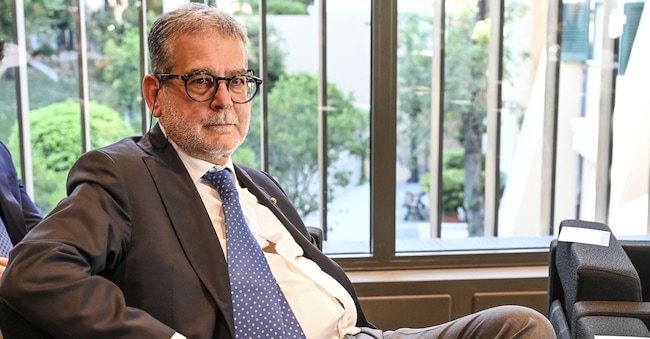
A two-day event in Cagliari focusing on Italian, European and international security. At the heart of the discussions – organised by the Vittorio Occorsio Foundation and initiated by General Luciano Carta , special adviser and former director of the External Agency – were geopolitical crises, hybrid threats, organised crime, strategic infrastructure and industry – with representatives from government bodies, the defence sector, academia and the private sector. “The international landscape is characterised by a continuous increase in competition between nations and in conflicts,” stated Carta in an interview with Airpress. “Public attention is focused primarily on the two main theatres of war, but there are almost sixty such theatres worldwide. Added to this are hybrid threats, the growing role of critical infrastructure and the evolution of mafias and other criminal organisations – including foreign ones – which, amidst international turmoil, are finding new avenues for economic infiltration and the exercise of power, eventually taking on a transnational strategic dimension.”
Added to this picture – which was reiterated in the opening remarks – are climate, energy, raw materials, natural resources, water, health, demographics and growing economic and social imbalances. The balance of power amongst international organisations is also shifting, with the growing influence of the BRICS, the Shanghai Cooperation Organisation and the Non-Aligned Movement, whilst the United States has progressively shifted its strategic focus. Obama initiated the withdrawal from the Mediterranean, Biden implemented the withdrawal from Afghanistan, and today Trump is pursuing a policy that is often isolationist. Thus, on Friday 18 September, numerous panel discussions took place, each of which explored different aspects of the security issue with the aim not only of providing an overview, but also of explaining that, without a holistic systemic model, it is no longer possible to manage national security – that of citizens and businesses alike.
Thus, the first panel began by addressing international crises. Luigi Di Maio, the EU’s Special Representative for the Gulf, outlined the next steps in the dialogue between Brussels and the GCC. Lorenzo Guerini, Chair of COPASIR, outlined the new challenges within NATO and the complex stance of Italian policy on defence and national security. Antonio Ardituro, Deputy Public Prosecutor at the National Anti-Mafia and Anti-Terrorism Directorate, explained in a simple yet extremely comprehensive manner how various forms of organised crime intersect and overlap. No longer mere holding companies, but networks capable of collaborating with external actors, both physical and digital criminal organisations, with the aim of profiting from illicit activities whilst simultaneously amplifying the effects of hybrid wars. Finally, Chiara Colosimo, Chair of the Parliamentary Anti-Mafia Commission, took stock of the legislative limitations, but also of the progress made in recent years. Finally, the deputy director of AISE, Carlo Zontilli, addressed the complex issue of artificial intelligence and what it means to ensure national security in times of such rapid technological change.
In the afternoon, the Festival addressed the issue of the defence industry’s resilience and the country’s need for technological autonomy within the European context. Alessandro Ercolani, CEO of Rheinmetall Italia, Andrea Acampora, Managing Director of Leonardo’s Cyber division, Roberta Pinotti, Chair of the PNS Foundation, Gianluca Di Feo, a journalist at La Repubblica, and Emanuela Trentin, CEO of Veolia Italia, analysed the transformation of supply chains and the impact of geopolitical competition on European industrial capabilities. The participation of an operator such as Veolia in the round-table was particularly noteworthy, signalling that energy security too must be addressed within the broader framework of defence and national security. ‘In a scenario of high tensions, where cyber-attacks in the energy sector have risen significantly (+40 per cent in 2024 alone), security increasingly relies on the resilience of strategic infrastructure,” said Trentin as the panel concluded, “and of supply chains, making energy and water self-sufficiency a national priority. Faced with these challenges, an integrated approach is essential, achieved through an ecosystem of certified partners: a qualified and constantly monitored supply chain, where every segment of the supply chain contributes to overall security”.
To round off the afternoon, there was a session focusing on hybrid warfare and its impact on infrastructure and information. In attendance were Ivano Gabrielli, director of the Postal and Cyber Security Police Service, Antonio de Vita, chief security officer at Intesa Sanpaolo, Claudio Antonelli, deputy director of 24Ore NextMed, and Paolo Messa, senior fellow at the Atlantic Council.

