

The last taboo falls: only recommended masks in hospitals, but Covid resists
30 June is the deadline for the last extension of the Ministry of Health order, which is now ready to lift the obligation

2' min read
Key points
2' min read
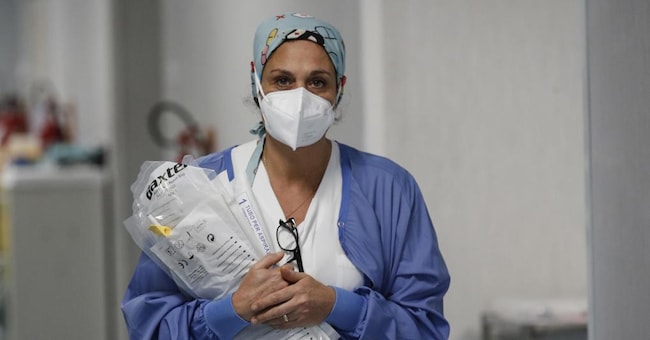
The last taboo of the Covid emergency measures is ready to fall: the obligation to wear face masks in hospitals and facilities housing frail and elderly patients. 30 June is the expiry date of the last extension of the Health Ministry's order, which is now ready to lift the obligation, leaving it up to health directors to decide whether and where to recommend their use in the most at-risk situations. In the meantime, despite the scorching temperatures, Covid is still circulating and indeed in recent weeks has shown signs of rising.
The new measures: no obligation, but recommendations
The new measures, effective on 1 July, signed by the Health Ministry's Prevention Directorate headed by Francesco Vaia, will, barring any last-minute surprises, also retire this last bastion of the Covid era, aiming instead to follow the line of the 'paradigm shift in responsibility' of both the citizen, who will be recommended to wear a mask in hospital if he or she has respiratory symptoms, and those responsible for protecting the safety of the most fragile, concepts often emphasised by Vaia himself in his public speeches. The new ordinance will thus aim at recommending to the medical directors of health facilities to make staff as well as visitors use the device in those areas where there might be more risks for hospitalised patients.
What the ordinance expires on 30 June
Until now, there has been an obligation to wear protective masks for workers, users and visitors of healthcare facilities in wards housing frail, elderly or immunocompromised patients. This obligation is extended to workers, users and visitors of social health and social welfare facilities, including hospitality and long-term care facilities, nursing homes, hospices, rehabilitation facilities, and residential facilities for the elderly, including non-self-sufficient patients. In the other wards of healthcare facilities and waiting rooms, the decision on the use of respiratory protective devices against the Covid risk by healthcare workers and visitors remained at the discretion of healthcare management. The latter route should now become the only one envisaged.
The Covid rising despite the heat
.The circulation of Covid in Italy has been on the rise in recent weeks, registering a slight increase in the number of cases, and this despite the warm season that is supposed to be curbing the virus. In particular, according to the latest monitoring, the Rt transmissibility index is at 1.15, slightly above the epidemic threshold, and in the last week there has been a 25% increase in infections, which have risen above 2,600. However, the occupancy of beds in the medical area remains stable at 1.2% (751 inpatients), as does the occupancy of beds in intensive care, at 0.3%. However, while the impact on hospitals remains limited, epidemiologists urge not to underestimate the threat of Covid, whose numbers are also growing in the United States where the Centers for Disease Control (CoC) have recommended a booster shot with up-to-date vaccines to the entire population.


