Lancia Gamma, the test drive: what the Italian ‘flagship’ is like and how it drives
We took the brand’s second model of its new era for a drive along the roads of the Amalfi Coast: Italian design, comfort and technology are in the DNA of this fastback crossover.

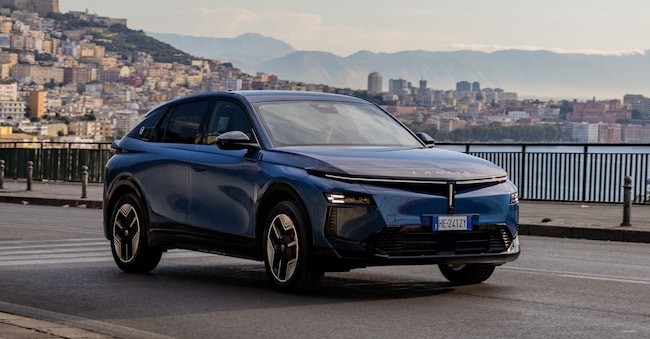
Amidst the winding roads of the Amalfi Coast, we put the new Lancia Gamma through its paces – the fastback crossover that marks another step in the revival of the historic Turin-based brand. Comfort, technology and a distinctly Italian flair characterise the launch of the car, which will be available from the end of November with prices starting at 40,000 euros.
A legendary name returns
Fifty years on from the first Gamma, launched in 1976 as the Turin-based manufacturer’s flagship model, Lancia is reviving a name that has left its mark on the company’s history and reinterpreting it in line with contemporary standards.
The new car measures 4.67 metres in length, 1.898 metres in width and 1.665 metres in height, with a wheelbase of 2,783 mm, which increases to 2,791 mm on the battery-powered variants. Production takes place at Melfi, confirming the brand’s commitment to keeping a central part of its manufacturing process in Italia. The boot capacity is 560 litres, whilst the STLA Medium platform, which made its debut three years ago on the Peugeot 3008, allows for a range of powertrain solutions, as already seen with other models in the group that use it, such as the DS No. 7 – the Italian model’s sister car – which is built in Melfi alongside the Jeep Compass.
Elegant lines and an Italian-style interior
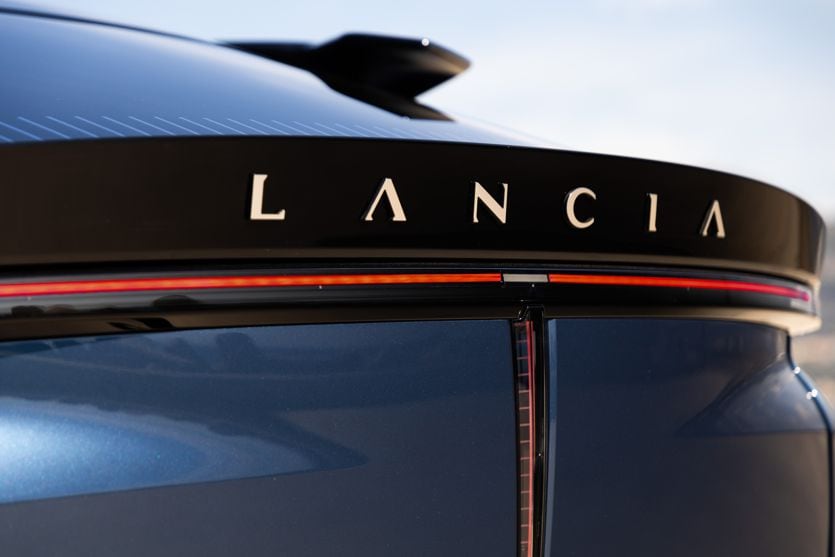
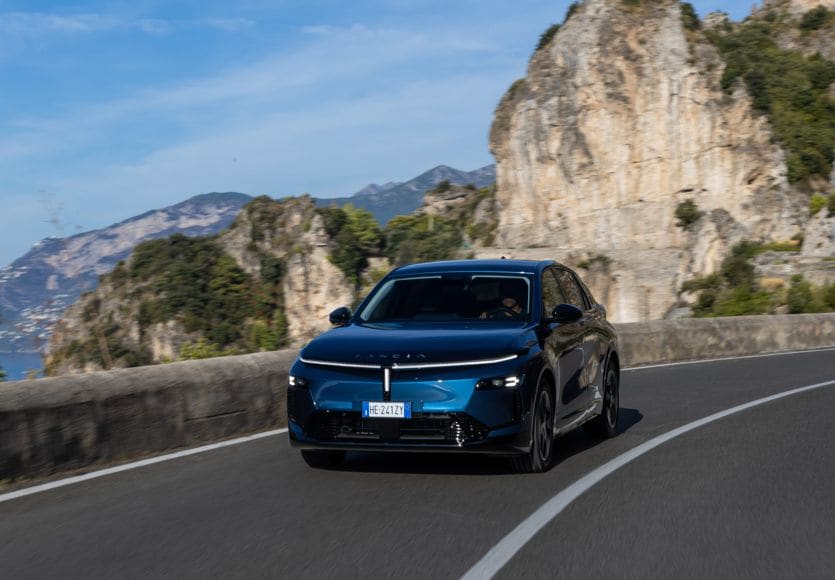
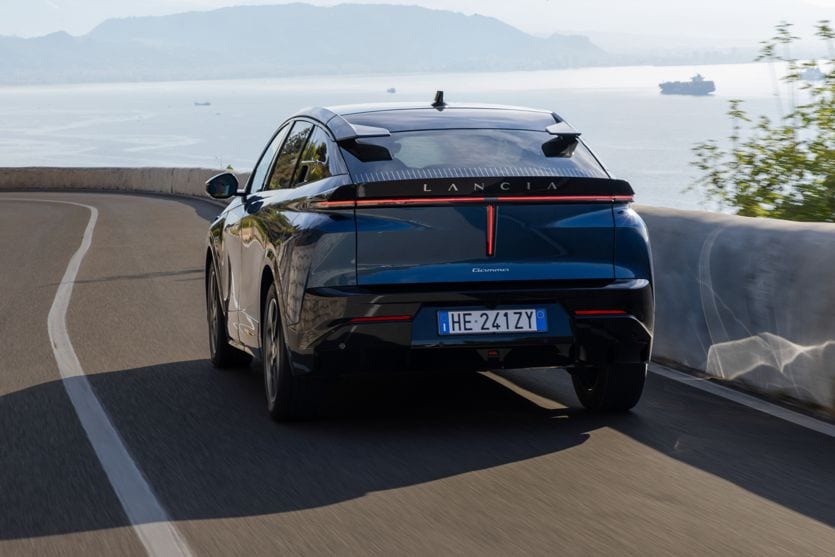
The design project, coordinated by Gianni Colonnello, blends traditional elements with influences drawn from fashion, design and architecture. At the front, the modern interpretation of the characteristic Lancia ‘goblet’ stands out, flanked by the three-element illuminated signature and hexagonal geometric details. The profile combines the imposing presence of a crossover with the sleek silhouette of a fastback, whilst the rear end echoes some distinctive motifs from the past.
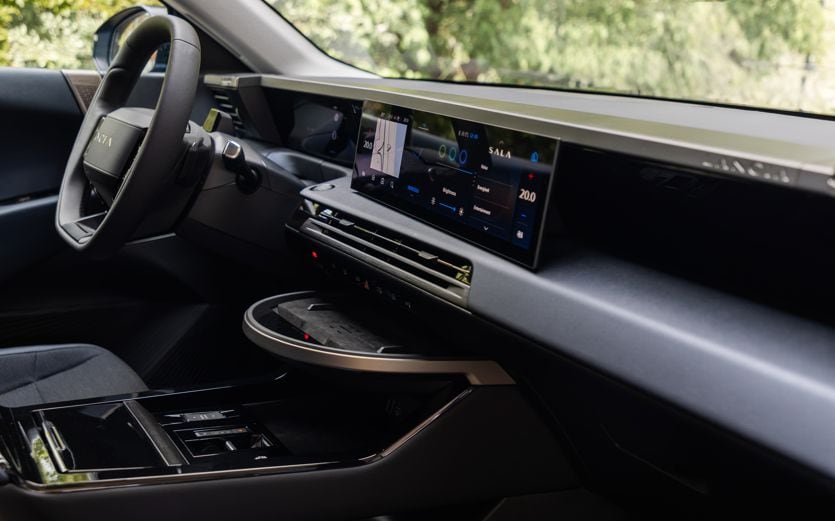
Inside the cabin, the ‘Italian Home Feeling’ philosophy is reflected in the centre console, the seats with their cannelloni-style stitching, and the use of sustainable materials, which account for more than 60 per cent of the decorative surfaces.