The interview

Foglia: 'After Ubs-Credit Suisse, no more takeovers between banks in Switzerland'

by Lino Terlizzi

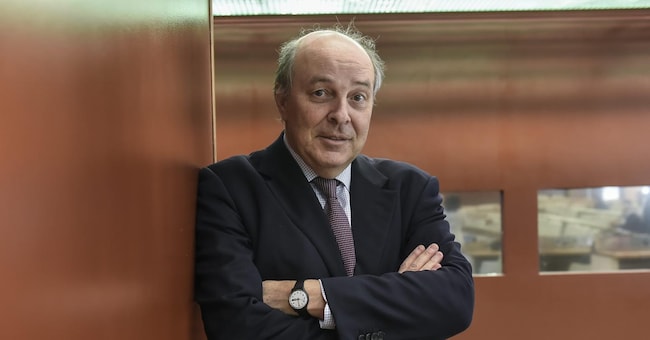
Antonio Foglia

3' min read

3' min read

"The new Ubs-Credit Suisse group can work, but no more acquisitions and mergers in the Swiss banking sector". Antonio Foglia, vice-president of Ceresio Investors, a Swiss group with Ceresio Bank at its centre, takes stock of the maxi transaction of the two largest Swiss banks and more generally of the Swiss financial centre.

What assessment can be made at this point of the purchase of the second largest Swiss bank, which fell into crisis last year, by the first one?
Ubs paid a very low price for the purchase of Credit Suisse. In recent bank rescues in the US, too, the authorities have had to guarantee the 'white knight' a profit on the deal sufficient to cover the costs of integration, even in terms of additional capital required by regulations. This is an anomaly in the banking sector that confirms the errors of a regulation that keeps the sector undercapitalised. I believe that the new group will be able to function, even though its size is very large for Switzerland and will require a different articulation of its activities between Switzerland, Europe and other markets.

Loading...

There is discussion about whether or not takeovers and mergers could touch other Swiss banks of varying sizes. What is the picture from this point of view?

As far as the topic of mergers-acquisitions for Swiss banks is concerned, with those already seen in past years and now with this Ubs-Cs transaction, the level of concentration is now high. It is not desirable to continue, a healthy degree of functional and dimensional diversity in the banking sector must be maintained.

Looking at the Swiss financial centre as a whole, one part of the experts points to some shadows and another part emphasises the lights. What is the picture?

The Swiss financial centre has shown great resilience and the ability to adapt to a situation that has changed over the past few years. This is the positive aspect. On the negative side, however, the changes have included the disappearance of banking secrecy and the advent of the automatic and indiscriminate exchange of information imposed by the OECD. This was an injustice to those in the world who are exposed to undemocratic regimes. And it was also an own goal for the states that wanted to collect more taxes in this way, because tax revenues, net of withholdings paid abroad, did not increase while collection costs rose.

One of the characteristics of the Swiss system is the strength of the franc. The Swiss currency was already strong before, but it has risen again in recent years. How should this rise be analysed? .

The further appreciation of the franc did not come in recent years from foreign investors seeking refuge, except to a small extent. The bulk came from purchases by Swiss individuals, institutional investors or savers. One proof of this is the fact that in many cases the rise of the franc was not correlated with indicators of financial tension or the gold price. Swiss pension funds made massive purchases of foreign securities and then hedged themselves against the exchange rate risk against the franc. The other side of these transactions was the Swiss National Bank, which meanwhile continued to point to foreign investors as the driving force behind the franc's rise. In addition, the SNB itself doubled the error, because it invested the foreign currencies it bought in essentially the same foreign securities as the pension funds, thus also increasing the risk that Swiss citizens were indirectly running.

How do you assess the path on the cost of money by the Swiss National Bank, which, after a not short period of rock-bottom or negative rates, rapidly implemented a series of hikes between 2022 and 2023?

The SNB was right to raise interest rates. It was a change of line caused by an international context of fighting inflation. However, the SNB must now think very carefully before lowering Swiss rates again. On the one hand, the Swiss economy doesn't need it; on the other, it wouldn't hurt to finally give savers some return on their franc investments, after the long phase of zero or negative rates.

Copyright reserved ©

Brand connect

Loading...

Newsletter

Notizie e approfondimenti sugli avvenimenti politici, economici e finanziari.

Iscriviti