

'Leaving people with disabilities behind? A cost to society'
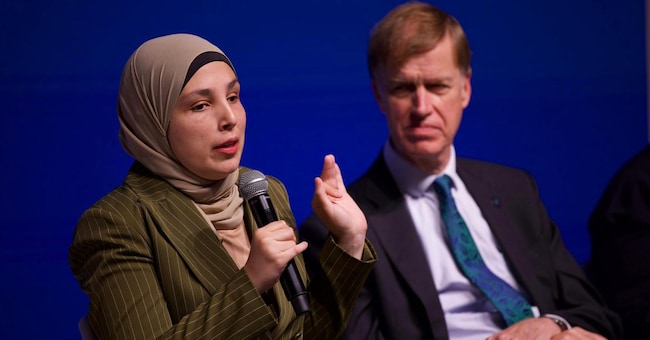
Sara Minkara, Special Advisor Disability Rights of the US Government, participated in the work of the G7 Inclusion and Disability

3' min read
3' min read
Only three out of ten people with disabilities in the world are employed, according to data from the International Labour Organisation. On average they work 20 hours a week or less and, as they are often self-employed, they are more exposed to the risks of informal employment. Moreover, a gap in hourly wages of 12% and higher levels of unemployment persist between them and the employed without disabilities, even with the same age and education. While in recent decades, an increasing number of countries have adopted legislation promoting the rights of persons with disabilities, national and international initiatives struggle to produce the expected results everywhere, despite the proven benefits of better inclusion.
The political value
.Sara Minkara, Special Advisor on Disability Rights to the US Government, in Italy for the first G7 Inclusion and Disability being held in Solfagnano, has a very clear view on the matter: "We need to elevate disability through a political lens not only because it is a human rights issue, but also because it is a value from which everyone can benefit. Not including us is a cost to society as a whole'.
It means, on the one hand, leaving behind 1.3 billion people (that's how many people in the world declare a disability) and, on the other hand, a substantial loss for the global economy. In part avoidable thanks to the ubiquity and impact of technology on everyday life.
The Opportunity for Innovation
"When we do not make technology and artificial intelligence accessible, we leave many behind. Not to mention that the world does not draw on our disposable income: we are talking about two trillion dollars, which becomes 13 trillion if we include that of our families. A market is lost if we remain excluded from discussions on AI, on the digital economy, on technology'. Not least because, continues the special advisor, 'when technology innovates we all benefit. Think of the automatic subtitles introduced to support deaf employees during Covid or virtual assistants. Today they have become services that everyone uses'.
We are living through a technological revolution that is creating great progress on a social as well as an economic level, but this evolution also requires great adaptations: just think of how different professions are evolving.

