
Live
Latest war news. Iran: Trump says, ‘Very positive meetings; denuclearisation is moving forward’
US President Donald Trump has been considering a return to war with Iran in recent days, but has since opted for diplomacy
For feedback, please contact
english@ilsole24ore.com
“Dozens of explosive devices in Hormuz; it will take two months to clear the Strait”
Any Italian mine-clearing mission in the Strait of Hormuz, aimed at ensuring the safe passage of ships and oil tankers, is expected to last at least two months. The timeline for the operations – should they go ahead following parliamentary approval – has been provided by the commander of the Joint Forces Operational Command, Giovanni Maria Iannucci, who stated that “the prospect of a multinational mission to clear mines from the Strait is to allow non-European and regional actors to participate as well”. During his hearing before the Foreign Affairs and Defence Committees of the Chamber of Deputies and the Senate, the general outlined the framework for Italia’s overseas engagement in 2026: forty international missions and operations, an average force of around 7,500 military personnel and a maximum authorised contingent of 11,900 personnel.
However, the Strait of Hormuz does not feature among these figures. Or at least not yet. The two minesweepers, the ‘Crotone’ and the ‘Rimini’, have been stationed in Djibouti for weeks – partly whilst waiting for a stable agreement to be reached between Iran and the US – and they are capable of locating and either defusing or destroying naval mines – the very same ones laid by the Iranian military authorities in the Strait, at that so-called ‘choke point’, the only mandatory passage linking the Persian Gulf to the rest of the world. “It is estimated that there are dozens of them; this will require a commitment of around a couple of months,” explains Iannucci. “These are sophisticated and advanced devices that require capabilities and expertise not available to all countries.” The Italian minesweepers are equipped with a sophisticated sonar system and two remotely operated vehicles, which enable them to detect and investigate any object lying on the seabed at depths of up to around 600 metres. They will be escorted by other vessels providing logistical support and an adequate security perimeter.
According to the latest figures circulating in recent weeks, the potential mission could involve around five hundred military personnel. The commander of the Covi also touched on the future in Lebanon, in view of the closure of UNIFIL scheduled for 31 December: “The UN Secretary-General, Antonio Guterres, has put forward three proposals – three possible models for an evolving UN presence in Lebanon,” he said. “We are seeing a very strong request from the Lebanese government for a UN force, of varying size, to help build greater stability. We, too, believe that a UN presence is necessary and we will certainly support it and back its development in the appropriate forums.”
All three options proposed by the UN envisage a reduced number of peacekeepers compared with the current 7,500 and are categorised according to varying levels of involvement, ranging up to a robust presence provided through technological support, logistical support and assistance to local forces, as well as monitoring along the entire Blue Line, which separates Lebanon from Israel but has been violated on a daily basis in recent months. Still on the Middle Eastern front, in Turkey, the Italian Samp T missile defence system is set to be “fully operational from 3 July”; its deployment is also linked to “the heightened security that will be required for the summit of NATO heads of state and government, to be held in Ankara”. In Africa, meanwhile, “Wagner, the Russian private military company, has once again established a significant presence”, whilst China’s military presence is also increasing.
Lebanon: at least 4,297 people have been killed in Israeli attacks since 2 March
The Israeli attacks carried out in Lebanon since 2 March have caused at least 4,297 deaths and 12,196 injuries. This was reported today by the Ministry of Health. The Lebanese daily *L’Orient Le Jour* clarified that the new death toll is 19 higher than the figures released yesterday, explaining that these are people who died from injuries sustained in the attacks and bodies recovered from the rubble and identified.
1 July 2026
Nyt: Tensions between Trump and Saudi Prince Mohammed bin Salman over the conduct of the war
The war in Iran has caused a rift in relations between the US President, Donald Trump, and the Saudi Crown Prince, Mohammed bin Salman, highlighting deep differences over the handling of the conflict and security in the Gulf. This is confirmed by the New York Times, which reports that relations between Washington and Riyadh have become increasingly strained during the military operations against Tehran.
At the start of the crisis, in fact, Saudi Arabia is said to have taken a hard line, pushing for more decisive US action against the Islamic Republic. The situation is said to have changed rapidly as the conflict escalated and, above all, following Iran’s closure of the Strait of Hormuz – an event that had an immediate impact on energy markets and the security of global maritime traffic.
From that point onwards, according to the American newspaper’s account, Riyadh is said to have gradually abandoned the idea of stepping up attacks against Iran, moving instead towards a ceasefire and de-escalation, out of fear that the conflict might spread and directly affect its interests and regional stability. Tensions between the two capitals were reportedly not confined to the political sphere, but also extended to the military dimension.
At the height of the crisis, during a US mission to protect trade routes in the Strait of Hormuz, Saudi officials reportedly initially refused to allow US forces to use their airspace. This decision is said to have taken the Pentagon by surprise and triggered a series of urgent contacts between Washington and Riyadh, with the White House forced to open a direct diplomatic channel with MBS, the acronym by which the Crown Prince is known in the West.
According to the New York Times, a series of telephone calls reportedly took place between Trump and Mohammed bin Salman during those days, alongside separate talks involving Vice-President J.D. Vance, Special Envoy Steve Witkoff, the President’s adviser and son-in-law Jared Kushner, and the national security team led by Marco Rubio. On the political front, the war is said to have accelerated an already ongoing trend: Saudi Arabia is becoming increasingly autonomous in its strategic decisions and is expanding its diplomatic contacts.
In recent years, Riyadh has also strengthened its ties with China and Pakistan, both of which played a role in mediating between Saudi Arabia and Iran in 2023. At the same time, the Saudi leadership is said to have initiated a more direct dialogue with Tehran on sensitive issues, such as control of the Strait of Hormuz, Iran’s missile programme and Tehran’s support for armed groups in the region, which Riyadh regards as a growing threat to stability in the Gulf. Despite the tensions, the fundamental pillars of the bilateral relationship between the United States and Saudi Arabia do not appear to have been compromised.
Energy cooperation, military supplies and strategic projects – including the programme to develop a Saudi civil nuclear sector – remain at the heart of the dialogue between the two capitals. However, according to the NYT, the war has highlighted a new political fragility: the perception, on both sides, that the alliance is becoming less and less automatic and increasingly subject to the vagaries of events.
Sfollati a Beirut EPA
Ask the editorial team
Have questions or feedback about this article? Contact our editorial team.
1 July 2026
Iran: US Ambassador to NATO: ‘Trump disappointed by two allies’
US President Donald Trump was “disappointed” by the “reluctance” of “a couple of allies” to grant access to bases on their respective territories as part of the war against Iran, but “those days” should now be “over”. This was stated by the US Ambassador to NATO, Matthew Whitaker, a few days ahead of the NATO summit in Ankara, Turkey. “We expected,” he explained, “that our allies would stand with us. The President expressed disappointment at the reluctance of a couple of our allies to support us in using our bases in their countries. And, just as importantly, he is also incredibly disappointed by the political statements made around the time of the launch of Operation Epic Fury. I think those days are behind us, thankfully. I think everyone in the Alliance understands that we are a political-military alliance and that our political ties are incredibly strong.” Between the US and its allies, the diplomat noted, “there is a deep military relationship. The challenge lies on the political front. And, given that we are a political-military organisation, political relations matter too, and we will continue to work on them. This is my job, and the job of my colleagues. But it is also the responsibility of our ministers, our heads of state, our heads of government and our leaders.” Work is therefore being carried out, both publicly and privately. “I expect the summit to be a great success, because we have worked hard to ensure that relations, both politically and militarily, are strong and enduring,” he concluded.
1 July 2026
Iran: working groups set up for the final agreement with the US
The Iranian Deputy Foreign Minister and chief negotiator, Kazem Gharibabadi, has announced the creation of working groups tasked with monitoring the implementation of the memorandum of understanding with the United States and negotiating a final agreement, adding that negotiations will begin “as soon as the necessary conditions are in place”.
When asked about the negotiations for a final agreement following his meeting in Doha with the Prime Minister and Minister of Foreign Affairs of Qatar, Sheikh Mohammed bin Abdulrahman Al Thani, Gharibabadi replied: “Working groups have been set up to monitor the implementation of the agreement and to negotiate a final agreement, but negotiations in these areas have not yet begun.”
According to a report by the IRNA news agency, the deputy minister went on to say that consultations were under way at the mediators’ level to determine the timing and venue of the working group negotiations, which are expected to begin “as soon as the necessary conditions are in place”.
1 July 2026
The Emir of Qatar meets Witkoff and Kushner: Lebanon is also on the agenda
The Emir of Qatar, Sheikh Tamim bin Hamad Al Thani, met with US negotiators Steve Witkoff and Jared Kushner. This was announced by the Emir’s office, which stated that the three discussed the “progress of negotiations” between the United States and Iran, as well as the situation in Lebanon and the “importance of consolidating the ceasefire” in the country following the framework agreement reached with Israel in Washington.
1 July 2026
Trump: ‘Iran’s denuclearisation is progressing’
“Iran’s denuclearisation is proceeding.” Donald Trump said this whilst speaking to journalists before leaving for North Dakota. The president also pointed out that the price of oil is lower today than it was when “I attacked Iran to prevent it from acquiring a nuclear weapon”.
1 July 2026
Iran: agreement reached to unfreeze 3 billion in assets held in Tehran
Iran: media reports that ‘a preliminary agreement has been reached to unfreeze $3 billion of Tehran’s frozen assets’
Cairo, 1 July (Adnkronos) – The United States, Iran and the mediators are reported to have reached a preliminary agreement to unfreeze $3 billion in Iranian funds, as part of technical talks in Doha. This was reported by the Egyptian newspaper Al-Hadath. The parties met separately today in Doha to advance negotiations on the memorandum of understanding. Tehran had made any progress in the technical negotiations contingent upon receiving the $3 billion. The discussions, which according to the Saudi newspaper Al-Arabiya are taking place between American and Qatari representatives, and between Iranian and Pakistani representatives, are focusing on a new Omani proposal concerning the Strait of Hormuz. At the end of the talks, the delegations will return to their respective capitals for further internal discussions on the proposal.
1 July 2026
Araghchi: ‘We will respond to any threat against the Supreme Leader’
Iranian Foreign Minister Abbas Araghchi has warned Israel against threatening Supreme Leader Mojtaba Khamenei, after Israeli Defence Minister Israel Katz claimed that Khamenei was “in the crosshairs”, stating: “Any threat against our people and our leadership will receive an immediate and decisive response.” “The US President has committed the United States to silencing his lapdogs in Tel Aviv. If they ignore their master, Iran will teach them a lesson”, Araghchi wrote on X. Meanwhile, Araghchi stated that the terms of the Memorandum of Understanding between Tehran and Washington are “crystal clear and accessible to all”.
1 July 2026
Araghchi: Trump must keep his little lapdogs in Tel Aviv in check, or face a powerful response
“The terms of the Islamabad Memorandum of Understanding are crystal clear and in the public domain. The President of the United States has pledged to keep his ‘lapdogs’ in Tel Aviv in check. Should they disobey their master, Iran will teach them a lesson. Any threat against our people or our leadership will be met with an immediate and powerful response.” Iranian Foreign Minister Abbas Araghchi wrote this on X, commenting on a statement by Israeli Defence Minister Israel Katz, who described Iran’s current Supreme Leader, Mojtaba Khamenei, as “condemned to death”.
1 July 2026
Iranian Security Council: the case regarding retaliation for Khamenei’s death remains open
Iran’s Supreme National Security Council has stated that “The case regarding retribution for the blood of the martyr Ayatollah Khamenei and the Iranian martyrs remains open”. This was reported by the Iranian broadcaster IRIB. “The commanders and perpetrators of these crimes will face justice in due course – and it will not be long – at the hands of righteous individuals,” the statement continued.
1 July 2026
Iran criticises the slow pace of the international judicial process regarding the attacks on Minab
The Iranian ambassador to the UN in Geneva, Ali Bahraini, has criticised the “slowness of the judicial process in international forums” regarding the case of the killing of 168 students and teachers during the Israeli-American attacks on the city of Minab in Iran. “We will not allow the world to forget these crimes against civilians over time,” he emphasised, adding: “Undoubtedly, responsibility for what happened lies with the United States and Israel, as the aggressors.” “We must continue to recount what happened and seek justice for the victims in international forums,” Bahraini concluded, according to a report by Mehr.
1 July 2026
Technical talks are currently taking place between the US and Tehran in Doha
“Technical talks” between the United States and Iran are currently taking place in Qatar. Al Jazeera reports this, citing informed sources. The same sources confirm that no face-to-face meetings are planned between senior officials from both countries. In Doha – it is explained – there are reportedly at least three working groups dealing with technical issues: the nuclear issue, diplomacy, and the financing and return of frozen funds.
1 July 2026
Pizzaballa: Gaza is a disaster. Three killed in a raid on tents


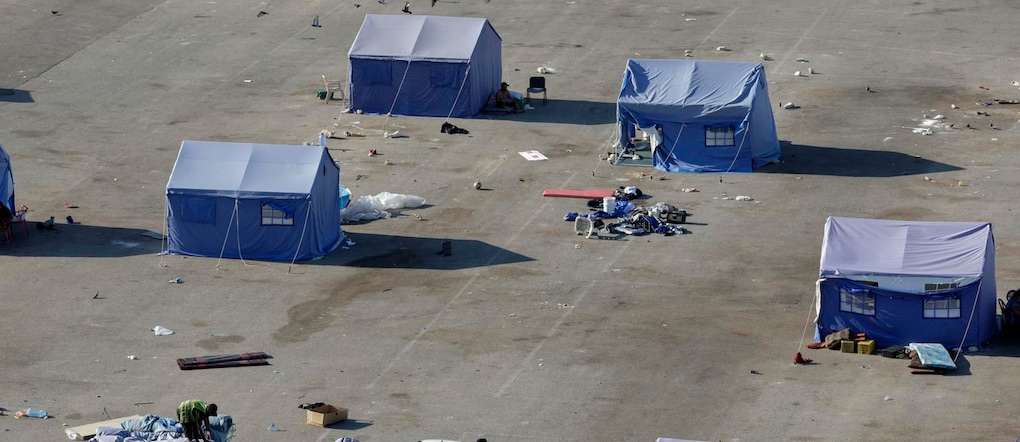
It was some time after dinner when the Israeli army ordered the evacuation of an area occupied by Palestinian refugees. We are in al-Mawasi, a coastal area west of Khan Younis, in southern Gaza, designated a ‘humanitarian zone’ following Israel’s forced displacement of the Strip’s population. Thousands of people – mostly women and children – are living in this makeshift camp, having found refuge there, often after being forced to move several times.
It is around ten o’clock on Monday evening when a bomb strikes the ground. “F-16 fighter jets dropped a missile packed with explosives,” explains Abdullah, a 30-year-old businessman living in the area, who is currently involved in managing humanitarian aid in Gaza, “which set fire to and destroyed 145 tents. The force of the explosion was similar to that of an earthquake, and the incendiary explosive caused a fierce blaze and a powerful shower of shrapnel.” Three people were killed in the attack: a man and a mother with her one-year-old daughter. ‘The warning was too short,’ explains Abdullah, ‘to avoid casualties.’ In total, the Gaza Ministry of Health reported yesterday, ten people have been killed in the Strip by Israeli attacks over the past 24 hours. Since the ceasefire came into force, the death toll has reached 1,053, with 3,406 injured; since the start of the war, there have been 73,066 fatalities and 173,514 injured.
1 July 2026
Qatar: indirect talks between Tehran and the US are taking place today
There will be no direct negotiations between Iranian and US diplomats in Doha today. This was stated by Majed al-Ansari, spokesperson for the Qatari Ministry of Foreign Affairs. The diplomat added that, for the time being, mediators will act as intermediaries in the talks, in which no high-level officials will take part. Currently in the country are Steve Witkoff, US President Donald Trump’s special envoy for the Middle East, and Jared Kushner, the US president’s son-in-law.
1 July 2026
Modi meets Pezeshkian, reaffirms the importance of freedom of navigation
Indian Prime Minister Narendra Modi said he had spoken with Iranian President Masoud Pezeshkian about “recent developments” in the Middle East. “I welcomed the progress made in the negotiations and expressed the hope that these efforts would lead to lasting peace in the region. I reiterated the importance of freedom of navigation in the Strait of Hormuz for India and for the whole world,” Modi wrote on X.
1 July 2026
Pezeshkian: We honour our agreements; let others do the same
“Tehran is honouring the commitments it has made under the recent Iran-US Memorandum of Understanding and hopes that the other party will do the same to ensure peace and security in the region”. This was stated by Iranian President Masoud Pezeshkian, as quoted by IRNA, who called on the international community to “help stabilise this process so that aggression and the use of force have no place in international relations”. The president made these remarks during a telephone conversation with Indian Prime Minister Narendra Modi yesterday evening, during which the latter reiterated the importance of freedom of navigation in the Strait of Hormuz for India and for the world. According to experts, India imports around 40 per cent of its oil and around half of its gas via the Strait of Hormuz.
1 July 2026
Hormuz: transit uncertainties and difficulties are affecting 80 per cent of businesses
First the closure of the Strait of Hormuz, and now the uncertainties surrounding the future of trade through this waterway – which is vital to the stability of the global economy – have already been factored into “the financial statements of Italian companies”, explains the Director-General of Promos Italia (the agency for the internationalisation of businesses within the Chamber of Commerce system), Giovanni Rossi.
“In Europe, between March and June, the additional cost of procuring diesel and jet fuel was estimated at around 10 billion euros, of which over 1 billion was borne by Italia. These figures clearly illustrate how quickly a geopolitical crisis can translate into industrial costs,” adds Rossi. Furthermore, a survey launched by Promos amongst the companies listed in its database in the wake of the reopening of the Strait (and constantly updated) confirms the significant impact of events linked to the war in Iran and the crisis in the Middle East.
1 July 2026
Iran: Vance says Tehran will remain nuclear-free even if negotiations fail
“I believe the United States is in an excellent position, regardless of the final outcome of the negotiations.” This was stated by the US Vice-President, JD Vance, in an interview with Fox News regarding Iran. “If the negotiations are successful – as we obviously hope they will be – we will have a permanently transformed Iran. An Iran that does not fund terrorism and regional instability, that permanently renounces any nuclear ambitions and that, as a result, is welcomed back into the global economy,” he said. “If, on the other hand, the Iranians do not behave properly – if they do not make the concessions we expect in the negotiations – their nuclear programme will still be destroyed, their conventional military will still be destroyed, and the United States will still be in a far stronger position than the Iranians,” he added, emphasising that – in his view – the US has “all the cards in its hand”.
1 July 2026
Lebanon: Iran announces a committee with the US and Beirut
Iran, the United States and Lebanon are to set up a joint committee to safeguard Lebanon’s national sovereignty. This was announced on Tuesday by the Speaker of the Iranian Parliament, Mohammad Bagher Ghalibaf. “To safeguard Lebanon’s national sovereignty, a joint committee will be set up between Iran, the United States and Lebanon. Iran’s ambassador to Lebanon will be our representative on that committee,” Ghalibaf told Iranian state television.
1 July 2026
Iran-US, WSJ: Trump considered further air strikes but opted for diplomacy
US President Donald Trump has in recent days been considering a return to war with Iran, holding several meetings with Defence Secretary Pete Hegseth and the Chairman of the Joint Chiefs of Staff, General Dan Caine, on the possibility of new attacks. This is reported by the Wall Street Journal, citing official US sources.
According to sources, however, Trump has decided at this stage to stick to the diplomatic route.
Officials reported that the talks focused on the possibility of the United States walking away from the negotiations and launching a large-scale attack on Iran, an option described by some as a way of “finishing the job”.
1 July 2026
Iran, Ghalibaf: over 40 million barrels of oil exported
Iran has exported over 40 million barrels of oil since the United States lifted the naval blockade. This was stated by Mohammad Bagher Ghalibaf, Speaker of the Iranian Parliament and head of the negotiating team in talks with Washington.
On 18 June, the US military announced that, on the orders of President Donald Trump, it had lifted the naval blockade against Iran’s ports and coastal areas.
“Since the naval blockade was lifted and up to the present day, we have exported over 40 million barrels of oil,” said Ghalibaf in an interview on Iranian television.
1 July 2026
Iran-US: Witkoff and Kushner reaffirm commitment to negotiations
US presidential envoys Steve Witkoff and Jared Kushner have reaffirmed the United States’ commitment to continuing negotiations with Iran. This was reported by the Qatari Ministry of Foreign Affairs.
According to the ministry, the Qatari Prime Minister and Minister for Foreign Affairs met with Witkoff and Kushner on Tuesday to discuss the ongoing talks between the United States and Iran under the bilateral memorandum of understanding, and efforts to promote security and stability in the Middle East.
The two US envoys expressed the United States’ appreciation for the role played by Qatar, in partnership with the Islamic Republic of Pakistan, in facilitating the talks, emphasising Washington’s commitment to continuing the negotiation process and supporting diplomatic efforts to reach a comprehensive agreement.
