

Makhzoumi: ‘Lebanon must become a gas producer and, above all, an energy supplier’
Interview with politician and business magnate Fouad Makhzoumi. “The deep state still holds control of the country today. If we manage to restore the state’s control over the territory, ensuring that only the state is armed and not the militias, then we can start thinking about development.” Ideas and suggestions for involving Lebanon in the reconstruction of Syria and “to carve out a role within the framework of the new energy routes”.

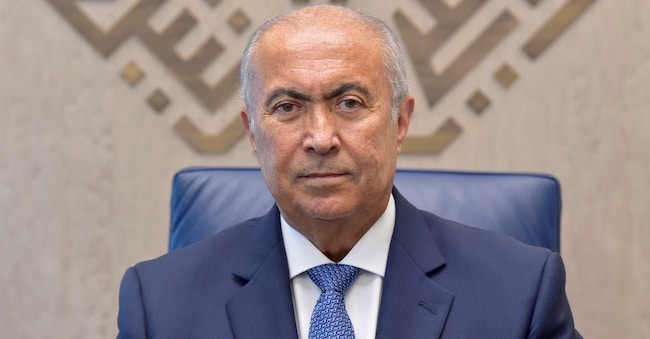
24OreNextMed interviewed Fouad Makhzoumi, the Lebanese MP and billionaire who made his fortune in the fibreglass piping sector, transforming a small local start-up into a global giant. He entered politics in Lebanon as an outsider to help shape the country’s future. In particular, to overcome what he sees as the most significant obstacle to Lebanon’s economic development: the existence of the deep state. An expert in the energy sector in the eastern Mediterranean, he offers his perspective on the future of the region and the opportunities for Italian entrepreneurship in the MENA region.
In a recent opinion piece you published for The Economist, you outline a plan to regain control of Beirut, which includes not only reconstruction but also the country’s economic development. Could you explain what that would entail?
‘In Lebanon, the “deep state” came into being at the time of our independence in 1943 and still holds control over the country. The problem is the political cover it uses: first there was the issue of Palestine, then Syria, and now Hezbollah. The central idea is to promote the development of the poorest parts of the country (the east, on the border with Syria, the north and the south). Little has been invested in these areas to foster their development. Geography determines the geopolitics of every country. One cannot live in a nation where most of its borders are areas of conflict. If we manage to restore the state’s control over the entire territory, ensuring that only the state is armed and not the militias, it will be the task of the institutions to take responsibility for promoting development, not just reconstruction. Reconstruction plans are devised on the assumption that what is built will be destroyed again after a few years, whereas genuine development means that the state invests in and builds roads, schools, hospitals, and water and energy networks. This approach would foster a sense of attachment to their homeland amongst the population, but with their loyalty directed towards the state rather than towards Hezbollah or other political parties – a phenomenon that has, in fact, prevailed in Lebanon for many years. Until now, the government has been forced by the ‘deep state’ to fund political parties, allowing them to retain control of their municipalities and areas.”
Following her meeting with the President of Lebanon, Joseph Aoun (6 July 2026), she stated that the framework agreement between Israel and Lebanon represents a historic opportunity to restore the state’s sovereignty. What impact did the current war (in which Lebanon became involved at the behest of Hezbollah, not as a result of a decision by the state) on 2 March have on the maritime agreements signed by Lebanon and Israel in 2022, and what do you expect for the future?
‘Back in 2015, I invited Amos Hochstein to Lebanon to speak at a conference I had organised, which focused on Lebanon’s aim of becoming a gas-producing country. But at that time, before President Biden appointed him as the White House’s special envoy for the Middle East, Hochstein made it clear that all the indicators point to the presence of gas fields, but if no peace agreement were reached in the region, it would be very difficult for companies to begin extracting gas for commercial purposes. Because no major company would invest in a conflict zone. Referring to the latest report from a few years ago, we do not know, for example, whether Total would have found gas had it continued its exploration. However, I believe there is a high probability of gas deposits, as we have seen in Cyprus and Israel. We are in the same basin, so I believe there is gas in Lebanon too, but unless we achieve peace first, I doubt the country will ever see oil or gas production.”

