
Lebanon under the bombs: Sr. Maya Beaubi and the Sacred Heart school between war and hope
A Lebanese school five kilometres from the border with Israel continues to educate displaced students, using advanced technology to keep the dream alive despite the war

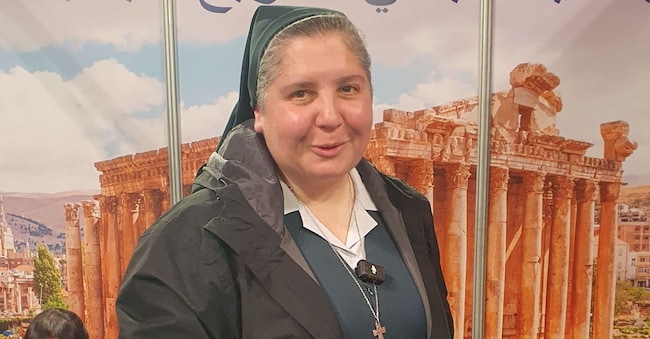
"Our students retain all their dreams, even under the bombs. It is our responsibility to keep them studying at the highest level". Thus Sister Maya Beaubi, headmistress of the Sacred Heart School in Ain Ebel, southern Lebanon. Her school - a tradition behind it of 165 years - is only five kilometres from the southern border of Lebanon, caught between the grip of Hezbollah and Israeli bombs. These days Sister Maya is in Milan, to take part in the 'SFIDE-La scuola di tutti' fair, as part of 'Do the right thing! Some of her students should also have been at her side, to crown a twinning project between the Lebanese school and some Milanese institutes. The children from the two countries have been writing to each other for months, they have a whatsapp group where messages used to be sent about music and sport. Now there are messages about fear.
Is the school functioning? Where are the male and female students in your institution?
Unfortunately, 50 per cent are displaced throughout Lebanon. We have students from kindergarten to high school. There are people who cannot find a home because every time they move, there is bombing near them. Because the bombardments now are not only in the south, but in the Bekaa, even in the suburbs of Beirut and even inside Beirut. Our school continues to function, but we have to agree on exactly what we mean by 'open': do the children continue to attend classes? Yes, they do, but not in attendance, because it is practically impossible. We can't even move around the village, all around there is bombing. People haven't slept for days, because there are attempts at ground manoeuvres from both sides: from Hezbollah and from the Israeli side. We are afraid of everything.
Can you call them, do you know where they are, can you talk to them?
Of course, we feel them from day one. We have been running an advanced digital project in our school for five years. The students have high-level Artificial Intelligence applications. We have a platform and we can follow the students closely: whether they have Internet, whether they have electricity, whether they have done their homework. The professors correct all the homework, we do timely monitoring. Every day the professors tell me who is absent, who hasn't entered the platform to hand in their homework, etc. There is a whole team that is always in touch with parents to know if they are OK, if they need anything. For example, during the Israeli attack last year we kept four schools open and I went there with some brave teachers. We followed the students wherever they were to take their exams in attendance and get authentic grades, because our students have dreams. Even though we are a French-speaking school, they are admitted to English-speaking universities in Paris, England. All this even under the bombings.

