The crisis in the Middle East

Lebanon, Unifil mission: the Sassari Brigade has taken the place of the Taurinense Alpine Troops

The 'dimonios' in command of the Joint Task Force-Lebanon Sector West (JTF-L SW), which is in charge of the western sector of the UN mission

by Andrea Carli

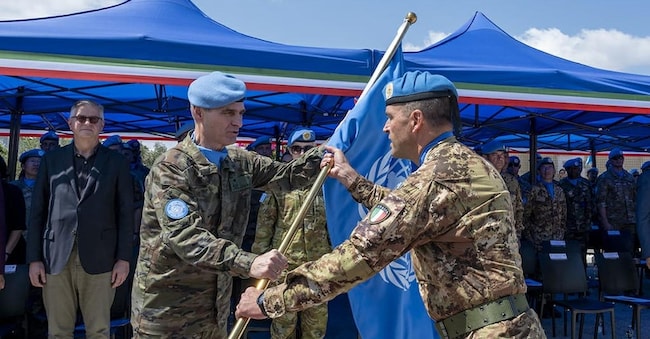
Libano: cambio al comando tra Brigata Taurinense e la Sassari. Il generale di brigata Stefano Messina subentra al parigrado Enrico  Fontana.

4' min read

4' min read

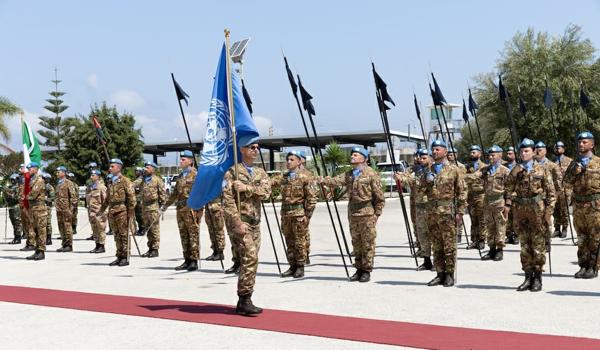
While the risk of a serious escalation grows in the Middle East, with Iran promising 'revenge' against Israel for the killing of Hamas political bureau chief Ismail Haniyeh during a raid in Tehran, in Lebanon the ceremony of the changeover between the "Taurinense" Alpine Brigade and the "Sassari" Brigade at the command of the Joint Task Force-Lebanon Sector West (JTF-L SW) took place at the "Millevoi" base in Shama, which, as part of the UN Unifil mission, deals with the western sector of the area of operations. Italy leads the JTF-L SW, composed of over 3,500 'blue helmets' from 17 of the 49 nations participating in the mission. The Italian contribution in South Lebanon exceeds 1,100 of Unifil's total of over 10,000.

The Israeli army announced that a prominent Hezbollah commander, Ali Abd Ali, belonging to the southern front unit of the Shia militia, was killed in an attack by an Israeli drone in the south of the cedar country. The raid in the town of Bazourieh, near Tyre. Ali was involved in the planning and execution of several attacks. His killing is a 'significant blow to the functioning of Hezbollah's southern front in the region', the IDF stressed.

Loading...

In general, as far as the overall situation is concerned, also in relation to the escalation in the relationship between Israel and Iran, the security picture is not so dissimilar to that of recent months. In the words of Defence Minister Guido Crosetto, who recently spoke for a briefing in the House, 'as of today I believe that the security of our military is no more at risk than before. They are not a direct target and we have an excellent intelligence apparatus; however, they could be accidentally involved in the clashes between the parties, which have become more frequent and of increasing intensity'.

In other words, Unifil's 10,000 blue helmets risk being caught up in the military confrontation that could explode Lebanon. Evacuation plans for Italian personnel have therefore been updated, with the alerting of ships and transport planes. For now, however, the Defence Minister clarified, "we will continue to operate, as long as the UN deems fit, and I am convinced that our presence and that of Unifil are at this time the only element that can bring stability and prevent further escalation".

Unifil, worrying situation but mission remains

"The situation is worrying" but "the mission remains", clarified Unifil spokesman Andrea Tenenti. "We continue to be operational," he added, "Things have not changed except for the increased level of attention. The firefights continue, as they have for ten months now, but the activities have not changed. If ever conditions were such as to think of a withdrawal of the mission, it would be the Security Council that would take the eventual decision, although each country is free to return'.
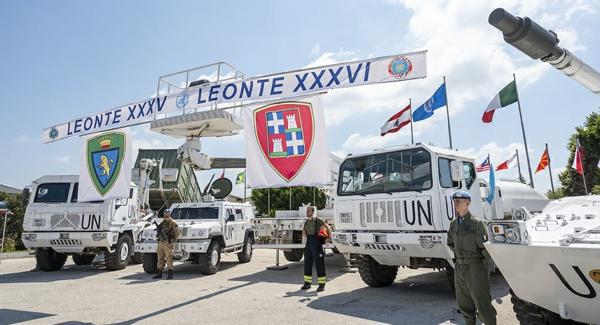
This is the third mission in Lebanon for the Sassari

.

For the Brigata Sassari, which has been given the reins of the operation, this is the third mission in Lebanon after the six-month mandate of 2016 and 2020-21. Experiences that have allowed the "dimonios" to mature an in-depth knowledge of local culture and traditions, which will be strategic in the next six months, when the "Sassari" will also be replaced. Brigadier General Enrico Fontana, for the 'Taurinense', and Brigadier General Stefano Messina, for the 'Sassari', were present in Shama. Also present were the Under-Secretary-General for Peace Operations Jean-Pierre Lacroix, the Head of Mission and Force Commander of Unifil Lieutenant General Aroldo Lázaro Sáenz and the local civil and military authorities.

Where are the Italian military

The Italian contingent, which for the national aspects operates under the Inter-Forces Summit Operations Command (COVI), carried out Blue Line monitoring activities through personnel deployed at the two Italian-led forward bases, one above a large rise near the town of Shama and the other at Al- Mansouri, near the coast, the headquarters of the manoeuvre force, i.e. the actual operational arm of the Italian military contingent (ITALBATT).

Patrols along the Blue Line

.

The Blue Line is the demarcation line separating Lebanese and Israeli territory, defined by the United Nations in June 2000 following the final withdrawal of the Israeli occupation forces, and still at the centre of disputes between the two countries. Italian soldiers patrol this line, autonomously or with the collaboration of the Lebanese Armed Forces, trained by the Italians, for example in overcoming obstacles with the use of ropes (a typical activity for Alpine troops).

Support for the civil population

.

The Italians are intervening to support the population: some 90,000 people have had to abandon their homes along the villages near the Blue Line. Medical assistance, medicines, and food are needed. The contingent has launched a series of support operations carried out precisely in favour of these segments of the population housed in the villages further north or in the city of Tyre, where the "Taurinense" has carried out medical examinations and distributed medicines and food in one of the schools housing numerous families.

The tripartite forum last met in September

.

Within the stabilisation process in the area, a prominent role is played by the Tripartite Forum. This is an opportunity for dialogue, developed after the 2006 war, between representatives of the Lebanese Armed Forces, representatives of the Israeli Armed Forces and the Unifil Force Commander. The meetings generally take place on a regular basis and are held in a UN position near the Ras Naqoura crossing on the Blue line, along the coastal road connecting the two countries.

In the absence of formal relations between Israel and Lebanon, and thus of a permanent ceasefire agreement - the ultimate aim of the UN resolution - tripartite meetings constitute the only effective instrument, to which the parties have adhered so far, to attempt to resolve delicate security issues, through mediation by Unifil representatives. The last meeting took place in September (thus before 7 October, the day of the simultaneous Hamas attack on Israeli towns and villages). After that date, Unifil's Force Commander met with the parties, but separately.

Copyright reserved ©
Loading...

Brand connect

Loading...

Newsletter

Notizie e approfondimenti sugli avvenimenti politici, economici e finanziari.

Iscriviti