
The 2027 Electoral Law: what is the ‘Stabilicum’? How will we vote and what will change?
From the majority bonus for parties securing over 42 per cent of the vote to the nomination of the coalition’s prime ministerial candidate, from the return of preferential voting to the thresholds for smaller parties: this is the ‘Melonellum’ revolution

Key points
- The main change: a majority bonus for those who secure more than 42 per cent of the vote
- The effect: polarisation of the political debate between the two main camps
- Double-round system: the risk of no winner if no one reaches 42 per cent
- The ‘little prime minister’: the nomination of the prime ministerial candidate that is dividing the broad coalition
- Preferential voting is back, but only partially: the issue of ‘fixed’ list leaders
- Variable thresholds for small parties and the issue of increasing the number of signatures
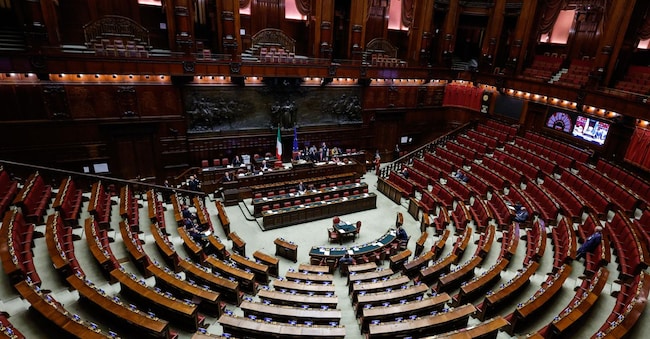
D-Day is 8 October at lunchtime, when the Chamber of Deputies will hold the final vote by secret ballot on the electoral reform sought by the centre-right and opposed by the opposition. This is now taken for granted by everyone, given that Prime Minister Giorgia Meloni has clearly warned that, should the reform be rejected in the secret ballot, early elections will be called immediately. It is no coincidence that the parties have been organising themselves for some time now to contest the election under the new rules, which paint a very different picture from the recent past.
The main change: a majority bonus for those who secure more than 42 per cent of the vote
The main change introduced by the ‘Stabilicum’ or ‘Melonellum’ – whichever you prefer – is the abolition of the single-member constituencies provided for under the ‘Rosatellum’ and the introduction of a proportional representation system with a 3 per cent threshold and majority bonus for the coalition that secures more than 42 per cent of the votes. The bonus is allocated not as a percentage, but as a fixed quota of 70 members of the Chamber of Deputies and 35 senators, up to a ceiling of 220 members of the Chamber of Deputies – that is, 55 per cent of the seats – and 113 senators, or 56.5 per cent. These percentages more or less fall within the constitutional threshold of 55 per cent, which safeguards the election of institutional bodies responsible for safeguarding the constitution – namely the President of the Republic and the judges of the Constitutional Court and the High Council of the Judiciary – and prevents the ruling majority from amending the Constitution on its own.
The effect: polarisation of the political debate between the two main camps
It is clear that such a system leads to the polarisation of political debate: on the one hand, it encourages like-minded forces to form coalitions in order to reach the 42 per cent threshold; on the other, it encourages tactical voting against extremist forces, as is the case with Prime Minister Giorgia Meloni against Roberto Vannacci’s party Futuro Nazionale. As the saying goes: “if you vote for him, the left will win”.
Double-sided system: the risk of no winner if no one reaches 42 per cent
There remains, however, the risk that neither coalition will reach the crucial 42 per cent threshold: in this case, the system would revert to a purely proportional system in the style of the First Republic, making it difficult to form a broad coalition government between parties that were opponents during the election campaign. This is not an entirely far-fetched risk, judging by the polls: with Vannacci’s party already hovering around 8 per cent, some surveys show Meloni’s centre-right coalition below the threshold, whilst others place it slightly above. As for the ‘broad coalition’ – which is almost always shown to be above the threshold – it must be borne in mind that the coalition currently taking shape between the PD, M55, Italia Viva and Più Europa is an arithmetic sum rather than a political one.
It is reasonable to expect that the M5S would lose some of its votes if the coalition were led by the PD’s secretary Elly Schlein were to lead the coalition – and, conversely, that a proportion of PD voters would look towards the centre-right under Calenda’s leadership if the coalition were instead led by the leader of MS5 Giuseppe Conte. The failure to introduce a run-off vote if no candidate reaches 42 per cent – initially proposed by Fratelli d’Italia and subsequently abandoned due to opposition from Forza Italia and the Lega, remains the main systemic flaw in the new electoral law.


