Products

Lenovo is bringing AI to its new PCs, but not always in the way Microsoft had expected

5' min read

Translated by AI
Versione italiana

5' min read

Translated by AI
Versione italiana

BERLIN – The personal computer continues to evolve, driven by artificial intelligence, and seems to be becoming increasingly specialised. Once upon a time, the PC was an ‘all-rounder’ where all we had to do was decide on the spec: with a gaming desktop, you could do everything. Now, there are Windows tablets for gaming on the go, colourful laptops to show off to friends, and AI-centric PCs that run large-scale language models (LLMs). At IFA 2026 in Berlin, Lenovo showcased virtually all of this, along with a glimpse into the future of laptop cooling. The most significant development probably concerns the high-end segment of the Yoga range, where Lenovo is introducing the NVIDIA RTX Spark platform for the first time in laptops designed not only for content creation, but also for the development of AI applications and models.
Yoga becomes a portable AI workstation

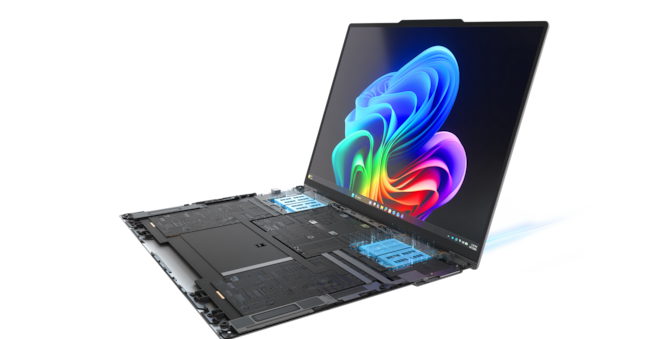
The flagship product is the 15-inch Yoga Pro 9n, designed for creators and developers and built around the new RTX Spark platform. It can accommodate up to 128 GB of unified memory and, as a result, run large AI models locally. It also serves as an excellent platform for creating and testing agent-based applications. In essence, Lenovo has transformed a notebook that looks like a traditional laptop into a sort of mobile AI workstation. In addition to classic creative applications, Lenovo highlights uses such as software development, 3D rendering, high-resolution video editing and the local execution of AI applications. The presence of the CUDA ecosystem also makes the machine particularly appealing to those already developing on NVIDIA technologies, whilst offering the convenience of using a Windows machine. However, the OLED display and the pen-compatible haptic Force Pad confirm that the primary target audience remains creative professionals. Lenovo has therefore sought to merge two categories that have so far remained quite distinct: the AI workstation and the premium notebook for creators. A choice that perhaps looks more to the future of creative professionals than to the present. Whilst an AI developer will immediately find plenty to get to grips with, creative professionals are faced with a machine that will run future AI software dedicated to creativity exceptionally well.

Loading...

The same principle applies to the 16-inch Yoga 9n 2-in-1, which reduces the maximum unified memory to 64 GB but features the traditional Yoga design, with a 360-degree convertible form factor. The stylus can be used both directly on the OLED display and on the haptic touchpad, almost transforming the latter into a small graphics tablet. Prices and availability of the two new Yoga models will be announced at a later date.
ThinkCentre X Ultra: four mini PCs can work together

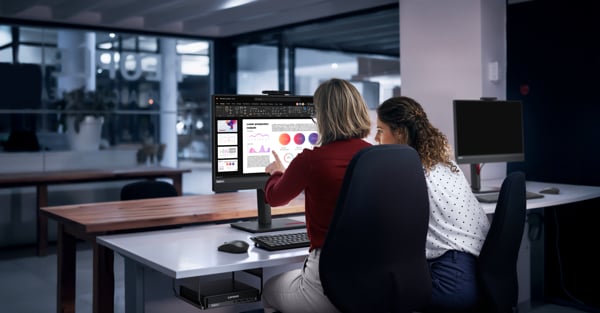
The other technologically significant development comes from the business world. The ThinkCentre X Ultra will be available in November, starting at €3,100, and is a desktop with a footprint of just 1.6 litres, designed specifically for workloads related to Agentic AI. It uses AMD Ryzen AI Max+ PRO processors and can also support up to 128 GB of unified memory. Its most interesting feature is the ability to cluster up to four systems together, thereby multiplying the available computing power and memory to run larger models, utilise broader context windows or manage multiple AI agents simultaneously. We can view it as a solution that aims to bridge the gap between an AI development PC and centralised AI infrastructure.

The range also includes the more traditional ThinkCentre M75s Gen 6 and M75q Gen 6. The former is a small form-factor desktop with on-board AI acceleration, whilst the latter is a Tiny PC small enough to be fitted behind a monitor but capable of driving up to four displays. Prices will start at €1,059 and €999 respectively.
ThinkBook opts for two different approaches to mobility

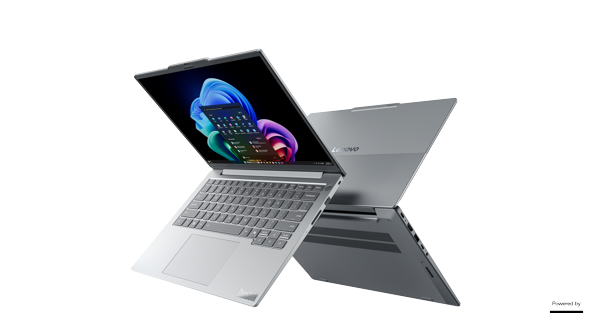
In the professional segment, Lenovo has introduced two different approaches to portability. The ThinkBook 14 Gen 9 uses the Snapdragon X2 Plus and delivers up to 80 TOPS for AI tasks. It is a Copilot+ PC designed primarily for those who often work away from a power socket: Lenovo claims up to 26 hours of local video playback, with a starting weight of 1.3 kilograms. AI is utilised for content creation, collaboration, task automation and features integrated into Lenovo Qira. It will be available in October from €1,099.

With the ThinkBook 14x Gen 2, however, the focus is on weight. The laptop weighs less than a kilogram, coming in at 990 grams, and is 12.9 millimetres thick. It uses Intel Core 3 Series processors and is aimed primarily at those who bounce between the office, meetings, co-working spaces and travel. It will be available from September, with prices starting at 1,079 euros.

The IdeaPad Vibe is all about colour, but underneath it’s an AI PC

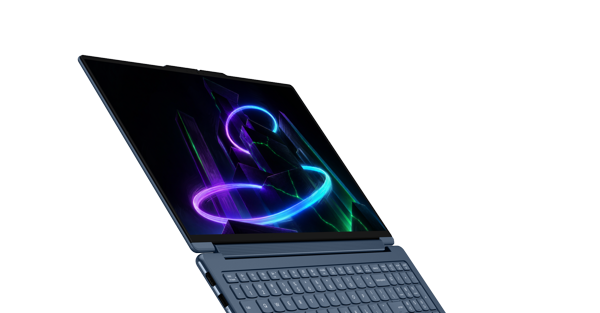
On the consumer front, Lenovo is instead attempting to break away from the aesthetic uniformity of notebooks and perhaps encroach on the MacBook NEO’s territory. The new IdeaPad Vibe range, available in 14- and 15-inch models, comes in seven different colours developed in collaboration with the Pantone Colour Institute. This is an attempt to transform the PC into a less formal object, following a trend already seen in the smartphone market. Behind this aesthetic overhaul, however, lie genuine Copilot+ PCs, initially available with Snapdragon X processors and, in some configurations, AMD Ryzen AI 400 Series processors. Weights start from 1.3 kg, and both OLED and IPS versions are planned. The range will be available between October and November, with prices starting from 799 euros.

Lenovo is applying the same approach to the IdeaCentre AIO i desktop, a 24- and 27-inch all-in-one computer available for the first time in a range of colours and with a slimmer design. It is primarily designed for home, study and everyday work, and will be available from 999 euros in November.

Monitors become docking stations and tools for video conferencing

Lenovo has pulled out all the stops with the number of models it has unveiled, and the two most interesting models are probably the ThinkVision P34WD-4v and P27UL-40. The former is a 34-inch curved WQHD ultrawide monitor designed for hybrid working. It features a Thunderbolt 4 docking station, a 5-megapixel webcam and AI sensors that can correctly and automatically frame the user during video conferences, detect whether multiple people are present, and adjust certain settings based on who is in front of the screen. Prices will start at €1,099.

Loading...

The P27UL-40, also priced at €1,099, is a 27-inch UHD OLED display manufactured using inkjet printing technology; it is aimed at imaging professionals, offering 99 per cent coverage of the DCI-P3 colour space and DisplayHDR True Black 500 certification. This monitor also features built-in Thunderbolt docking capabilities, effectively making it the centrepiece of the workstation.

AeroBlade aims to remove the fan from laptops

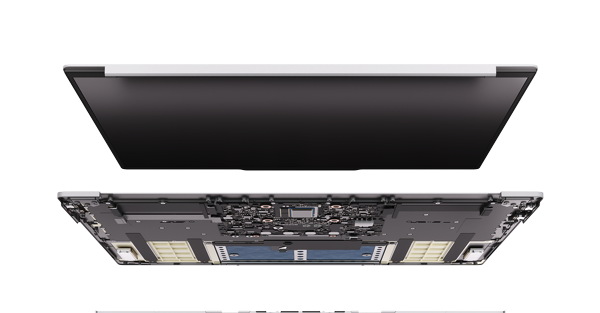
Rounding off the round-up is Project AeroBlade, which for now remains a proof of concept but may well herald one of the most interesting directions for laptops. Lenovo has created a 14-inch notebook less than 10 millimetres thick and weighing under 830 grams, by doing away with traditional fans. Instead, it uses Active Flow, a solid-state cooling system developed with Frore Systems and based on AirJet technology. Although highly advanced, it is not currently intended for sale, but it shows great promise in making the computers of the future easier to carry around.

Copyright reserved ©
Loading...

Brand connect

Loading...

Newsletter

Notizie e approfondimenti sugli avvenimenti politici, economici e finanziari.

Iscriviti