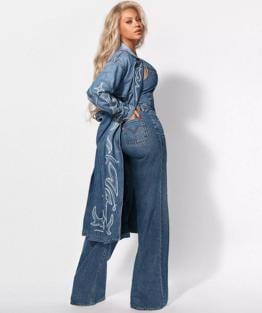
Levi's ceo: 'Denim, yoga and signature collaborations: this is how we grow and deal with uncertainty'
Interview with Michelle Gass, president and world ceo of Levi's Strauss & Co.: 'We have set up a task force to examine the possible impact of tariffs on our supply chain'

4' min read
4' min read
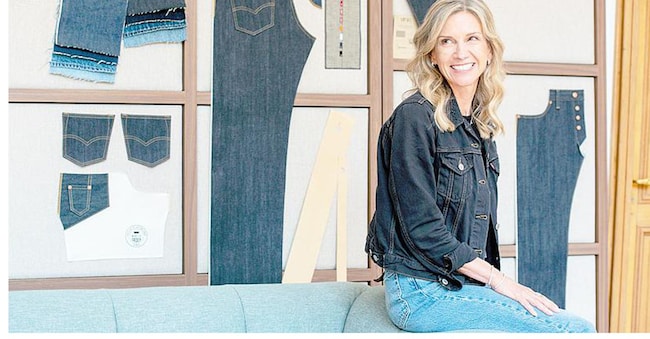
She loves Italy and hopes to explore it in depth in the future; she cherishes the memory of a trip with her husband to Positano and is looking forward to a walk in the Dolomites in the summer, followed by a stay on the Amalfi Coast. Michelle Gass, president and ceo of Levi's, is passing through Milan to visit the monobrand shops, multibrand and department store partners and to update herself on the city's retail scene, which is constantly evolving, perhaps even more so than that of Paris, where the American brand has opened a large shop on the Champs-Élysees in 2024 with an innovative format that, who knows, could be replicated in Italy.
In love with our country, but perhaps even more so with her work, Michelle Gass is the head of one of America's largest clothing companies: after more than 30 years at the top of consumer goods companies and chains, from Kohl's to Starbucks, the manager joined Levi's in 2023 as president and since the end of January 2024 has also been chief executive officer.
How would you summarise these 18 months at the helm of Levi's?
"First of all, I would like to emphasise that I had a great privilege: to spend the first months in the company working side by side with the then ceo, Chip Bergh, who left his post at the end of April 2024, but remained an advisor and my advisor, because he is deeply attached to the brand, to the world of denim and to all the people who have worked with him. I learnt a lot from Chip and thanks to those months of collaboration and sharing on the key points of the corporate culture, but also on the plans for the future, I felt that I had a very solid basis for making Levi's evolve, and partly change".
Where did you start from to initiate this evolution?
"We rationalised the collections, particularly those of jeans, starting with the 501, because over the years the Sku (acronym for stock keeping unit, the alphanumeric code that identifies each individual product of a company, ndr) had multiplied and in some cases, even within the same market or geographical area, had overlapped. It is one of those operations where technology helps a lot, as it does in general for warehouse management and logistics. Then we sold Dockers, one of the brands in the portfolio: it was not a decision taken lightly, because the brand had been part of the group for a long time. Let's just say that Dockers, perhaps the world's most famous khaki trouser brand, is in good hands (sorries): it was acquired (for over $310 million, ndr) by the Authentic Brands group, whose founder, chairman and ceo, Jamie Salter, explained last May, when we announced the deal, that 'Dockers fits perfectly into the Authentic Brands model'.
Could one say that there are now more resources and energy to devote to the other brands?
"The process, as I said, had begun months earlier: we have the largest share of the jeans market globally and we will continue to invest in the Levi's brand, focusing in particular on women's collections and collaborations: the aim is to make 10-12 a year, but that they will be truly surprising, both for the names we link to and for the products. Then there is the Beyond Yoga brand, which has great potential and in which we will invest a lot. We prefer to leave another sector, athleisure, however promising, to other companies. There is also the junior clothing part, which is under licence, because it really is a different business to adult. But surely we can find more synergies and opportunities there too'.