
Leo XIV in Turkey and Lebanon, the pontificate's first trip to the heart of Middle East tensions
The first stop in Ankara for the meeting with Erdogan

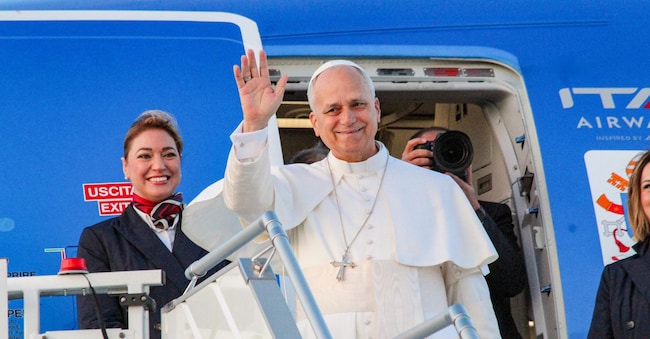
Many speeches, on the trip to Turkey and Lebanon, all in English. It is the first time in the memory of journalists (and not only) that on an apostolic journey the Pope will not use the Italian language, which is that of the Curia, on official occasions. It is a sign of the times and of the election of an American Pope, who on 27 November begins his first trip outside the Italian borders - it will end on 2 December - and has chosen the Near East, marked by the conflict in Gaza but also by the new repeated attacks by Israel in Lebanon. The stops are: Ankara, Istanbul and Beirut. An area crossed by many tensions, plots that pass through Turkey, a protagonist in the diplomatic political scene, and Lebanon, an area of strong interest for all geopolitical actors especially after the change of regime in Syria and the future role of Hezbollah. The Pope will not enter into the specific issues, but certainly his presence and his message will carry weight, given his possible role as a 'bridge' of dialogue between the parties.
Christian unity and interreligious dialogue are also at the centre of the trip
First and foremost at the centre of the agenda is dialogue and unity among Christians of all confessions, and closeness to communities affected by ancient and recent tragedies and tensions - including the Armenians - then peace, a theme "at the heart of the Pope" since his first appearance to the world and throughout these seven months of his pontificate, as the director of the Holy See Press Office, Matteo Bruni, said. The focus of the trip - which Francis wanted to make - was the ceremony in Iznik (today's name for ancient Nicaea) for the 1700th anniversary of the Council, and significant references to current events, with the presence of the Successor of Peter in the Middle Eastern powder keg. Today's Turkey is a cradle of Christianity, the birthplace of St. Paul, the scene of the first eight Councils, a bridge between different worlds and continents, while Lebanon has always been a place where representatives of different religions coexist - often a coexistence marked by conflicts and massacres - and also a place where people fleeing wars and terrorism are welcomed. Lebanon in particular is a nation that has been suffering from a serious economic crisis for years, exacerbated by the port explosion and now also by Israel's attacks in the south. Are there fears for the Pope's safety? "All the concerns deemed necessary have been taken," Bruni said.
Political conversations intertwined with the 'knots' of religion
Leo will converse privately with Presidents Recep Tayyip Erdoğan and Joseph Aoun; he will greet civil, religious, interreligious authorities; he will visit Mosques and Churches built centuries ago or in the 1990s; he will visit the Turkish Diyanet, the Presidency for Religious Affairs; he will pray at the Port of Beirut commemorating the more than 200 people who died in the 2020 explosion. And above all, with this trip, he will be following in the footsteps of his predecessors: John XXIII (who was apostolic delegate during the war), Paul VI who visited in 1967 and Lebanon on his way to India in 1974; again, John Paul II who went to Turkey and Lebanon in 1997 and then Benedict XVI who went to both countries, one almost at the beginning of his pontificate and the other five months before his resignation. Finally Pope Francis who went to Turkey in 2014 and wanted to return there in May 2025 for the 1700th anniversary of Nicaea but never managed to visit Lebanon, which remained an open desire until the end of his days. And from his predecessor Francis, Leo XIV picked up this first 'pilgrimage' to the heart of the Middle East.
The landmark event is the celebration in Iznik (Nicaea) for the 1700th anniversary of the First Council
As mentioned among the important appointments, the ecumenical celebration in Nicaea with Pope Leo and the Patriarch of Constantinople Bartholomew in a procession along the lakefront towards the remains of the earthquake-damaged Basilica of St Neophytus. Then singing and prayer with some twenty patriarchs and representatives of the Christian churches in a semicircle before the icons of Christ and the Council and the lighting of a candle. In addition to ecumenism, the component of interreligious dialogue will also prevail. On 27 November, the Pope will visit the Diyanet, an appointment that was added to the initial programme, as well as the meeting with the Chief Rabbi of Turkey and the private meeting, in the Beirut Nunciature, with the heads of the Muslim and Druze communities.
Leo: 'Abandon the use of weapons to solve problems'
And on the eve of the Pope's departure, in Castel Gandolfo, regarding Israel's bombing of Beirut against Hezbollah quarters, Leo XIV - asked in English - told reporters that "there are reasons for concern". He then launched an appeal, calling on everyone "to seek ways to abandon the use of weapons as a means of solving problems". He urges them to respect each other, to sit down together to resume dialogue and to "work to find solutions to the problems that concern us". It is necessary "to encourage all people to seek peace," he says, referring to Israel and Hezbollah, "to seek justice, because violence is often the result of injustice. It is also necessary, for the Pope, to work together for greater unity, for greater respect between people and for all religions.


