Alcoholic drinks

Liqueurs and spirits: to combat the global crisis, Italia is focusing on exports, cocktails and ready-to-drink mixers

Overseas turnover (1.7 billion) fell by 5% in 2025 but is outperforming the competition and is up 34% compared with 2019. Companies continue to innovate. Assodistil: however, we also need to free up the ethanol intended for use as fuel. Federvini: focus on new products and

5' min read

Translated by AI
Versione italiana

5' min read

Translated by AI
Versione italiana

Domestic consumption and exports are down, but Italia is holding up better than its competitors, partly thanks to new consumer trends and, in particular, mixology. This is what emerges from data compiled for Assodistil (the association of the spirits industry) by Nomisma and the Format Research Spirits Observatory. Despite the slowdown in world trade, Italian spirits have confirmed their international appeal, achieving, in 2025, overseas turnover of 1.7 billion euros. This figure is 5 per cent lower than the 2024 figure but is nevertheless 33.7 per cent higher than in 2019.

New consumer trends

“In an increasingly competitive environment,” explain representatives of Assodistil, “there is a growing need to focus on the geographical diversification of exports and on innovating the product range , by capitalising on new consumer trends and strengthening our presence in markets with the greatest growth potential.”

Loading...

Generally speaking, consumers are adopting a cautious and selective approach to alcohol, drinking less but with greater attention to quality. These trends are enabling companies to maintain substantial stability in their economic indicators. In 2025, spirits consumption in Italia stood at around 125 million litres, a 10 per cent decline compared with 2019. Liqueurs are the most important category on the domestic market, accounting for 52% of total consumption, followed by rum (11%), grappa (10%), vodka (8%) and gin (7%).

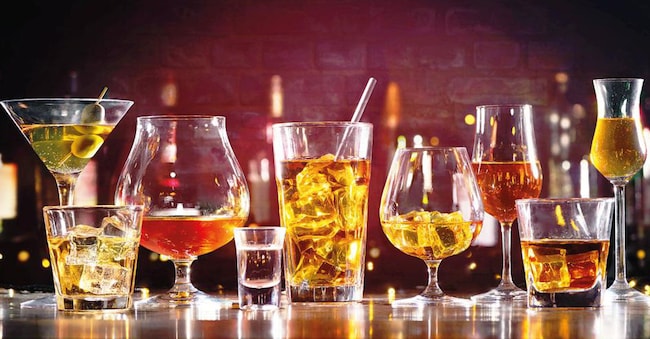
At the same time, interest in mixology is growing, both in bars and at home: 80 per cent of consumers who visit bars prefer to drink spirits in mixed drinks, a figure that stands at 52 per cent for home consumption as well. Furthermore, the expansion of ‘ready-to-drink’ products containing alcohol continues, with consumption reaching 22.4 million litres in 2025. There is also a growing focus on wellbeing and moderation: 15 per cent of Italians say they are interested in consuming or trying low-alcohol spirits, a sign of a constantly evolving market.

Global slowdown

On the international front, too, 2025 was a year of slowdown. Following years of sustained growth, a contraction was recorded that affected most of the major exporting countries. Against this backdrop , Italia demonstrated greater resilience than its main international competitors : whilst our country recorded a -5 per cent decline, France and the United States both saw a fall of 11 per cent, whilst Mexico recorded a decline of 17 per cent.

However, there remain serious grounds for concern regarding developments in international trade policy and geopolitical tensions: for this reason, the geographical diversification of exports is taking on increasing strategic importance. Whilst in 2019 the top three export markets accounted for 43 per cent of the total value of Italian spirits exports, by 2025 the share of other markets had risen to 60 per cent, signalling a gradual expansion into new destinations such as Poland, Croatia, China, Romania, Sweden, Ireland and Japan. The prospects offered by the Mercosur region also deserve particular attention, as this market presents significant scope for growth for Italian spirits producers.

Emaldi (Assodistil): let’s stay competitive

“The phase the sector is currently going through,” comments Assodistil’s president, Antonio Emaldi, “requires strategic vision and policies capable of supporting the competitiveness of our businesses. Italian spirits represent an economic, productive and cultural heritage that continues to be appreciated around the world. The figures confirm that companies are continuing to invest, innovate and look to the future with confidence, despite a complex international environment. At the same time, we must seize the opportunities offered by product innovation, mixology, low-alcohol offerings and an openness to new foreign markets.”

The application of ethanocl in fuels

But in the background, there remains a great sense of regret. ‘The major unfulfilled goal,’ adds Emaldi, ‘is the market for ethanol as a fuel. Law 199 of 2021 stipulates a mandatory 5 per cent blend of ethanol with petrol, without the need to make any changes to either vehicles or the distribution network. All this whilst in 19 out of 27 EU countries the mandatory blending rate is 10 per cent. But this provision has remained on paper, blocking the opportunity to reduce, even by a small percentage, Italy’s dependence on fossil fuels and imports from other countries. Italian ethanol is largely produced by distilling by-products from viticulture, a sector in which we are the world’s leading producer of grapes and wine. Not to mention that one litre of petrol blended with 5 per cent ethanol significantly reduces CO₂ emissions. The creation of an Italian ethanol market would unlock significant investment and create new jobs. Given so many advantages, it is truly difficult to understand why we are unable to get started.”

Vena (Federvini’s Spirits section): seizing new opportunities

“The situation is by no means easy. We are facing a general decline in consumption, which is likely to be structural as it is linked to profound changes in purchasing behaviour. But let’s not get too downhearted. There are plenty of opportunities to reposition our products and get back on track.”
This is the message of optimism put forward by Leonardo Vena, owner of Amaro Lucano and president of Federvini’s Spirits section. “Alcoholic drinks are going through a challenging period,” he explains, “with a decline in drinking occasions due to various factors: from economic reasons to a different approach to drinking among the younger generations. But changes in purchasing habits are nothing new; they have always existed and often bring with them some significant opportunities for those who manage to seize them.”

The key lies in a shift in consumer behaviour towards quality and different ways of shopping. ‘People are drinking much less after meals,’ adds Vena, ‘and much more as an aperitif. Mixology, therefore, is not just a lifeline but also a great opportunity that aligns with the drinking style that is gaining ground: lighter and enjoyed with food. Some of our companies have been working in the drinks sector for years now. We’ve been greatly helped by a number of Italian bartenders based in London and New York, who have successfully promoted certain Italian bitters and traditional products as ingredients capable of giving a cocktail its distinctive character.”

Loading...

From alcohol-free to ‘spiriturism’

Another trend that is gaining ground in the market – and which an increasing number of companies are embracing – is that of non-alcoholic or low-alcohol drinks. “More and more companies,” adds the president of Federvini’s Spirits Group, “are launching products with 0 per cent alcohol or reduced alcohol content. This trend originated in Anglo-Saxon countries but is now gaining ground in Italia too. We are starting to see non-alcoholic amari, gin and limoncello on the shelves. The hospitality sector, which is often quicker to embrace new trends, already features 10–15 per cent alcohol-free products on its menus.”

Another opportunity for the ‘Made in Italy’ sector is tourism centred on alcoholic drinks . “We are finding,” adds Vena, “that liqueur producers and distilleries also hold significant appeal for tourists. There are several companies in Italia that have areas where the history of the liqueur factory or distillery is showcased, and young people – and foreigners in particular – are very intrigued. This is because behind the brands in the ‘Made in Italy’ spirits sector there are often families with a history stretching back more than a century. In short, the concept of ‘spirit tourism’ should be embraced, and I am certain it will prove rewarding.”

A survey carried out by the Istituto Tutela Grappa del Trentino amongst its members reveals that 87 per cent of companies organise guided tours of their distilleries and that 70 per cent regard tourism as strategic for the sector: ‘a figure that indicates a positive perception, though there is still room for improvement’.

Copyright reserved ©
Loading...

Brand connect

Loading...

Newsletter

Notizie e approfondimenti sugli avvenimenti politici, economici e finanziari.

Iscriviti