
Local transport in crisis: 20 million extra costs per month with war
Diesel increases of up to 25%. For associations, fuel weighs 20% on production costs, service delivery at risk

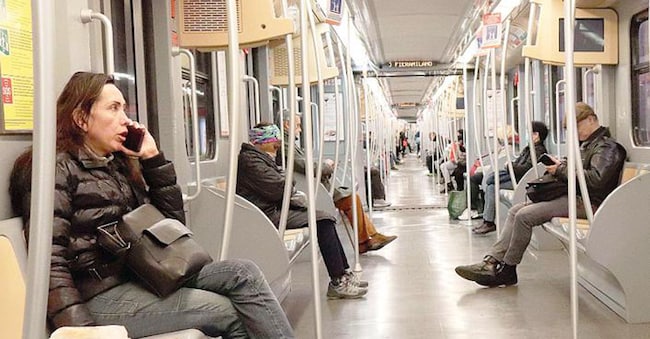
The crisis in the Middle East and the high fuel prices linked to the conflict in the Strait of Hormuz are bringing local public transport companies in Italia to their knees, a sector that employs more than 110 thousand people, has a fleet of around 48 thousand vehicles and more than 5 billion passengers a year. Diesel, which is the second largest item of expenditure for companies after personnel, accounting for between 15% and 20% of total production costs, is registering significant price increases that directly affect the balance of service contracts.
Since the beginning of theenergy crisis linked to international tensions, diesel prices have risen by more than 20 per cent, with peaks close to 25 per cent in the first months of the year. This trend translates into higher costs for the sector, estimated by trade associations at more than 30 million euros per month, of which almost 20 million for local public transport, amounting to approximately 340 million euros on an annual basis, with obvious repercussions on the economic sustainability of the essential services provided. To these must be added the higher costs of commercial bus services, which double the figure of higher costs to over EUR 480 million annually.
The Demands to the Government
The trade associations are united and are demanding urgent intervention from the government. As already represented in a parliamentary hearing last 31 March, Decree-Law 33 of 2026 did not provide for specific measures for local public transport, while it introduced a tax credit for autotrasporto merci, "determining an unjustified disparity of treatment," comments the president of Asstra, Andrea Gibelli. "An intervention similar to the one launched with the 2022 Dl Aiuti-bis," he adds, "would instead be necessary to guarantee the continuity and regularity of essential services. In the absence of adequate compensatory measures, there is a real risk of compromising the economic sustainability of companies and, consequently, the quality of services offered to citizens".
The picture for the first months of 2026, compared to the same period in 2025, shows a slight worsening, with an acceleration in energy costs that companies are struggling to absorb, also in view of the rigidity of regulated revenues. In 2025 the cost of diesel averaged 1.652 euro per litre: after remaining fairly constant, with a slight decrease between April and May, it then recovered values similar to those of March. In detail, the monthly average values in 2025 were EUR 1.680 per litre in March and EUR 1.620 per litre in April. In 2026, compared to the price at the beginning of the year (1.665 euro per litre), the Iranian crisis produced increases that, for the same period in March and April, reached 30 per cent: now the price averaged around 2.120 euro per litre.
"The companies that provide public transport are in danger of having to drastically reduce their services or stop them," says Fabrizio Molina, director general of Agens. The appeal is also supported by the president of Anav, Nicola Biscotti: "Rising fuel costs are also putting commercial bus transport, a sector that is entirely market-driven, unfunded and therefore particularly exposed to these dynamics, in serious difficulty. In the absence of immediate action and targeted corrective measures, the higher costs inevitably risk being passed on to the end customer, with negative repercussions on Italy's tourism system as well. The real danger is a reduction in the supply of services and a loss of economic sustainability for many businesses'.

