Doctor, is it true that

Is losing fat always good for your health? Here’s why that isn’t always the case

The team of doctors and fact-checking experts from the National Medical Association addresses the main health-related concerns

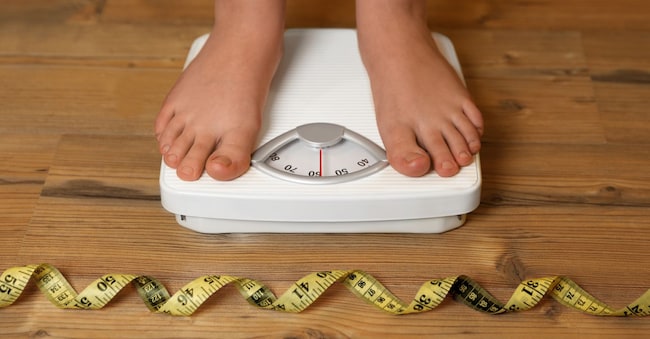
Overweight girl using scales near measuring tape on wooden floor, closeup New Africa - stock.adobe.com

4' min read

Translated by AI
Versione italiana

4' min read

Translated by AI
Versione italiana

14 November is World Diabetes Day. With 589 million people (aged between 20 and 79) affected in 2024, diabetes continues to be one of the most widespread chronic conditions in the world. When discussing diabetes, it is impossible not to mention GLP-1 receptor agonists and related therapies, which are widely used in the management of type 2 diabetes and, nowadays, also in the treatment of obesity. As well as promoting weight loss, in specific patient groups some of these medicines also appear to have a protective effect against cardiovascular events. Given these findings, it is natural to assume that less body fat always translates into better health. In reality, it is not quite that simple: let’s see why.

Is it always just fat that you lose when you lose weight?

No: along with fat, you also lose lean body mass. Lean body mass comprises muscles, but also water, organs and other tissues. For this reason, having less lean body mass does not simply mean having lost muscle. When you lose a significant amount of weight, whether through medication or intensive lifestyle changes, the loss of lean body mass is substantial.

Loading...

Is losing a bit of muscle a problem?

It depends: what matters most is how much strength remains, not just how much muscle mass. We talk about sarcopenia when muscle strength and function decline, not just muscle mass. It is a particular risk for older people, because weakness in the leg muscles is associated with a slower gait, greater disability and a higher risk of falls. We discussed this in the factsheet ‘Is muscle mass loss a problem for all older people?’.

In people taking GLP-1 receptor agonists and other incretin-based therapies, studies to date have not shown any clear deterioration in strength or mobility. However, there is still limited long-term data, particularly for older people or those who already have low muscle mass. Therefore, whilst it cannot be said that these medicines cause sarcopenia, it is also not possible to rule out significant muscle loss in the most frail individuals.

How can you preserve muscle mass whilst losing weight?

This is particularly true with exercise, especially strength training. A review from 2026 found that the amount of lean body mass lost was lower when strength training was added to the diet. The same is true for older people who are obese: adding strength training to their diet prevented much of the loss of lean body mass. More generally, in older people, this type of training strengthens muscles and improves certain daily activities, and serious side effects are rare.

Diet is also important: an adequate intake of protein, combined with strength training, helps to preserve muscle mass. The correct amounts vary from person to person and should be determined in consultation with a doctor, particularly for those with kidney disease. We have discussed this in detail in the factsheet ‘Is it necessary to take amino acid supplements?’.

Isn’t all fat the same?

No: what makes the difference is, above all, the part of the body where it accumulates: visceral fat – the type that has the most negative effects on our health – is found deep within the abdomen, around the organs. In a large MRI study, people of the same weight who had more of this fat had a higher risk of type 2 diabetes and coronary heart disease. Fat beneath the skin of the abdomen appeared to have almost no effect, whilst fat on the hips and thighs was associated with a lower risk. These are associations observed in the general population: on their own, they do not prove a cause-and-effect relationship. Furthermore, fat is not merely an energy reserve: it is an active tissue that produces substances called hormones, which travel through the blood and act on other organs. Examples include leptin, which informs the brain of the body’s fat reserves and helps regulate appetite, and adiponectin, which influences how the body responds to insulin and uses sugars. A scientific review describes this role and points out that both an excess and a deficiency of adipose tissue have negative consequences for metabolism.

So is it not true that the slimmer you are, the better?

Being increasingly slimmer does not necessarily mean being healthier. And health is not measured by counting the kilos of fat to be lost. What matters is how much fat there is, where it is located and how it functions, together with a person’s muscle mass and overall condition. New weight-loss medicines should therefore be reserved for those with a weight-related health problem, as recommended by the World Health Organisation, and not for the sake of pursuing an ideal of thinness. Successful weight loss is not about losing the most weight, but about genuinely improving one’s health.

In practice: losing weight can be beneficial when being overweight poses a risk to health, but it is not everyone’s goal and, above all, falling below a normal weight is not a health objective; if you are taking these medicines, it is advisable to combine them with a balanced diet and physical activity, including strength training; To decide whether and how to lose weight, the first step is to discuss it with your GP. The same applies if your relationship with food or your weight is causing you distress.

Read the full article on the dottoremaeveroche website, run by Fnomceo

Copyright reserved ©
Loading...
Loading...

Brand connect

Loading...

Newsletter

Notizie e approfondimenti sugli avvenimenti politici, economici e finanziari.

Iscriviti