
Lunch break, more and more focus on healthy food and waste reduction
Edenred survey: for 1 in 5 Italians, food accounts for over 40% of their monthly budget and almost 90% expect further increases in the coming months

3' min read
3' min read
The inflationary crisis also affects the Italians' lunch break, turning it into a time of compromises and adaptations. According to the15th edition of Food-Fighting Obesity through Offer and Demand, a survey conducted by Edenred, many workers are facing economic constraints: for one in five Italians, food accounts for over 40% of their monthly budget, and almost 90% expect further increases in the coming months.
Agnieszka Piszczek, chief partnership officer of Edenred Italy, emphasises that 'inflation is accompanied by an increasing focus on healthy eating and the fight against waste, elements that are pushing the catering sector to adapt to new requirements'. The data also highlight the importance of meal vouchers as a tool to increase purchasing power and guarantee the quality of lunches. Eighty per cent of Italian workers consider meal vouchers a fundamental support, also influencing their choice of restaurant. For 71% of respondents, the absence of this benefit would significantly damage their budget, while an increase in the value of vouchers would encourage 8 out of 10 workers to improve the quality of the food they eat.
The catering world also recognises the value of meal vouchers: 63% of operators consider them essential to their business, with benefits ranging from increased turnover (58%) to greater visibility (56%). However, inflation is also weighing on this sector, with the hope that the approval of the amendment to the DDL Concorrenza - which standardises private sector commissions with those already required in the public sector - will give new impetus to this worker-friendly welfare tool. Seventy per cent of operators report a decline or stagnation in customer numbers compared to the previous year, with only 14 per cent reporting a significant increase.
To attract customers, 90% of restaurants focus on price competitiveness, while 74% focus on a healthier offer, in line with the expectations of an increasingly health-conscious public. One in two restaurateurs have also changed suppliers to ensure healthier and more local products, while 60% use organic ingredients. This sensitivity is also confirmed by workers: 80% look for healthy options in their menus, motivated by health needs (70%) and attracted by offers that include fresh vegetables (63%) and detailed nutritional information (45%).
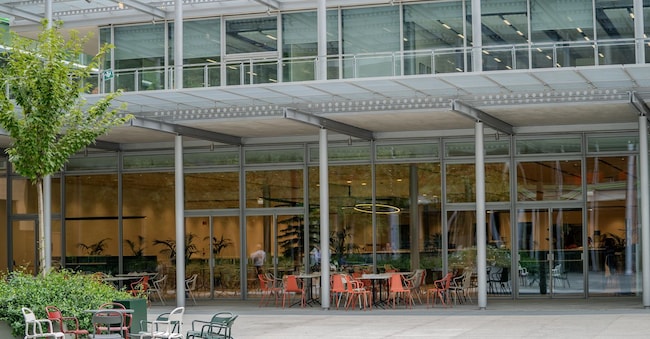
In response to these trends, new initiatives are transforming lunch breaks into more conscious and personalised experiences. In Milan, the Ecooking Campus project, conceived by chef Luigi Cassago at the Monterosa 91 complex, stands out as a unique space oriented towards sustainability and well-being. Open from 8 a.m. to 2 a.m., with an innovative approach, it eliminates traditional canteen features and emphasises the transparency of the kitchen, visible at all stages and optimising the customer experience.

