
LVMH and Kering are well below their highs of recent years
The return to normal levels of demand, sluggish sales to Chinese tourists and cost-increasing policies are weighing on share prices on the stock market

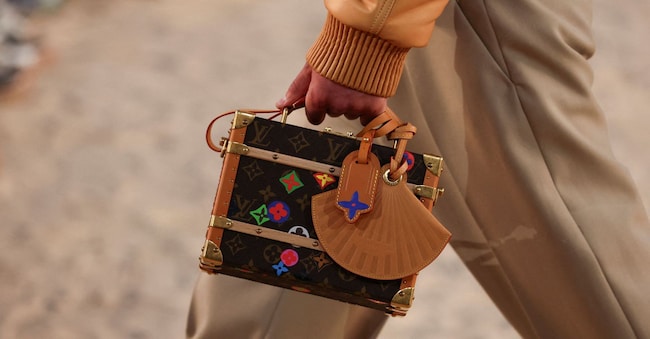
The stock market glory days of 2023 now seem like a distant memory for LVMH. Back then, the group’s shares had become the largest by market capitalisation in Europe, when on 24 April of that year it became the first European company in history to exceed a valuation of $500 billion, with shares worth €900 each (compared with the current 406). This week, however, the group headed by the Arnault family has even slipped out of the European top 10, making way for L’Oréal, with a market capitalisation of around 200 billion euros. The same applies to its long-standing rival, Kering, which had reached 798 euros per share in July 2021 but is now trading at just under 240 euros. For Hermès, the highs are more recent: in February 2025, it nearly reached 2,750 euros per share, whilst yesterday’s stock market price stood at 1,382 euros.
Headwinds
According to analysts, several concurrent factors are weighing on the sector’s share prices, starting with the normalisation of demand – which had reached high levels in the post-Covid period – and the slow recovery in purchases by Chinese customers abroad, due to the government’s tighter measures on international travel. In a report, Mediobanca expresses concern that any prolonged decline in cross-border Chinese tourism could pose a further obstacle to demand for luxury goods, particularly for brands with significant exposure to tourism-related sales in Europe, South Korea and Japan.
There is also no shortage of commentary on the pricing policies adopted by the leading brands, which have seen rising costs – from raw materials to energy – passed on to the end consumer. “The sharp post-pandemic price rises are exacerbating an already difficult situation. A K-shaped economic recovery and the growing polarisation of consumers have weakened the ‘mass market for luxury goods’,” Bernstein points out, citing the example of Chanel, whose new smooth-leather handbags cost less than the classic quilted models. Gucci, part of the group, is moving in the same direction Kering group, whilst, as Bernstein points out, LVMH’s flagship brand, Louis Vuitton, has so far been reluctant to adjust its entry-level prices.
First half of 2026: stabilisation
Looking at the previous quarters of this year, the luxury sector has sought to put the most challenging phase of the cycle behind it. In the first half of 2026, the sector’s revenue returned to growth of 0.6 per cent, following the 12.4 per cent decline recorded in the same period of 2025. The recovery has affected both personal luxury goods, which rose by 0.9%, and other sectors, including furniture & houseware, luxury hotels, private jets, restaurants, luxury cars and yachts, which grew by 0.4%. According to Deloitte’s report “Global Fashion & Luxury Private Equity and Investors Survey 2026”, this figure could signal the end of the downturn and the start of a stabilisation, following a 2025 that ended with overall sales down by 2.4 per cent and an operating profit (EBITDA) down by 9.5 per cent. This stabilisation could also rekindle the interest of closed-end funds. “The fashion & luxury sector – emphasises Elio Milantoni, senior M&A partner at Deloitte Advisory – is proving to be a market of great interest to investors, with 75 per cent of private equity funds intending to invest in the sector in 2026, confirming renewed investor interest and confidence. The cosmetics & fragrances sector is proving the most attractive to investors, whilst interest in the hospitality sector is growing. Majority takeovers remain the preferred investment approach (73 per cent), although there is a growing openness to minority stakes (+9 percentage points compared with 2025). “Against this backdrop, value creation will be driven primarily by revenue growth, buy-and-build strategies and M&A consolidation, as well as international expansion, confirming an approach that is increasingly focused on growth and the realisation of assets’ strategic potential.”
M&A data for the luxury sector
Consolidation remains one of the market’s driving forces. In 2025, the Fashion & Luxury sector recorded 345 M&A transactions, 3.6 per cent more than the 333 recorded the previous year. Personal luxury goods accounted for 145 deals, up 8.2% and representing 42% of the total. The average transaction value was $297 million, whilst that for personal luxury goods fell to $339 million, a decline of 16.5 per cent. Strategic investors accounted for 59 per cent of bidders, whilst financial investors accounted for 41 per cent. In detail, private equity and venture capital accounted for 19 per cent, family offices and private individuals for 12 per cent, and financial services for 9 per cent. The greatest concentration is now on medium-sized targets, with revenues of between $50 million and $250 million, which accounted for 42 per cent of transactions. In the first half of 2026, there were 152 deals, down 6.2 per cent compared with the same period in 2025.


