Lvmh considers divesting minor brands
In Paris, the Arnault family-owned group's shares are up after the FT's rumours, but the balance since the beginning of the year is -30%

The Lvmh group is considering the sale of some non-primary assets among the 75 maisons in its portfolio, marking the beginning of a rationalisation in the growth strategy of the giant headed by Bernard Arnault. According to reports in the Financial Times, the company is considering the sale of brands such as Marc Jacobs and its stake in Fenty Beauty, as well as US wine producer Joseph Phelps Vineyards, as part of one of the most significant restructurings in its history.
In Paris, the share reacted by closing 0.7% higher. However, the balance since the beginning of the year remains heavily negative at 30%, while the loss in value over the past 12 months has been just under 9%.
Rationalisation Strategy
The transaction is part of a broader rationalisation plan launched in response to the slowdown in global demand for high-end goods. The French group is reportedly considering divesting businesses ranging from fashion to cosmetics to spirits, with the aim of freeing up resources and preventing further slowdowns in sales.
The potential divestments come on top of a series of divestments that have already taken place over the past 18 months: these include the sale of thestreetwear brand Off-White, the divestment of the Greater China operations of the travel retailer DFS, and the exit of designer Stella McCartney's 49% stake in the brand.
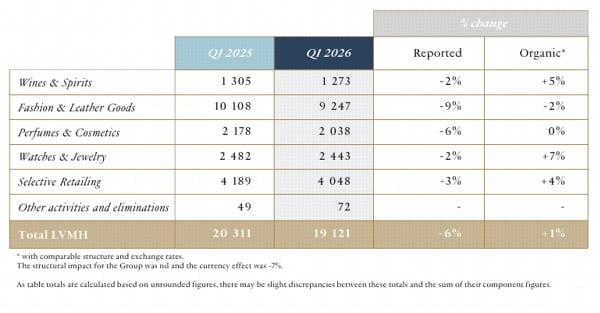
According to the British newspaper, Lvmh is therefore returning to focus on its main profitability drivers, namely Louis Vuitton and Dior. For the latter, it was noted during the conference call with analysts to comment on Q1 2026 that Dior had a predominantly store-focused ready-to-wear presence. However, management expects a gradual strengthening of the offering also in the core categories of leather goods and footwear over the coming quarters. Geographically, the brand has so far shown a relatively weaker performance in Japan and Europe, compared to more solid dynamics in the Americas and Asia.