
Macfrut kicks off, fruit and vegetables focus on exports but the war costs (for now) 200 million
Sales of Italian fruit and vegetables abroad will rise to 6.6 billion in 2025, but imports are also growing: the trade balance is down by 26% and risks worsening due to the surplus of goods arriving on the EU market because of the blockade of some markets caused by the war in Iran

Key points
The fruit and vegetable supply chain will meet from 21 to 23 April at Macfrut in Rimini, where 800 foreign operators from 80 countries are expected. The Italia sector brings a new record for exports of fresh produce, the value of which - 6.6 billion in 2025 - is growing by 11% compared to 2024 (when it was just over 6 billion), but with the handbrake applied by the crisis in the Middle East, which slows down trade and inflames costs, estimated at the moment by Frutimprese at EUR 200 million between energy and fuel price rises, the application of extraordinary surcharges in maritime transport, critical routes, longer transit times and increased land transport costs.
Trade Balance Worsens
Analysing the 2025 trade balance, in terms of quantity (but not value), we still import more than we export: 4,118,164 tonnes (+7%) for 6.2 billion (+14.9%). The trade balance therefore stands at just over 408,000 (down 26.8% compared to 2024) and at -195,960 tonnes (+7.7% compared to the 2024 balance).
Fresh fruit accounts for the largest share of exports, with 3.6 billion and 2.3 million tonnes (both up by 15 and 13% respectively), followed by tubers, pulses and vegetables (stable at 1.9 billion for 1 million tonnes). However, fruit continues to represent a significant figure in imports as well, with +8.3%, demonstrating that self-sufficiency is also decreasing in our core products.
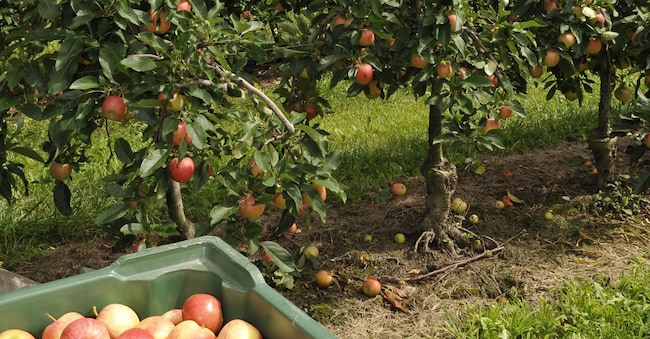
In terms of exports, the exploit of dried fruit (+24.4% in volume and +35.4% in value) and the reversal of the trend of tropical fruit - a typical product in transit from our ports to the rest of Europe - which, after years of growth, is marking time with -18.1% in volume and -10.2% in value. The export podium is (historically) contested by apples (1.1 billion in value), table grapes (973 million) and kiwis (700 million), categories particularly penalised by the war in the Middle East. Italia is in fact the largest European exporter of fruit and vegetables to the region, with a market share of more than EUR 150 million last year.
'The negative effect of the conflict is amplified,' explains Fruitimprese President Marco Salvi, 'if we consider that the Suez Canal was slowly resuming operation and that we were returning to the Indian and South-East Asian markets.' Also of concern is the surplus coming onto the European market (with consequent price drops) from the Arab countries' historical trading partners, such as Egypt and Turkey, whose exports of apples and citrus fruits are currently on stand-by.

