
Mandatory Adas systems on new cars: what they are and why they are needed
New EU legislation requires mandatory adoption of Adas systems in cars. Find out what they are and why they are important for road safety

5' min read
Key points
5' min read
As of 7 July 2024, an EU regulation comes into force that makes certain Adas mandatory and requires the adoption of specific safety criteria for all cars on sale.
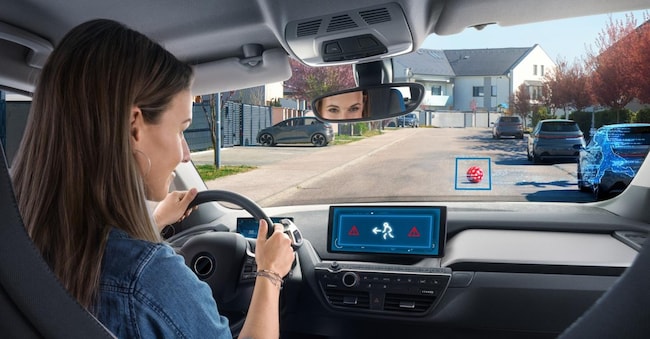
Research estimates that more than 90 per cent of road accidents are caused by human error and only 5 per cent by problems with vehicle operation. Advance Driver Assistance Systems (ADAS) not only improve the driving experience but also make it safer, which is why the European Union has stipulated the mandatory integration of some of these systems in new cars.
Until recently, most of these systems were only available on high-end cars and as expensive options. This legislation aims to significantly reduce the number of deaths and serious injuries on EU roads by making advanced safety technologies mandatory as standard equipment in all vehicles. Furthermore, the aim is to improve the competitiveness of European manufacturers in the global market by providing an initial legislative framework for automated and fully autonomous vehicles. In other words, the basis for autonomous driving is being created.
A standard with several stages of application
.The date of adoption is imminent but the standard was launched a good five years ago, it is in fact EU Regulation 2019/2144 on type-approval requirements for motor vehicles, which included several steps for its implementation. The first step was in July 2022, from which date every car must have certain safety-related driver assistance systems in order to obtain type approval in Europe. Manufacturers, however, had two years to adapt their already type-approved cars, but not all of them were worth it. In order to update the type approval, the cars had to be adapted in terms of both adas and structural and IT safety: not an easy and sometimes costly process. It is precisely the latter that are the most critical elements that, in fact, have made it uneconomic to update certain models of cars such as the Porsche Macan, the Ypsilon, the Fiat 500X, the Panda, the Dacia Duster, the Smart ForTwo, the Mitsubishi Space Star and the Subaru BRZ: some models have been replaced by a new one, others have simply reached the end of their life cycle (Fiat has chosen to 'abandon' the 500X also because of an overlap with the design of the new 600).
Next steps
.From 7 January 2026, type approval will also require cars to be equipped with an extended head impact absorption zone, a pedestrian leg and head protection system and advanced emergency braking systems for pedestrians and cyclists in front of the vehicle (for this last device the deadline is 7 July 2026). But that's not all, by July 2027 the European Commission will assess the effectiveness of the adopted safety measures and systems and indicate any new modifications.

