Parliamentary scrutiny

Manoeuvre 2026, dividends, police, rents: the Senate looks at changes

Mayors warn that the manoeuvre still contains 'severe financial criticalities' that jeopardise their ability to guarantee certain essential services and investments

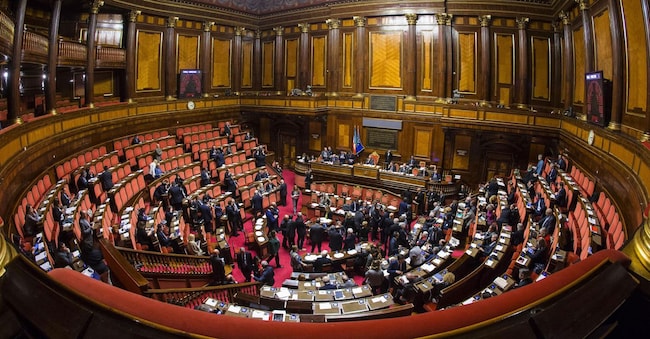
La manovra 2026 è all’esame del Senato in prima lettura

3' min read

Translated by AI
Versione italiana

3' min read

Translated by AI
Versione italiana

Approved ten days ago in the Cdm, the debate on the changes that could be made to the manoeuvre 2026 is already hot. Economy Minister Gianfranco Giorgetti has asked for the 'balances' of the manoeuvre to remain unchanged, but some measures could certainly see adjustments: from short rents, to the retirement age of the police, to the dividends of companies, to measures for municipalities, but also for transport and infrastructure. Considerations - it is noted in majority circles - that reveal a certain irritation in Giorgia Meloni for these continuous tests of strength within the coalition.

A majority summit is still a hypothesis - the day has yet to be made official - to try to bring voices back to greater unity: the aim is that outside distinctions should pass as normal political dialectics, nothing more. Asked whether a new summit of the secretaries of the governing majority would be possible soon, Tajani replied: 'I am always ready to discuss with everyone, if necessary it will be done'.

Loading...

Below are the main points of the manoeuvre under the lens of parties, trade unions and industry associations.

Short-term rentals

The bone of contention is the tightening of taxation on short-term rentals. The flat rate remains at 21% if the first home is rented without intermediation by internet portals, such as Airbnb, otherwise the rate will rise to 26% like second homes. FI and Lega have promised to cancel it because this means 'hitting small landlords'.

Law enforcement

In the face of the increase in the retirement age, the police and military unions denounce that no resources are foreseen in the manoeuvre for the security and defence sector: nothing for new hirings, renewal of contracts and specificity. The Minister of the Interior, Matteo Piantedosi, has however reassured that the resources are there and that in the manoeuvre, on the investment front, 'there will be margins to do a good job'.

Banche

The measures that apply levies on the banking world are one of the chapters from which the manoeuvre expects the most: 4.4 billion. It is unlikely that they will be changed in depth, but it is not excluded that there will be adjustments on some aspects. This has already happened in the past.

Dividendi

The new tax on coupons, which will drain companies of 1 billion a year, is highly contested. The tax, which will hit shareholdings below 10%, will be collected by the State at a rate of just over 1 billion from 2027. The regulation raises taxes on dividends from 1.2% to 24% for shareholdings below 10%. The measure is in the crosshairs of Confindustria, but even in the majority there are those who do not want it, and for Forza Italia it should be reviewed. But the amount to be covered is substantial.

Comuni

The mayors warn that in the manoeuvre there remain 'heavy financial criticalities' that jeopardise their ability to guarantee some essential services and investments. Anci points out that the main node remains current expenditure, burdened by cuts and provisions introduced by previous budget laws, for a total of about EUR 2.08 billion until 2029, with a further contraction of EUR 460 million expected in 2026.

Infrastructure and Transport

Fi is ready to present amendments in Parliament 'to correct' both the rail link between Naples and Afragola, the issue of the C metro in Rome, and the cuts to the Milan metro, after the deficits that emerged from the tables of the Budget law. Then there is the haulage association Assotir, which denounces how the manoeuvre contains 'a new sting of over 200 million euro' for the sector, in light of the increase in excise duty on diesel from 1 January of 4.05 cents per litre. The increase in excise duty will affect about 1 million heavy goods vehicles.

Labour and Contracts

The CISL has asked for some changes to the labour regulations. The first concerns the objective of providing that the 5% taxation on increases in contract renewals concerns only the 'most representative contracts' in order to avoid favouring pirate contracts. It has also asked for the financing of the fund to make the law on worker participation in companies operational.

Copyright reserved ©

Brand connect

Loading...

Newsletter

Notizie e approfondimenti sugli avvenimenti politici, economici e finanziari.

Iscriviti