
04 November 2025
Manoeuvre, Confindustria: real urgency for resources from NRP and energy costs. Ania: in 2025-28 contribution 600-700 million more expected
CGIL: austerity returns. The Cisl considers it 'positive that the consolidation of public finance is continuing in order to get out of the excessive deficit procedure', but remains critical on scrapping and pensions
For feedback, please contact
english@ilsole24ore.com
 Aggiungi Il Sole 24 Ore
ai preferiti su Google
4 November 2025
Manoeuvre: Ania, we will not back down, provided the request is fair
"We have noted that the need for our contribution, aimed at strengthening public finance initiatives, has come up again this year, and we have responsibly decided not to back down, provided that the request is proportionate, fair and reasonable". This was stated by Ania chairman Giovanni Liverani at a hearing on the manoeuvre before the budget committees of the House and Senate. "Every year, insurance companies pay a total of over 12 billion euros in taxes into the state coffers, an amount that is growing year after year thanks to the sector's good health. Beyond the amount and its dynamics, however, it is worth noting that this figure already represents an incidence on the added value of national accounts that is almost double the average for other economic sectors," Liverani stressed.
4 November 2025
Ania, mandatory long term care for new pension fund members
"Non-self-sufficiency care is a time bomb that will progressively place unsustainable burdens on families, or the elderly alone, with a significant social impact. An organic approach is needed, but as a first sign of attention, we propose in this Budget law that Long Term Care (LTC) coverage should become compulsory for new members of the complementary pension scheme, with the cost covered by the state for the first three years, and that the LTC premium should enjoy an additional tax deduction of up to 500 euros," This was said by Ania chairman Giovanni Liverani at a hearing on the manoeuvre before the joint Budget committees of the House and Senate. "In the face of an ageing population, it is crucial to provide a second and third pillar complementary to our National Health Service. On supplementary healthcare, we propose introducing incentives for individual healthcare coverage," Liverani said. "In particular, we propose the elimination of the 2.5 per cent tax on premiums and the introduction of a 19 per cent Irpef tax deduction of up to EUR 750 per year, provided that the policies provide for affiliation with public healthcare facilities under the intramural freelance regime. This would reduce the tax asymmetry between individual health policies and collective health funds and would also allow resources to be recovered for the National Health Service'.
4 November 2025
Ania: in 2025-28 contribution 600-700 million more expected
'In cumulative terms, our contribution in the four-year period 2025-2028 will be more than EUR 600-700 million higher than expected,' he said. This was said by Ania president Giovanni Liverani at a hearing on the manoeuvre before the budget committees of the House and Senate. 'Over the years, in fact, the sector has been called upon several times to make extraordinary contributions. I recall the Tax on Mathematical Reserves (Irm), which has reached EUR 9 billion and which represents a unicum at international level, being, among other things, commensurate with a size of the liabilities and not of the assets. In addition, we have long been paying an IRAP rate (at 5.90%) that is more than 50% higher than the ordinary rate. Finally, the insurance industry during the year has already contributed more than 30% more than originally estimated for the stamp duty on life insurance policies introduced by the Budget Law 2025," he explained.
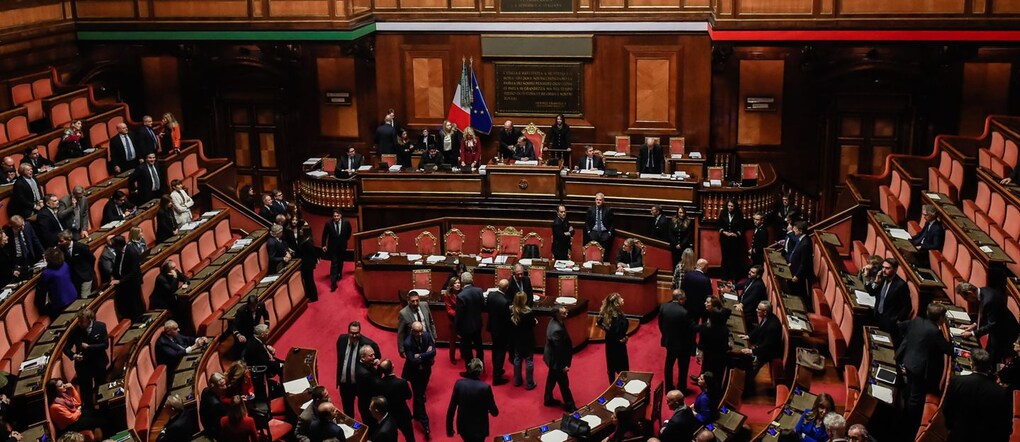
Senato aula discussione manovra 2025. (Imagoeconomica)
Ask the editorial team
Have questions or feedback about this article? Contact our editorial team.
4 November 2025
Ania: correct downsizing of insurance premium deductions
"We appreciate the support for lower and middle incomes. However, the draft law provides for a further restriction of Irpef deductions, limiting them for taxpayers with an annual income above EUR 200,000. Unfortunately, among the deductions being reduced are also those related to insurance premiums for social security, welfare and protection purposes, such as long term care, death or natural disaster policies. Reducing the tax incentives for taking out these covers in a country that is already largely under-insured is in our view the exact opposite of what should be done'. This was said by Ania president Giovanni Liverani at a hearing on the manoeuvre before the budget committees of the House and Senate. "We appeal to Parliament to correct this situation in the emendative: the impact can be estimated at only 12.6 million per year, a very modest amount for the state, but a distracting and diseductive signal for citizens," he added.
4 November 2025
Manoeuvre: aiming for Senate approval by 15 December
The deadline for tabling amendments to the manoeuvre is 14 November at 10 a.m. and that for the groups' recommendations is Tuesday 18 at 7 p.m. This is the outline timetable for the financial bill set by the Senate Budget Committee's bureau, according to chairman Nicola Calandrini. '15 December,' Calandrini explained after the meeting, 'is the date we then indicated as the deadline for approval in the House. But we also aim to go a few days earlier, since we have other commitments and measures to approve such as the anticipation dl'.
4 November 2025
Manoeuvre, Senate Budget Service: more information on Irpef effects
With regard to the reduction of the second Irpef rate for second-tier incomes envisaged by the manoeuvre, 'more information' should be provided on the parameters considered for the 'quantification of the expected revenue shortfalls, in relation to the number of taxpayers who will fall into the second Irpef bracket'. This is what the Senate Budget Service notes in its documentation dossier on the manoeuvre. Again with regard to the IRPEF cut, the Budget Service also notes in the document the need for "indications on the Isa of the affected tax brackets" and "information elements" on the criteria adopted in estimating the lower revenue from regional and municipal surtaxes starting from 2027. But the dossier also asks for additional information on several other topics. For example, on short rentals, the technicians observe: 'it would be useful to provide a representation of the effects of the measure even after the three-year period considered, assessing whether the assumption that 90% of the real estate units will continue to use the platforms for simplification and rapidity of transactions can be a stable hypothesis or subject to a certain variability'. On the rule on fuel excise duties, then, it is observed: 'for the quantification profiles, it is noted that the technical report, while providing a series of information on the methodology used to determine the financial effects of the provision, does not specify the data and elements used for the estimate, therefore it is not possible to make an assessment on the quantification of the higher revenues expected'. As regards the hyper and super depreciation, the dossier points out that the technical report, 'while illustrating the estimation methodology and providing the results of the same, does not make explicit other information such as, in particular, the average net rate for direct taxes. In order to allow a verification of the estimate made, the additional detailed data should therefore be provided'. Additional information is also requested on the Litigation Fund: 'it would be necessary,' the dossier states, 'to acquire information on the national and European litigations to which the fund is destined and explanations on the estimation criteria adopted in the quantification'.
4 November 2025
Confagri: manoeuvre works on investment incentives
The extension to 2026 of the Irpef tax exemption on dominical and agrarian incomes, the detaxation of contract renewals and productivity bonuses, as well as the postponement of the sugar tax and the refinancing of the Nuova Sabatini were all positive. Strong criticism, instead, on the investment incentives front. This was reported by Confagricoltura, which was heard in the joint Senate and House Budget Committees, as part of the examination of the 2026-2028 Budget Law and the 2026-2028 multi-year budget. In particular, with the return of the 4.0 investment incentive in the formula of super and hyper depreciation, excluding the tax credit tool, for Confagri 'the virtuous path that had characterised the last few years and had enabled technological and digital innovation in the agricultural sector is halted'. The same goes for the failure to extend the tax credit for investments by companies in the ZES, the single special economic zone for southern Italy, which is instead guaranteed for all other sectors. "Also 'bordering on unconstitutionality' is the provision prohibiting the offsetting of tax credits against tax debts as from 1 July 2026. Confident that these critical issues will be overcome, Confagri also hopes for the stabilisation of the guarantee measures of the SME fund managed by Medio credito centrale to facilitate companies' access to credit. It is therefore necessary to strengthen the agricultural and agrifood entrepreneurial fabric through instruments aimed at development and generational turnover. As well as incisive public policies to encourage innovation and access to credit, also enhancing alternative finance and, last but not least, encouraging aggregation between businesses, which are often too small, to improve investment capacity and strengthen competitiveness in international markets.
4 November 2025
Cia: manoeuvre is a blow for agriculture
"Such a manoeuvre is a blow for agriculture, nullifying the tax credit for the sector. There is nothing in the Budget Law 2026 that really helps the sector, starting with Article 26, which prevents the offsetting of tax credits with social security and welfare contributions, in fact the main opportunity for recovery for agricultural businesses,' he said. Announcing amendments, the national president of Cia-Agricoltori Italiani, Cristiano Fini, said this during a hearing in the Senate before the Budget Committee. Cia writes in a note that 'the approach of this manoeuvre clearly betrays a pact with farmers who were first incentivised to modernise, and then to invest, but then left without any real possibility of recovering their expenses. Moreover, in the Budget law,' adds the agricultural representative, 'even the new tax credit for investments in capital goods for the sector (Article 96) is insufficient for the sector. While appreciating the government's intentions on this measure, we would like to underline,' Cia comments, 'the meagre financial resources allocated, barely over 2 million euros, as well as, the bureaucratic burden and excessive fulfilments necessary for its implementation. Our agriculture,' says President Fini, 'is at the pole. We need more concrete, strategic and long-term interventions to help a sector under pressure. We appreciate the tax extensions in the manoeuvre, that of the exemption from the payment of agricultural IRPEF, as well as from the excise duty on diesel for activities in the fields, but more courage is needed from the institutions to give a boost to agricultural accounts, which are increasingly marked by high production costs and commercial instability'.
4 November 2025
Budget Bill, Ance, worries about the absence of measures against expensive materials
Ance expresses 'strong concern' over the absence of measures to compensate for the extra cost of building materials in the 2025 budget manoeuvre. At a hearing in the Chamber of Deputies, president Federica Brancaccio warned that without urgent refinancing of funds against the high cost of materials, "many public building sites risk collapse". The builders' association estimates that at least 2.5 billion is needed to pay for work that has already been carried out and to extend compensation to 2026.
In the document filed, Ance points out that prices are still 30-40% higher than the tender prices and that about 70% of Italian construction sites, including many Pnrr, remain excluded from the price revision introduced with the new Code. "This is a real sword of Damocles on growth and employment in 2026," warned builders' president Federica Brancaccio, who called for a concrete commitment by the government and parliament to safeguard the continuity of public works and trust between the state and companies.
4 November 2025
Confcommercio: more resources and adequate measures for growth
"While focusing on households and businesses", the manoeuvre "has limited expansionary effects. The macroeconomic framework is held back by weak consumption and low confidence of citizens and businesses. More resources and more adequate measures are needed to support competitiveness and growth". This was stated by Confcommercio vice-chairwoman Donatella Prampolini at the hearing, expressing "strong concern over the tax relief for contract renewals limited to 2025-2026, excluding over 5 million workers in the tertiary and services sectors" and calling "strongly for the benefit to be linked to the date on which the increase is paid and not the date on which the contract is signed". It calls for "tax relief and subsidised credit for young companies, recognition of the notional contribution for the Iscro of self-employed professionals, extension of the Inps relief for artisans and traders"; on the Irpef cut "extend the measure up to 60,000 euro".
4 November 2025
Confesercenti: minimal effect on growth and consumption
The manoeuvre will have a "minimal effect on growth" and the Irpef cut "minimal on consumption": with reference to household consumption, the additional impulse would be equal to a tenth of a point and would only manifest itself in 2028. Thus Confesercenti in its hearing called for a corrective measure to prevent inflation from dragging income upwards and making people lose their benefits; the restoration of funds for the Caf and the offsetting of tax credits; and the tax relief on salary increases also for 2024; a specific contribution to the big digital players on revenues from digital services to correct the fiscal imbalance, with resources allocated to an Urban Regeneration Fund; a National Trade and Tourism Microcredit Fund, with an endowment of 500 million over three years, to provide micro-loans of up to 50.000 at zero interest to micro-enterprises in trade and tourism.
4 November 2025
Confcommercio: more resources and adequate measures for growth
The manoeuvre "while focusing on households and businesses, has limited expansionary effects. The macroeconomic framework is held back by weak consumption and low confidence among citizens and businesses. More resources and more appropriate measures are needed to support competitiveness and growth". This was stated by Confcommercio vice-president Donatella Prampolini at the hearing, expressing "strong concern over the tax relief for contract renewals limited to 2025-2026, excluding more than 5 million workers in the tertiary and services sectors" and calling "strongly for the benefit to be linked to the date on which the increase is paid and not the date on which the contract is signed". It calls for "tax relief and subsidised credit for young companies, recognition of the notional contribution for the Iscro of self-employed professionals, extension of the Inps relief for artisans and traders"; on the Irpef cut "extend the measure up to 60,000 euro".
4 November 2025
Confindustria: no measures on housing emergency
“Mancano misure specifiche per affrontare l’emergenza abitativa che, tra gli altri effetti, ha quello di ostacolare la mobilità territoriale dei lavoratori e spiazzare l’incontro tra domanda e offerta di lavoro”. Lo ha detto il dg di Confindustria, Maurizio Tarquini. “Il Ddl - ha aggiunto - consente di utilizzare una quota del Fondo sociale europeo per il clima anche per le iniziative del Piano casa Italia previsto dalla Legge di Bilancio 2025, ma non prevede, come sollecitato da Confindustria, misure finanziarie e fiscali, ferma la necessità anche di semplificazioni urbanistiche per favorire la realizzazione di alloggi per lavoratori a basso reddito, studenti, anziani. Si segnala, inoltre, l’assenza di misure per la ricerca industriale e per la logistica intermodale (ferrobonus, sea modal shift). Strumenti utili a potenziare la connettività e la logistica all’interno del nostro Paese e con l’estero; da segnalare, inoltre, la mancanza di risorse per la copertura dei costi del nuovo contratt
Further reading

4 November 2025
Confindustria: reassess penalising tax measures
“La manovra - e non è una novità di quest’anno - presenta anche alcune criticità inattese. Si tratta di interventi che minano l’affidamento dei contribuenti, la certezza del diritto e l’impatto positivo delle misure a sostegno degli investimenti”. Lo ha detto il dg di Confindustria, Maurizio Tarquini, in audizione al Senato sulla manovra. “Tra le critiche relative alle nuove misure fiscali - ha aggiunto -: l’inasprimento della tassazione dei dividendi infragruppo (l’introduzione di una tassazione piena al 24%, in presenza di partecipazioni inferiori al 10%, invece dell’1,2% effettivo attuale). Una disciplina dirompente anche rispetto a quello che accade oltre confine, dove si adottano analoghi sistemi di esenzione, e che cambierà radicalmente l’assetto proprietario dei gruppi italiani, penalizzando la nostra capacità di mantenere e attrarre capitali; il divieto, dal primo luglio 2026, di utilizzare crediti d’imposta agevolativi sul modello F24 per compensare i debiti per contributi
4 November 2025
Confindustria: Real urgency resources from Pnrr and energy costs
Faced with "a zero-balance manoeuvre", Confindustria reiterates "the need to provide Italy with an extraordinary industrial plan" with "three lines of action: investment, competitiveness and an attractive context". At the hearing on the budget law, this was pointed out by managing director Maurizio Tarquini, who emphasised "two real urgencies that complement the manoeuvre": the remodulation of the NRP as "an opportunity to ensure that support for companies of at least 8 billion a year, for a three-year period", which for Confindustria is "the minimum objective"; and "reducing energy prices" with "immediate measures that do not affect budget balances" and "only require the will to act". A third point: to make "reforms at zero cost".
Further reading
4 November 2025
Ugl, consider extending Irpef cut threshold to EUR 60,000
The Ugl 'is in favour of promoting a Pact for the Future between workers, companies and the government, aimed at relaunching the country system, with a common commitment on taxation, income, industrial policies, technological innovation, energy, justice and social solidarity. It is essential to continue to reduce the tax burden: we believe it is possible to consider raising the income threshold to 60,000 euros. It is useful to open a debate on social security, starting with the requirements linked to life expectancy and the extension of other flexibility instruments, in order to arrive at a complete social security reform and the full relaunch of supplementary social security. The need for structural investment to reduce accidents at work remains central," said Luigi Ulgiati, deputy deputy secretary general of Ugl at the hearing on the manoeuvre.
4 November 2025
Cisl: good accounts, but no scrapping and pension measures
La Cisl ritiene “positivo che prosegua il risanamento della finanza pubblica per uscire dalla procedura di deficit eccessivo”, ma resta critica su rottamazione e pensioni. Il segretario confederale della Cisl Ignazio Ganga in audizione sulla Manovra esprime un parere articolato, su una Finanziaria che “nelle dimensioni quantitative è la più piccola dal 2014; le misure espansive sono pari, in rapporto al Pil a metà della dimensione media del periodo 2014/2025. Aggiunge che contiene ”la quinta rottamazione dal 2016, cui si aggiungono tre operazioni di stralcio (2018, 2021 e 2022) e un condono nel 2023: è l’incentivo per chi evade a continuare a farlo. Parte delle risorse possono essere trovate tramite una più incisiva lotta ad evasione ed elusione fiscale”. Giudizio negativo anche sulle norme in materia di pensioni e sul mancato rifinanziamento della legge sulla Partecipazione.
Further reading
4 November 2025
Uil: good on contracts. Criticism on tax, health, pensions
"This economic manoeuvre marks, for the first time, a concrete recognition of the economic, social and political value of collective bargaining, directly linking the fiscal instrument to contractual renewals. It is a positive fact, the result of the dialogue between the Government and the social partners, which we welcome. However, it presents significant criticalities in the chapters on tax, pensions and health, with risks for the exercise of people's protections and rights", said Uil confederal secretary Santo Biondo, during the hearing before the Budget commissions of the House and Senate on the budget law.
"Article 4, which provides for the tax relief on contract renewals and the reduction of the tax on productivity bonuses, goes in the direction that Uil has been asking for years: to support wages through bargaining. Now,' Biondo pointed out, 'it is necessary to make it a structural measure limited to contracts signed by the comparatively more representative social partners at the national level and to extend the income threshold up to 40,000 euro, in addition to recovering the 2024 instalments and extending this measure to the public sector. Moreover, it is necessary, on the one hand, to strengthen second-level bargaining, which is still too weak in small enterprises, and, on the other hand, to make protections such as the Cigs for termination structural.
4 November 2025
CGIL: austerity returns. Wages, pensions and health care hit
A manoeuvre that marks a return to austerity with an improvement in the public finance framework paid for by employees and pensioners who 'have not only experienced a brutal impoverishment due to a profit-driven inflation, left completely free to unload on their shoulders, but have also suffered all the fiscal drain resulting from the non-indexation of the Irpef to inflation', said the confederal secretary of the CGIL, Christian Ferrari, during the hearing at the Budget commissions of the House and Senate on the budget law. Wages, underlines the CGIL, have suffered losses in the last three years 'far greater than the benefits obtained with the interventions made on the Irpef, on the decontribution and its subsequent taxation'.
"What has been recognised with one hand has been subtracted with the other, in a mere roundabout game with zero balance,' Ferrari continued. 'Moreover, the resources 'silently' subtracted through tax drainage have not only not been returned, but have not been allocated, nor will they be, to social spending.
4 November 2025
Le audizioni di oggi
Dopo giorni di scontri in maggioranza - e non solo - ha preso il via la sessione di Bilancio in Parlamento. Che si è aperta con una raffica di audizioni. Un lavoro preliminare che si concluderà giovedì 6 novembre, con l’audizione del ministro dell’Economia Giancarlo Giorgetti davanti alle commissioni Bilancio riunite di Senato e Camera. Saranno quattro i relatori per la legge di Bilancio in Senato, uno per ogni componente della maggioranza di centrodestra - Fratelli d’Italia, Lega, Forza Italia e Civici d’Italia-Udc-Noi Moderati - e l’ufficializzazione, secondo quanto viene confermato, dovrebbe arrivare al termine del giro di audizioni.
Oggi, martedì 4 novembre, la seconda tornata di audizioni. Tra gli auditi, i sindacati (Cgil, Cisl, Uil, Ugl, Confsal, Cisal e Usb), Confindustria, Confesercenti, Confartigianato, Casartigiani, Cna, Coldiretti, Cia, Confagricoltura, Copagri, Ance, Confedilizia e Ania.

