
Manoeuvre, towards partial exclusion of first home from Isee
The hypothesis of eliminating real estate up to the cadastral value of 100,000 euro from the calculation in order to defend the purchasing power of families. Banks, the League calls for a contribution of 5 billion

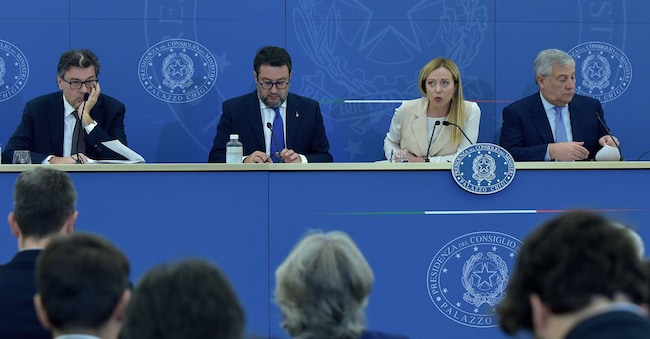
The idea is dear to the leader of the Italian League, Matteo Salvini, who launched it at the end of August from the stage of the Rimini meeting, and yesterday, at the new evening majority summit on the 16-billion-euro manoeuvre for 2026 (the lightest since 2014), it was welcomed, first and foremost by the Minister for the Economy and party colleague Giancarlo Giorgetti. The measure aims to redesign access to bonuses and benefits, from contributions for kindergarten to support for domestic gas and electricity bills and rent, extending a helping hand to families hit by the high cost of living. An objective, that of strengthening the purchasing power of families, which is also fully shared by Prime Minister Giorgia Meloni.
Banks, League aims for 5 billion contribution in 2026
Dall’esito meno scontato è l’altra battaglia che il Carroccio ha portato ieri al tavolo con Meloni, Antonio Tajani (Forza Italia) e Maurizio Lupi (Noi Moderati): innalzare fino a 5 miliardi per il solo 2026 il contributo da chiedere alle banche. Per bypassare il “no” irremovibile del numero uno degli azzurri a ogni idea di tassazione degli extraprofitti, si studia una soluzione sul modello dello schema già introdotto lo scorso anno basato sul congelamento delle imposte differite attive (Dta). Ma, per la Lega, si dovrà trattare di «soldi veri», non di anticipi di cassa o prestiti. Se ne riparlerà oggi a Palazzo Chigi, dove sfilerà per il confronto sulla legge di bilancio il mondo delle imprese, da Confindustria a Confcommercio, inclusi rappresentanti dell’Abi. La trattativa con gli istituti di credito sarà decisiva: è stata Meloni a chiarire che il pacchetto dovrà essere concertato e non dovrà avere «alcun intento punitivo».
Irpef, cut stops for incomes up to 50,000 euro
Tajani's request to raise from 50,000 to 60,000 the maximum income limit to which the reduction of the IRPEF rate from 35 to 33 per cent (a relief of 440 euros) can be applied remains unheeded for the time being. Despite the fact that it is intended to support the impoverished middle class, it would raise the costs from 2.5 billion to 4-5 billion: too much, according to the economy and Palazzo Chigi, compared to the expected benefits. The problem with the five-year tax amnesty called for by the League is also the cost: the agreement on 108 instalments over nine years has been confirmed, but it is moving towards a significant restriction of the audience to 'deserving taxpayers' only.
Pensions, selective sterilisation
Doubts also remain on the other intervention called for by the Carroccio: the freezing of the three-month increase in the retirement age to adjust it to life expectancy, planned for everyone in 2027. One of the solutions under consideration would provide for a gradual selective sterilisation: only those who will have turned 64 in 2027 could have access to the complete freeze, along with workers who carry out demanding activities. In addition to the extension or revision of instruments such as Quota 103, Women's Option and the Ape sociale, the hypothesis of encouraging complementary pension schemes and the use of the severance pay fund to supplement the contribution pool is taking shape, measures that aim to provide flexibility in leaving without immediately unloading the cost on the public accounts
Meloni's signal on healthcare
The Prime Minister has reiterated the need for an injection of resources for public health, a signal also for the oppositions in the trenches: the additional resources in the manoeuvre could rise above the 2 billion imagined so far, first of all to launch a maxi three-year recruitment plan and stem the haemorrhaging of personnel from the National Health Service. The priority? Nurses, whose lack (or flight) is now an emergency.


