
Marano: ‘Big Tech companies should give back to publishers the wealth they take from them’
Calls for funding for the publishing sector, prior consent for AI and regulatory intervention

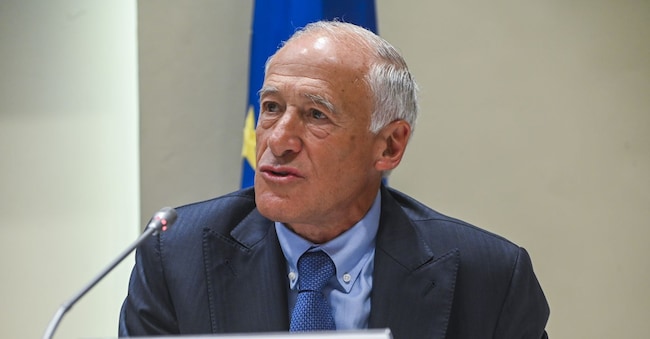
The big tech companies simply rake in the money. Publishers foot the bill. And, ultimately, it is the public who pay the price, called upon to support a news sector that is losing resources whilst the digital giants monopolise advertising, data and attention. This is the starting point for Antonio Marano, president of Confindustria Radio Televisioni, in this interview with *Il Sole 24 Ore*, as he sounds the alarm over an issue he believes is not being taken seriously enough, alongside a shift that must be stopped: ‘We are not asking for a subsidy: we are asking that those who extract value give it back, and that those in government act in time.’
Marano’s ‘J’accuse’ takes direct aim at the major global platforms and AI operators, and goes beyond the dispute over revenues: ‘We are witnessing a shift in power from national governments to Big Tech. This is not merely a technical evolution.’ It is an unprecedented concentration of power, he argues: a handful of entities possess the technology, data, computing power and access to the public. The president of Confindustria Radio TV calls it ‘technological supremacy. You do not control a market; you control the tools by which the market functions and operates.’
The driving force behind this power is a ruthless cycle: content is produced by others; platforms collect, distribute or rework it; the relationship with the public and an increasing share of the economic value remain in their hands. ‘But behind every piece of content there are journalists, authors, producers, directors, actors and technicians. If big tech companies use this content without paying for it, the impact ripples out to affect everyone and the country’s industrial system.’ All the more so as the figures point to an evolutionary shift that has now become the starting point. In the five largest European markets, the internet now accounts for around three-quarters of total advertising expenditure. Focusing solely on the radio and television sector, the market was worth around 7.5 billion euros in 2025, compared with nearly 9.7 billion in 2011 (source: Agcom): a reduction of nearly a quarter over the course of fifteen years.
Artificial intelligence can, at this stage, accelerate this hollowing out. Previously, the platform directed the reader to a publication; now it can offer them the answer directly. This is the ‘zero-click’ model. “With generative artificial intelligence, we are moving from intermediation to replacement,” warns Marano. This is why he is calling for the use of content to be authorised in advance: “It must not be the publisher who discovers the exploitation and objects afterwards: it must be the AI developer who demonstrates that they have the right to use that content.” Prior consent and the reversal of the burden of proof are the proposals put forward in collaboration with Confindustria Cultura Italia and Fieg.
On the economic front, the appeal leaves no room for misunderstanding. A portion of the revenue generated by big tech companies in the Italia market must be channelled back into the print media, radio, television and the book publishing industry. ‘At present, Italians are footing the bill for support to the publishing sector, through the licence fee and public funding. Those who extract value – those who appropriate what others have produced and developed over the years – must pay.’


