Digital Economy

Mark Zuckerberg is not satisfied with his artificial intelligence

This is how one can explain the super-investment of some USD 14 billion in the start-up Scale AI.

by Alessandro Longo

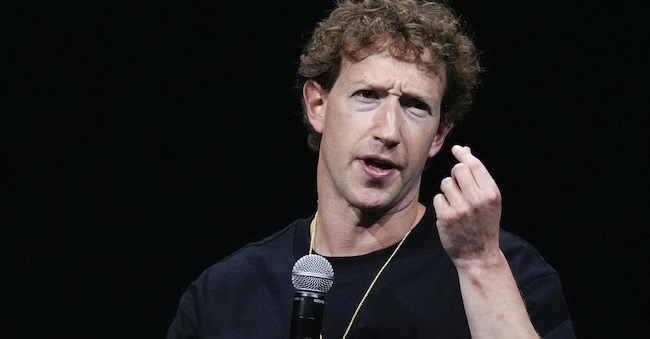
Mark Zuckerberg. (AP)

2' min read

2' min read

Mark Zuckerberg is not satisfied with what Meta is doing on artificial intelligence. Thus one can explain the super-investment of around 14 billion dollars in the start-up Scale AI.

We need to make up ground. But not only that. The main objective of this operation seems ambitious: to strengthen Meta's position in the global race towards general artificial intelligence (Agi), closing the gap with competitors such as OpenAI, Google and Microsoft, which have accelerated greatly on this front in recent years. The head of Scale AI, Alexandr Wang, was immediately placed by Meta in a dedicated Agi lab.

Loading...

Wang has built a reputation as an ambitious leader who understands both the technical intricacies of artificial intelligence and how to build a company that does not focus solely on research, according to anonymous reports from Meta employees to international press sources.

The agreement also stipulates that Scale AI will discontinue collaborations with other big tech companies (OpenAI, Google), thus strengthening Meta's competitive recovery.

Mark's disappointment

.

Basically, there is a problem. Zuckerberg is counting on Wang to catch up with competitors in this field, after the disappointing launch of the company's latest Llama AI models.

Yes, Llama is appreciated in the open source community, but it has so far failed to establish itself as a truly competitive alternative to the OpenAI, Google or Anthropic models. In fact, Meta may also have chosen the open route to differentiate itself from rivals that seem more advanced in an absolute sense.

In addition, commercial deployment and adoption by developers and companies has not reached the hoped-for levels.

Why Scale AI

But why does Scale AI fit into these recovery and revitalisation objectives of Meta? The start-up specialises in collecting, cleaning and labelling large-scale data, an activity that is fundamental to creating increasingly powerful and reliable AI models.

The company operates a network of more than 100,000 employees who provide superior data by combining human labour and automation ('human-in-the-loop'), an approach that allows training models that are more accurate and perform better than those based only on automatically generated data.

Scale AI has already worked with OpenAI, Google and Meta itself, but with this investment Meta is guaranteed priority access to the start-up's data and services, as well as bringing in Wang, who will head a new internal division dedicated to Agi.

Why doesn't Meta buy 100 per cent of Scale AI?

.

Meta is not buying the whole company, but 49 per cent. The decision to stop at 49 per cent is strategic: it serves to avoid problems with antitrust, as Meta is already under scrutiny for its previous acquisitions (WhatsApp, Instagram). This way, Meta can still control access to Scale AI's data and expertise without risking regulatory blocks.

This strategy is similar to that of companies such as Google and Microsoft, which have hired prominent leaders in the field of AI from the start-ups Character.AI and Inflection AI, acquiring significant shares in these companies rather than buying them directly.

Copyright reserved ©
Loading...

Brand connect

Loading...

Newsletter

Notizie e approfondimenti sugli avvenimenti politici, economici e finanziari.

Iscriviti