Marketing

Massimo Beduschi: 'Uncertainty hits budgets, advertising tries to resist'

The ceo and chairman of Wpp Media Italia assesses the impact of the war on the advertising market

by Fabio Grattagliano

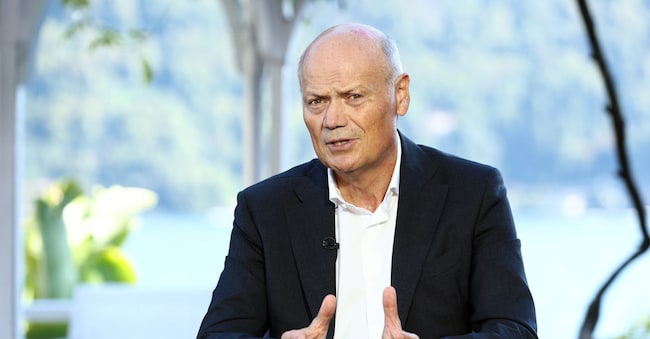
Massimo Beduschi  Imagoeconomica

4' min read

Translated by AI
Versione italiana

4' min read

Translated by AI
Versione italiana

"Theadvertising market is holding up despite the war, but if the conflict were to continue, the expected growth would slow down to +5.1% in 2026, with a loss of more than EUR 150 million and a heavier impact in 2027. The effect would be more limited in the event of a quick resolution: in this scenario, the market would maintain a growth of around +6.5%, recovering the postponed investments in the second half of the year. However, it remains a difficult situation to outline, in a context characterised by marked volatility and with conditions that change abruptly in a matter of hours". These are the words of Massimo Beduschi, ceo & chairman of Wpp Media in Italia, Italy's leading media company, who paints a picture ofadvertising investments in our country in the light of geopolitical tensions and the transformations taking place in the market.

Beduschi, how much is the war factor weighing on investors' choices?

Loading...

It is weighing mainly in terms of uncertainty. The mechanism is well known: rising energy costs, inflationary pressure and reduced purchasing power. This does not stop investments, but makes them more cautious, more selective and often more tactical. Especially in the last month we are seeing signs of a slowdown, particularly in the more traditional media.

So there is no generalised braking?

No, we are not facing a blockade and that is why I want to remain optimistic. The advertising market is once again proving to be more resilient than the real economy. Growth is slowing down, but remains positive even in the most complex scenarios. The key variable is the duration of the conflict. If the crisis is resolved in a few weeks, the impact remains marginal and recoverable. If, on the other hand, it lasts for months, the effect is amplified and becomes structural, especially on the following year.

Why does the real risk shift to 2027?

Because that is where the cumulative effects are unloaded: high energy, rates, consumer confidence and corporate margins under pressure. It is an impact that builds over time and is then reflected in budget marketing.

What is the main factor holding up the market today?

The presence of very solid structural drivers. The first is the strong concentration of the market: about 80% of investments go through the main operators, especially digital. This ensures stability even in times of turbulence.

Digital continues to push.

Absolutely. Some platforms are experiencing significant growth. The Gamt (Google, Amazon, Meta and TikTok) alone account for over 85% of investments in the medium and 70% of their revenue comes from small & medium business. Meta has forecast 30% growth globally in Q1 2026, despite the geopolitical environment.

There is also a new geography of investors. How heavy are the Chinese brands?

More and more. Some Chinese companies such as Temu, Shein or Byd are increasing their advertising expenditure by up to 50% in international markets, including Italia. It is a dynamic linked to the weakness of domestic demand that drives them to seek growth abroad.

What effect does this pressure have on the Italia market?

Competitive intensity increases. In many sectors, not only is the advertising pressure not reduced, but it grows precisely because very aggressive new players are entering.

Another driver is ecommerce.

It plays an increasingly central role, in Italy it exceeded 65 billion euro, with a growth of +7%. Retail media is now the third largest advertising medium, with over EUR 750 million and double-digit growth.

What role does artificial intelligence play instead?

It is anaccelerator. It is creating new categories of advertisers and new monetisation models. But above all, it is compressing competitive cycles: whoever enters first quickly gains visibility shares.

Which sectors are suffering the most?

Luxury, tourism, energy, retail and food. Tourism is immediately affected by the perception of instability. Luxury suffers from falling international demand. Retail is squeezed between margins and consumption.

How are companies reacting on the communication front?

They scale back more aggressive campaigns and shift resources to more efficient activities or those closer to sales.

Does the tone of communication change as well?

Yes. More sober, more value-oriented and less aspirational. Brands must be coherent with the overall context.

Did the Milan-Cortina Olympics turn the spotlight on the role of the event economy?

It remains an important driver, especially for TV and Out of home. Major events generate incremental investments (this will also be the case with Italy out of the World Cup) and help to support traditional media.

Television holds its own.

Yes, also thanks to the advanced component, which is now worth around 20% of revenue and is growing in double figures. It is a Tv that is increasingly integrated with digital.

And the other means?

Out of home benefits from digitisation and events, with the digital component now close to 40%. Audio continues to grow. The print media remains weaker, but can intercept moments of high attention.

What should advertisers do today?

Avoid excessive defensive reactions. Exiting the market or reducing visibility too much can be a big mistake. Because the space left vacant is quickly occupied. And today, with Ai and the entry of new players, this process is even faster.

Copyright reserved ©
Loading...

Brand connect

Loading...

Newsletter

Notizie e approfondimenti sugli avvenimenti politici, economici e finanziari.

Iscriviti