International Day

Mattarella: 'Nurses army of good: prevent young people from going abroad'

From the 'heroic gestures' in Gaza and during the Covid pandemic evoked by the President of the Republic to the fundamental role in the health service recalled by Health Minister Schillaci: the portrait and demands of the profession celebrating 100 years of history

by Barbara Gobbi

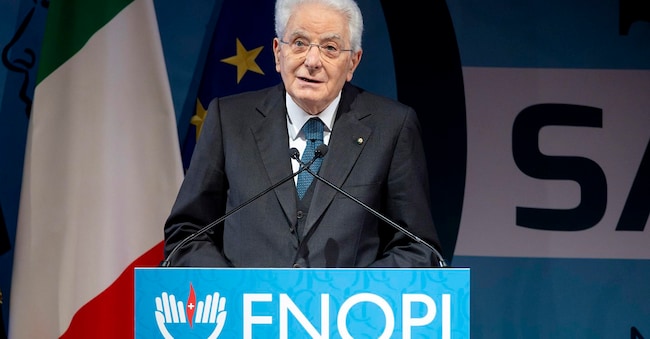
Il Presidente Sergio Mattarella alla cerimonia in occasione del centenario della giornata internazionale dell’infermiere, Roma, 12 Maggio 2026.  ANSA

4' min read

Translated by AI
Versione italiana

4' min read

Translated by AI
Versione italiana

Nurses as an 'army of good' to whom goes the 'gratitude of the Republic'. And, also for this reason, a category to be supported in numbers, in the face of the 462,000 that today are not enough to cover the social and health needs of a changing and ageing population and a National Health Service in need of new organisational models. In a context in which, as the Head of State emphasised, 'the universal right to health is a cornerstone of our democracy and our very freedom'.

The figure of the International Nurses' Day, celebrated in Rome by the National Federation of Orders (Fnopi), is outlined in the words of President of the Republic Sergio Mattarella and President Barbara Mangiacavalli.

Loading...

The Army of Good

"Nurses and nurses gathered in national associations constitute a veritable army of good - said the President of the Republicspeaking at the Auditorium Antonianum in Rome -. I do not hesitate to compare those made by your colleagues, in Gaza, where an already fragile health system has been demolished, destroyed, as has happened elsewhere". Then the reference to the commitment during the maxi-emergency six years ago: "I particularly want to remember the decisive contribution and passionate dedication that has contributed to the Covid pandemic, dramatic, long emergency that you experienced with huge sacrifices and with several victims and that someone, forgetting the many deaths of those tragic days, tries to dismiss it as little more than a mild flu - has added -. Leading one to forget the often heroic efforts and the suffering of doctors and nurses, of all staff health care. On this day, I would like to dutifully reiterate the Republic's gratitude for what you have done," the President said.

Right to Health Cornerstone

"Health is a pillar of welfare, of the European social model. The universal right to health is a cornerstone of our democracy and our very freedom. There should not even be any need to remind us that the necessary entrenchment of healthcare services cannot tolerate disparities between territories, starting with the inland areas of Italia: that would be tantamount to an unequal right to health for citizens,' Mattarella further stated.

A 'home' for young people

The President emphasised that the 462,000 nurses in Italy today are few in number. "We know that this is an insufficient number," he said, "compared to the population's care needs. It is an issue that cannot be avoided and that calls for training and consideration of the centrality of this function, which is essential for the functioning of society as a whole'. Hence the call to 'prevent our young professionals from going abroad to find recognition and better salaries than those we offer'.

The call to young people had come immediately before from Fnopi President Mangiacavalli. Under the slogan 'Born to care. Trained to excel', Mangiacavalli recalled that 'enhancing nursing means promoting organisational models that foster functional, healthy and safe working contexts, because they are the prerequisite for effective, person-centred care. It is necessary to promote clear and structured career developments,' he added, 'and to give, also from an economic point of view, recognition in line with the actual degree of specialisation, with the university qualifications obtained, and with the life plans of young nurses. To them, to young people, we must speak today. To those who have already chosen this profession and to those who are about to do so. It is their needs that we must listen to. The nursing profession must be for them the welcoming home to return to, but also the open ticket to freely choose who to be in society today".

The new degrees

The first professional boarding schools came into being just over one hundred years ago by Royal Decree. Today, even educational tools are more and more complete and qualifying: nursing, Mangiacavalli stressed, "is no longer an auxiliary profession, but an academic discipline with an exclusive object of study and a recognised scientific dignity. It has been a decade of demanding challenges to bring us into line with European standards. A commitment that in 2006 was sealed by the first PhDs, ideally closing the circle of higher education. Today, that vision is definitively fulfilled. The three new specialised courses, which flank the already consolidated Laurea Magistrale, represent the crowning achievement of a century of sacrifice and commitment. We started from the boarding schools to arrive at the top of the research and clinical levels'. The reference is to the ministerial decrees - registered in recent months - establishing three new Master's Degree courses in Nursing Sciences: Primary Care and Family and Community Nursing, Neonatal and Paediatric Care, and Intensive and Emergency Care.

Health service to innovate

But a real change of pace, is the warning coming from the nurses, is the National Health Service as a whole: "We are the daughters and sons of one hundred years of study and work, and today we assume the responsibility of being protagonists of the future of health care in our country," is Mangiacavalli's premise. "But today's health needs are not the same as yesterday's and, consequently, the answers must also evolve. A healthcare system called upon to deal with increasing complexity cannot limit itself to replicating outdated models, but must reorganise itself, enhancing the professional nursing presence. The pandemic has highlighted the need to strengthen territorial models and proximity, without diminishing the hospital, by investing in training, careers, and adequate economic recognition'.

These words were 'espoused' by Health Minister Orazio Schillaci: 'Today,' he said, 'we are called upon to deal with increasingly complex and multidimensional health needs, very often not only health, but socio-health. The role of nurses has become fundamental not only in direct care, but also in the management of care pathways, prevention, health education, and continuity of care. With the introduction of specialised master's degrees we want to respond to the more complex needs of a changing healthcare system and society. As President Mangiacavalli emphasised, it is not only a matter of expanding the educational offer and career opportunities for nurses - an objective that I also consider fundamental and rightful - but also of jointly enhancing that model of care that puts the person at the centre, and of influencing the evolution of your profession".

Copyright reserved ©
Loading...

Brand connect

Loading...

Newsletter

Notizie e approfondimenti sugli avvenimenti politici, economici e finanziari.

Iscriviti