

Mattarella: Opposition to vaccines is disconcerting; we must stand up to those who poison public opinion
The Head of State highlights the contradictions of our times: research advances and brings people together, whilst fake news and wars kill and drain resources

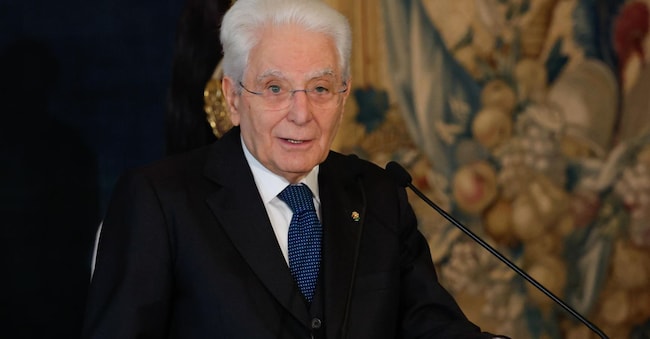
“Research and science are saving more and more lives, yet we still see irrational beliefs and destructive fake news spreading, which keep even small sections of the population gripped by fear. Prejudicial opposition to vaccines is one of the most disconcerting symptoms: when we are confronted with tragic news stories, involving adults or children who risk or even lose their lives – lives that could easily have been saved – we feel the need to counter the efforts of those seeking to poison public opinion.” This was stated by the President of the Republic, Sergio Mattarella, whilst marking ‘Research Days’ at the Quirinale, highlighting the other great contradiction of our times. “Research calls for a joint effort and collaboration between different countries, different continents and different cultures,” he said. We saw this during the fight against the Covid pandemic: yet today, in addition to the resources siphoned off by senseless wars and attempts to extend military conflict to every corner of the earth and even into space, we are faced with new material and immaterial barriers rising in various fields, hindering the international action needed to prevent and combat existing outbreaks and the risks of new pandemics.”
Research achievements
For Mattarella, research must not stop. “As soon as we reflect on the progress made in the fight against cancer, we realise just how great a leap forward has been achieved in just a few decades,” emphasised the Head of State. “Research looks to the future. It prepares it. It builds it. Always: after every milestone, after every success. To ensure we do not lose sight of the meaning and value of its work – including its social impact – it is useful, from time to time, to pause and remember where we started. The Days of Research stem from an insight that, just over sixty years ago, united the founding scientists of AIRC. The driving idea was as simple as it was surprising to the common sense of the time: cancer can be defeated. And the tool, the path, to victory is research. People were even cautious about uttering the name of the disease. And when someone discovered they had it, it was not uncommon for them to risk facing an absurd social stigma.”
The value of prevention and inequalities
Alongside treatments, however, we must recognise the effectiveness of prevention, which also depends on its practical accessibility. “It is unacceptable that there should be regional disparities which, in certain areas or regions, limit access to screening and healthcare services,” explained Mattarella. Nor can we accept that financial difficulties should become obstacles or, indeed, barriers to treatment. Early diagnosis is the most effective tool for combating cancer: this crucial opportunity must not be influenced by social or regional differences.”
Mattarella then pointed out that the National Health Service was established to ensure that the right to healthcare is a full and fundamental right of citizenship. “Its purpose would be undermined if the available resources, the range of treatment on offer, or the quality of facilities and infrastructure,” he noted, “were to widen rather than narrow inequalities.”
The long road ahead
For Mattarella, “from the achievements of research and medicine, and from the fight against cancer, a lesson emerges that transcends the confines of the laboratory: the individual remains at the top of the scale of social values. You researchers here today know full well that what, at a given moment – however long that may be – seems impossible can be made possible by human passion and determination. We wish to – and can – draw from this a source of confidence and hope even beyond the field of cancer research. There is still some way to go in this regard.” The most aggressive cancers and the rarest types are frontiers that still need to be crossed. “And, certainly,” the President of the Republic hopes, “they will be. Research must not stop: it never stops – I repeat – never. We know we need it and we know we can count on it.” This is why “Research Days” are seen – and experienced – as a message for society as a whole: “They help to remind us that the fight against cancer does not begin in hospitals, but much earlier, through prevention and the reduction of risk factors,” concluded Mattarella. “A large proportion of cancers could be prevented by addressing factors and behaviours that can be changed.”

