The Democratic success was complemented by two of the party's candidates who were at the same time elected governors of large states, Virginia and New Jersey. Leading moderate campaigns but united by a common denominator, the no to Trump's policies. The US elections were local and statewide, but they equally sent a clear message, a slap in the face to the President at the one-year mark of his term. Analysts say it may reflect a disenchantment of the electorate with his more aggressive policies and economic management, from immigration and civil rights to trade tariffs. An economic and political malaise that yesterday cracked the broad front that Trump had built in past elections: this time the Democrats gained significant percentage points among Hispanic and black minorities as well as young people, and strengthened in suburbs and provincial areas.
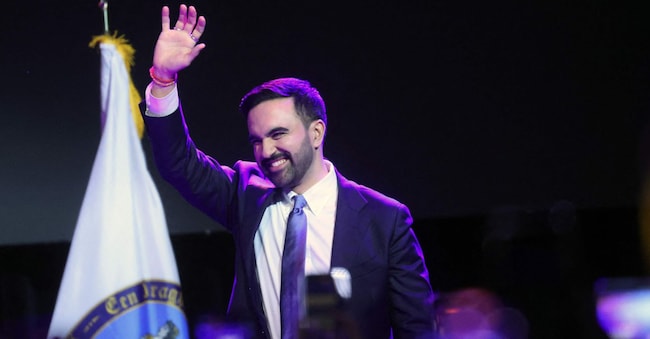
The outcome of the Virginia gubernatorial race, with the polls closed at 7pm, was the first to come in: Democratic candidate Abigail Spanberger won, with 56.2% to her Republican rival's 43.6%. She will also be the first woman to lead the state. Then it was New Jersey's turn, where success went to Dem Mikie Sherrill with 56.7% against her pro-Trump opponent's 42.8%. Finally it was Mamdani's turn: with over 80% of the ballots counted, the AP called the race in favour of the young politician who boasted 50.4% of the vote against Cuomo's 41%.
The New York mayoral race has attracted the most attention due to the presence of a new face, 34anne Mamdani. Of Indian origin and born in Uganda, he was aiming to become the first Muslim and the first South Asian-born politician to be elected to the city's leadership. And he has also become a leading exponent of the Democratic left, while in the opposition the future anti-Trump strategy in the next national elections, the mid-term elections for Congress at the end of 2026, is being debated: whether to adopt more progressive or more moderate campaigns, or better still how to unite the different souls in a new coalition capable of generating enthusiasm and winning. In New York, a sign of the stakes in the challenge between Mamdani and Cuomo, more than two million voters voted, a record since 1969. A third candidate, Republican Curtis Sliwa, took about 7% of the vote.
President Trump took the field in the challenge in New York right up to the last minute: he backed Mamdani's great rival, himself a Democrat, Cuomo, who ran as an independent but also courted moderates and conservatives and denounced his opponent as an extremist. Not only that: Trump threatened to take away federal funds from the city if the left-wing candidate won, and in a social media post during the vote he called Jewish voters who voted for the candidate 'stupid', accusing him of anti-Semitism, an accusation also made by Cuomo. And rejected instead by Mamdani, who supports Palestinian rights and is a harsh critic of Israel but said he will fight against anti-Semitism.
More generally, Trump also revived, without providing evidence, accusations of 'gigantic election fraud', particularly in Democratic states, and promised criminal investigations particularly in California, where a referendum was under way, on the suppression of the conservative vote. An error later corrected in the voter lists in a Pennsylvania county, itself the scene of local elections, was called a conspiracy by right-wingers. Even in New York there was no shortage of controversy: Elon Musk, back close to Trump, accused the local ballots as flawed because they indicated Mamdani twice as the candidate of two parties, Democrat and Working family party, while Cuomo, his chosen candidate, had only one box as an independent. However, this has always been the norm for all elections in New York.