Prevention

Dying of measles in New York in 2026: a warning for an Italia that is ‘lukewarm’ on vaccines

Italian paediatricians sound the alarm following the death of a child in the US, partly due to misinformation: here in Italy, despite the compulsory vaccination policy, coverage with the second dose stands at just 84.45 per cent

4' min read

Translated by AI
Versione italiana

4' min read

Translated by AI
Versione italiana

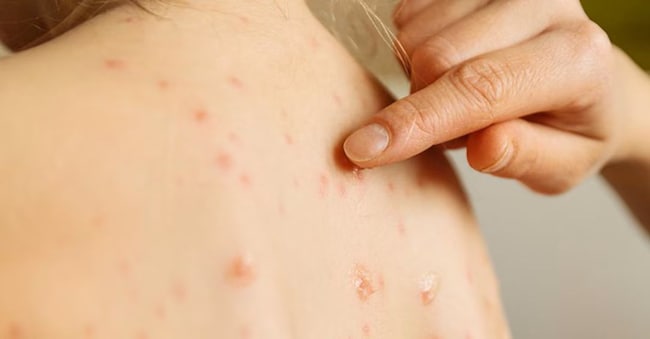
New York has recorded its first measles-related death in thirty years: a child, part of a growing outbreak in the state that has already infected over 170 people. The death occurred in Lewis County, in the state’s interior – an area home to Amish and Mennonite communities, situated north-east of Syracuse – according to a joint statement from the county and state health departments. As of 14 October, Bloomberg news agency reports, the county had confirmed 15 cases of measles, all involving unvaccinated individuals.

There is (unfortunately) enough evidence to support Italian paediatricians in renewing their warning about the lack of measles vaccination coverage in Italia. It should be noted that, in recent days, the Head of State, Sergio Mattarella, had spoken out on the issue of ‘vaccine hesitancy’, describing opposition to vaccines as ‘alarming’.

Loading...

According to the figures – as highlighted by the Italian Paediatric Society (SIP) – our country, as reported by the European Centre for Disease Prevention and Control (ECDC), has the highest number of measles cases in the EU and the European Economic Area: 651 in the last twelve months, accounting for over a quarter of those recorded. A record that the specialists themselves describe as ‘worrying’, accompanied by an incidence rate more than double the European average (11 cases per million inhabitants compared with 5.1), which brings the issue of still-insufficient vaccination coverage back into the spotlight.

Vaccine scepticism and fatal side effects

Over the past two years, measles has been spreading across the United States at an increasing rate, in parallel with falling vaccination rates. This has weakened the herd immunity needed to contain outbreaks and protect those who, for various reasons, cannot be vaccinated. Compounding the problem is the paradox of a Secretary of Health and Human Services, Robert F. Kennedy Jr., who – with the full backing of US President Donald Trump – has raised unfounded doubts about the safety of vaccines. This has turned what was once a routine childhood practice into a political issue. ‘This is the first measles-related death in New York in the last 30 years; a tragic reminder of what is at stake when, from Washington, a decade’s worth of progress made to protect American citizens from preventable diseases is deliberately undermined,’ said Governor Kathy Hochul in a post on X.

In neighbouring Pennsylvania, an outbreak affecting over 1,430 people has resulted in five deaths. The nature of these deaths has been called into question by Kennedy, sparking a political row with Governor Josh Shapiro. The Centres for Disease Control and Prevention (CDC) have confirmed only three of these deaths – a stance that marks a departure from previous practice – whilst the agency is working with an external group of epidemiologists to define precisely what constitutes a death attributable to measles.

The US outbreak

The United States is facing its most serious outbreak in decades: this year, the CDC has reported 4,852 cases across 45 states. In November, the country risks losing its status as a nation where measles has been eradicated – a status it has held for a long time – should sustained transmission of a viral strain be confirmed for a period exceeding 12 months. In October, Governor Hochul declared a state of emergency in response to the rise in cases, releasing state resources to enable a swift response through testing and vaccination campaigns. As of 24 October, 178 cases of measles had been recorded in New York State, eight of which were in New York City. According to the CDC, the measles, mumps and rubella (MMR) vaccine is 97 per cent effective in preventing infection, provided that two doses are administered. In August, President Donald Trump issued an executive order recommending that the combined vaccine be split into separate injections, whilst also making unfounded claims linking vaccines to autism. Measles is, as is well known, a highly contagious disease, with a mortality rate of between one and three cases per 1,000 people.

Italia falls short of its target 10 years after the introduction of compulsory vaccination

Almost ten years after the introduction of compulsory vaccination in 2017, progress has been uneven. According to an analysis by the Italian Paediatric Society (SIP) based on official data from the Ministry of Health, between 2016 and 2024, coverage with the first dose of the measles vaccine rose from 87.26 per cent to 94.77 per cent, approaching the 95 per cent target. Coverage for the second dose, however, has increased much less, from 82.24 per cent to 84.45 per cent, remaining well short of the coverage target required to eliminate measles. ‘The death of a child from measles in the United States, which we heard about just yesterday, serves as a reminder that we are not talking about a harmless disease. The new European data are a warning we cannot ignore: measles continues to circulate and Italia is paying the price for vaccination coverage that remains insufficient. The priority is to identify and catch up those who are not adequately protected, not only among children, but also among adolescents and young adults,” says Rino Agostiniani, President of the Italian Paediatric Society. ‘Whilst progress has been made with the first dose, coverage with the second dose not only remains insufficient but has even shown a slight decline in recent years,’ observes Rocco Russo, head of the SIP’s Technical Committee on Vaccinations. This means that there are still people who do not complete the vaccination course, contributing to the persistence of groups susceptible to infection. The aim must not only be to increase the number of children who start the vaccination programme, but to ensure that they complete it. A concrete and coordinated effort is needed from all those involved in the vaccination process, because gaps in coverage can have extremely serious consequences, including the loss of lives that vaccination could have prevented.”

Copyright reserved ©
Loading...

Brand connect

Loading...

Newsletter

Notizie e approfondimenti sugli avvenimenti politici, economici e finanziari.

Iscriviti