

Measles is on the rise again: Italia tops the European rankings, with concerns also mounting in the US. The decline in vaccination rates is a major factor
Whilst the Italian average for the first dose is just below the 95 per cent threshold recommended by the WHO for herd immunity, the booster dose is a cause for concern, with coverage standing at just 84 per cent

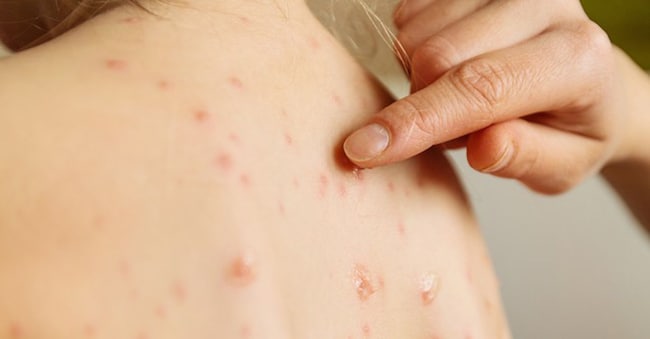
More than a quarter of the measles cases recorded in Europe over the past year have been in Italy, with the number of infections across the continent having well exceeded 2,000. This is by no means an enviable record, given that we are not talking about a trivial childhood rash illness, but one of the most contagious infections, which can be very dangerous and fatal, and which was thought to have been all but eradicated. This is a warning sign confirming that measles continues to circulate in Europe, with only five countries having recorded no cases in the past year: the latest monthly update from the European Centre for Disease Prevention and Control (ECDC), published in recent days, sets out the figures for the period from 1 September 2025 to 31 August 2026, which shows that Italia, with 653 cases, accounted for 28 per cent of the total 2,335 measles cases reported in the EU, with an incidence of 11.1 cases per million inhabitants – above the European average of 5.1 per million. Italia is the European country with the highest number of infections, followed by Bulgaria (564), Romania (255), Spain (230) and France (146). The highest number of cases relative to population (87.6 per million), however, is recorded in Bulgaria. What is striking – as the report highlights – is how measles continues to affect almost exclusively unvaccinated people, the majority of whom are young adults; moreover, given its highly contagious nature (one case can infect 17 others), when measles encounters pockets of the population that are not adequately immunised, it can resume circulating at an astonishing rate.
That is why, in a circular issued at the end of September, the Ministry of Health called on the regions to step up surveillance, vaccinations and the catch-up campaign for the many unvaccinated people. The figures – also cited in the circular – speak for themselves: whilst the Italian average for the first dose stands at 94.77 per cent, just below the 95 per cent threshold recommended by the WHO for herd immunity – what is worrying is the second dose (the booster), with coverage of only 84.45 per cent, whilst Bolzano (73.69 per cent), Sicily (67.88 per cent) and Campania (71.89 per cent) well below 75 per cent. These figures could lead to renewed measles outbreaks, as is currently happening in the US, where, for example, there is a measles epidemic in Pennsylvania: since April, over 970 cases have been confirmed across 39 counties, with nearly 200 people hospitalised. The state has also reported five measles-related deaths, including three unvaccinated adults and two newborns. New York’s Governor, Kathy Hochul, has also declared a state of emergency over the outbreak: “No one should become seriously ill or die from a vaccine-preventable disease.” According to the executive order, 108 cases of measles have been reported in New York State this year, the majority of which – 92 – were concentrated in the period from 15 July onwards and in rural communities with low vaccination rates.


