
Berlin rejects Macron's Eurobonds: the problem is not debt but the productivity deficit
Germany is pushing for three goals ahead of the informal EU Competitiveness Summit on 12 February: a deepening of the single market, new, faster trade agreements, and cutting red tape

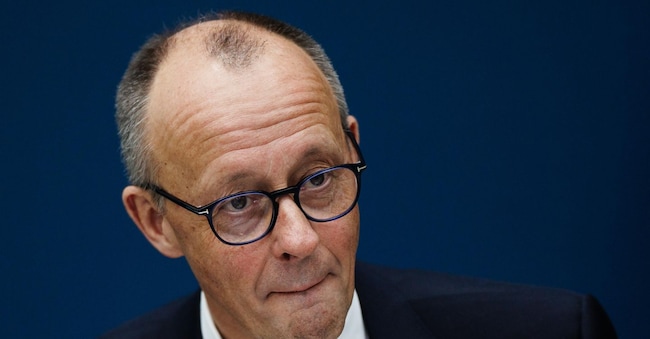
Berlin's rejection of French President Emmanuel Macron's proposal - in an interview with Il Sole 24 Ore and some European newspapers - to create a common European debt capacity through new Eurobonds intended to finance strategic investments in defence, green transition, artificial intelligence and quantum technologies. In fact, a German government official close to Chancellor Merz explained to Politico that Germany is against the French president's proposal, pointing out that it "distracts from the main topic, which is the continental productivity problem" being discussed at the informal EU leaders' summit on competitiveness scheduled Thursday 12 February. "It is true that we need more investment," said the official. "But, to be honest, this is in the context of the multiannual financial framework" and therefore not in the hypothesis of Eurobonds.
EU budget reform priorities
"Of course more investment is needed, in particular in new technologies and defence, but this must be seen in the context of the next multiannual financial framework," the Berlin government sources reported, pointing out that a reform of the European budget is indispensable and criticising the current allocation of resources, as "it is not sustainable that two-thirds of the budget continues to be allocated to predominantly consumptive expenditure such as agriculture and cohesion. The hope is that the countries calling for new resources "will also be ready to support in-depth reforms".
The theme of unused resources
Strong caution is also expressed on the hypothesis of new common European debt. "European debt is not free of charge: from 2028 the debt servicing of Next Generation Eu will weigh in at around EUR 24 billion per year, which is about 15 per cent of the EU budget," it is explained, stressing that financial margins are already limited. The sources also pointed out that there are still large unused resources: more than EUR 250 billion left over from Next Generation Eu, only one fifth of the structural funds spent so far, the EUR 150 billion of the Safe programme for defence still undisbursed, and the recent green light for EUR 90 billion in loans for Ukraine, of which about EUR 60 billion is earmarked for the European defence industry.
Informal rendezvous in a castle in Flanders
The informal summit on competitiveness will be hosted in a castle in Flanders two years aftertheLetta report and a year and a half after the Draghi report, which pointed to solutions for the EU to regain competitiveness and make full use of the single market. The heads of state and government will gather for a brainstorming session, discussing how to unlock the EU's economy, which has been struggling for many years, with growth rates far below those of the US, not to mention China. The twenty-seven EU heads of state and government will meet at the castle of Alden-Biesen, in the province of Limburg, former seat of the Teutonic Order, at the invitation of the President of the European Council Antonio Costa.
There, an hour and a half's drive from Brussels, they will discuss recipes and ideas aimed at making the European economy a little more dynamic, an indispensable basis for aspiring to the strategic autonomy that is increasingly talked about in Brussels. The numbers speak. According to the World Bank, in 2008 the EU had a GDP of 16.36 trillion (trillion) dollars, higher than the US' 14.77 trillion. Since then, the North American colossus, which is a federal state and not a loose confederation like the EU, has been able to innovate its economy and has grown at rates significantly higher than those of the Union, partly due to the different responses of the two areas to the financial crisis. As a result, today the GDP of the US is an impressive 28.75 trillion dollars, while that of the EU stands at 19.5 trillion

