

Medicines: export runs over 30%, but EU 'ideologies' put investment at risk
Already worth 58.8 billion up to October, with a positive balance of 8.2 billion, and could reach 70 billion by the end of the year with total production at 75 billion

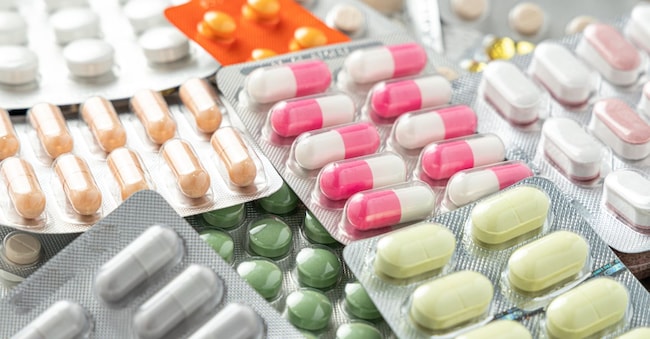
First of all, there is the export that continues to run with a leap that will exceed 30% this year given that already in the first 10 months of 2025 it totalled +33.7% compared to 2024, confirming itself as the leading manufacturing sector for export growth. A boost that is already worth 58.8 billion up to October and a positive balance of no less than 8.2 billion, and which could push exports to 70 billion and overall production to 75 billion. These are some of the record-breaking numbers being crunched by the made-in-Italy pharmaceutical industry, which "in a fast-moving world of uncertainty" is showing great resilience but is also facing great unknowns, first and foremost that of "the policies of Europe, which is entrenched in green ideology and does not come up with the right ideas", warns Marcello Cattani, President of Farmindustria, who yesterday tried to take stock of a year of "wars with weapons and trade wars".
25 billion investments at risk
At risk are our records, because in the great race to invest in new therapies worth $2 trillion up to 2030, the Old Continent could remain a 'mere spectator' in the face of the US and Chinese giants, so much so as to risk losing '100 billion in new investments, and for Italy we are talking about 25 billion in 10 years. But we can still change course,' assures Cattani. He sees glimmers of light in Italy, where the government has found 'additional resources for the pharmaceutical and health sectors in the budget law, and this is a very important signal: +7.4 billion for the National Health Fund and a further +0.1% for pharmaceutical spending, which makes it possible to reduce the payback to be borne by companies': the reference is to an amendment supported by the government that should be approved in the next few days, which increases the pharmaceutical spending ceiling that determines the payback for companies (direct purchases) by 0.30% of the health fund instead of 0.20%. In this way, from 2026 the share of the total health fund allocated to pharmaceuticals should become 15.65% (+0.35%), of which 8.60% for so-called direct expenditure (plus 0.2% for medical gases). A small breath of fresh air that is not enough, however, and that must now see the grounding of a more long-term strategy in the single text on drugs, which the government is still working on, which among other things 'must bring the payback down to an acceptable level'.
Europe risks the future
"the world waits for no one," Cattani goes on to stress, recalling how Trump has decided to "change the rules of the game, Europe has not yet understood this and we risk being left holding the bag. We do not have the scale of the USA or China, but if Europe does not act, there is no future'. For the president of Farmindustria, who also cites the model chosen by England with the USA to avoid tariffs on drugs (with the 'Most-Favoured-Nation' clause), Europe has "entrenched itself in green ideologies, with an inefficient system of governance that is outdated by history. Today this governance is no good. The world is changing, we are entering a new era, different from the past, where smart, smart governments with a vision for the future must place pharmaceutical safety as an essential part of a country's strategic security'. First and foremost, there is the EU pharmaceutical reform, which after the agreement between the European Council and the European Parliament over the past few days is close to being launched, with the knot of data protection for new drugs being brought back to eight years as a basic rule, even though it can be extended to a maximum of 11 years under various conditions, compared to 12.5 years in the USA: 'After five years of debate, we are back to square one. We believe that the Meloni government can act on the European Commission, which is weak today, to change the list of priorities. We must have competitive dossiers to keep up with the US and China: if we are not like them in the rules, starting with patenting and waste water, we are losers,' Cattani adds, estimating, for example, at 11 billion the cost for European pharmaceutical and cosmetics companies to comply with the much stricter rules for waste water disposal.
For Italy 'new rules'
The main destination for pharmaceutical exports is the European Union with 47% of the total (+33% in the first 10 months of 2025), followed by the United States (23%, +61%), Switzerland (14%, +11%), the United Kingdom (3%, +44%) and China (2%, +28%). "The Italian pharmaceutical industry is not frightened by global uncertainty," Cattani emphasises, "but it must have the support and strategic alignment with the government in order to do the right things, with reforms that guarantee access to drugs and vaccines homogeneously throughout the territory and supporting innovation throughout the supply chain, with modern and flexible rules. For Farmindustria, therefore, 'new rules' are also needed in Italy that revolve around four priorities: fast access to drugs (today it takes up to 18 months in Italy after the EU Agency's approval), evaluation of therapies on the basis of their therapeutic results, and adequate resources and non-punitive rules. Among all, those of the payback: 'On this we are confident that the path of the single text for pharmaceuticals is the structural vehicle to overcome this mechanism, which has very strong effects on companies, amounting to 2.3 billion in 2025 that cannot be sustained by drug companies'. In fact, the idea is to set at least a bar beyond which the payback does not go beyond: 'An acceptable transitional level, pending its overcoming, would be 13 per cent of turnover', while today it exceeds 17 per cent as a cut-off.


