The Middle East ‘without’ the US: Italian soldiers at the forefront and 8,000 Pakistanis in Saudi Arabia
Whilst Trump, following the warnings, announces yet another agreement on the Strait and nuclear issues, the real negotiations with Iran are being conducted in the region, where – given the ineffectiveness of the US security umbrella – a historic reorganisation of defence is underway. Riyadh, Ankara, Islamabad and Cairo are pressing ahead with their defence alliance. The pact cuts across NATO, cross-regional diplomacy and energy projects. Rome is navigating its way through the midst of it all

Key points
Whilst the US, on the one hand, is warning its citizens in the Middle East of a possible new escalation with Iran and, on the other, is leaking information regarding difficulties in procuring military supplies, and is ultimately witnessing yet another statement by Donald Trump onyet another agreement in Hormuz, the military balance in the region is undergoing a drastic shift. A shift that also affects Italia through its energy alliances and – consequently – its military alliances. When, on 28 February 2026, the United States and Israel launched a joint military campaign against Iran, the stated objective was to neutralise a nuclear and missile threat. The knock-on effect, however, was far more profound: every Gulf capital realised that the US security umbrella was unable to prevent direct attacks on their own territory. Within three weeks, on 19 March, the foreign ministers of Saudi Arabia, Turkey, Pakistan and Egypt met in Riyadh – on the sidelines of a summit convened specifically to condemn Iran’s retaliation against the Gulf states – to discuss, for the first time in a four-way format, the possibility of integrating their security capabilities. That meeting, which went almost unnoticed, marked the start of the most significant realignment of the security balance in the Gulf since the Abraham Accords of 2020. It represents the structural response of four regional powers – one nuclear (Pakistan), one industrially advanced and a NATO member (Turkey), one that is financially pivotal but militarily vulnerable (Saudi Arabia) and one that is geographically crucial for maritime trade (Egypt) – to a security vacuum that Washington is no longer able, or no longer willing, to fill on its own.
Less oil and the Saudi fiscal deficit
The origins of the Quadrilateral project cannot be understood without first looking at the figures relating to the blockade of the Strait of Hormuz. On 4 March 2026, the Islamic Revolutionary Guard Corps declared the Strait ‘closed’ to commercial traffic; the International Energy Agency subsequently described the resulting disruption to supply as the most severe in the history of the global oil market. Combined production from Saudi Arabia, Kuwait, Iraq and the United Arab Emirates had plummeted by around 6.7 million barrels per day by 10 March, and by at least 10 million barrels per day by 12 March. This represented a contraction of around one-tenth of global supply. According to Bloomberg estimates, the Saudi fiscal deficit for the first quarter of 2026 reached $33.5 billion, against an annual target of $44 billion. Riyadh therefore found itself, in the same quarter, facing both direct military exposure and a fiscal contraction: these are precisely the conditions in which the sharing of defence burdens becomes a necessity. Furthermore, according to an analysis by the Arab Gulf States Institute published in 2026 (Beyond the U.S. Umbrella), after around forty days of Iranian attacks, Saudi Arabia, the UAE and Qatar were “pushed into a high-intensity defensive posture” due to a “material crisis of availability” of resources.
The Quadrilateral Pact and military operations
It is essential to distinguish between what is legally binding and what is merely a matter of political consultation. At present, the only legally binding instrument within the entire framework remains the Strategic Mutual Defence Agreement signed at Al-Yamamah Palace on 17 September 2025 by Prince Mohammed bin Salman and the Pakistani Prime Minister Shehbaz Sharif, which stipulates that an attack against either party shall be treated as an attack against both. The Pakistani Minister for Defence Production, Raza Hayat Harraj, confirmed to Reuters in mid-January 2026 that a parallel trilateral draft – involving Pakistan, Saudi Arabia and Turkey – had already been circulating for around ten months, with negotiations having begun around March 2025, well before the signing of the bilateral Saudi-Pakistani pact. Between 19 March and 22 June 2026, the four foreign ministers — Prince Faisal bin Farhan Al Saud for Saudi Arabia, Hakan Fidan for Turkey, Ishaq Dar for Pakistan and Badr Abdelatty for Egypt — held four ministerial rounds without issuing any joint communiqué. Egyptian President Abdel Fattah al-Sisi’s call, made in Cairo, for the consultative mechanism to be transformed into a ‘more structured institutional framework’ remains, to date, a political aspiration without any specific legal implementation.
Behind the diplomatic ambiguity, however, lies a military deployment that is anything but ambiguous. Reuters sources, corroborated by five different regional news outlets, report that Pakistan has transferred to Saudi Arabia, since the beginning of April 2026, around 8,000 military personnel, an entire squadron of approximately sixteen JF-17 Thunder fighter jets (Block III variant, with advanced avionics and beyond-visual-range missiles), two drone squadrons, and a Chinese HQ-9 air defence system with a stated engagement range of over 200 kilometres, concentrated in Saudi Arabia’s Eastern Province, the heart of the Kingdom’s oil infrastructure. The entire operation is funded by Riyadh but operated exclusively by Pakistani personnel. A government source reported, on condition of anonymity, that the confidential text of the agreement would allow for an expansion to up to 80,000 Pakistani troops, a figure that neither government has officially confirmed.
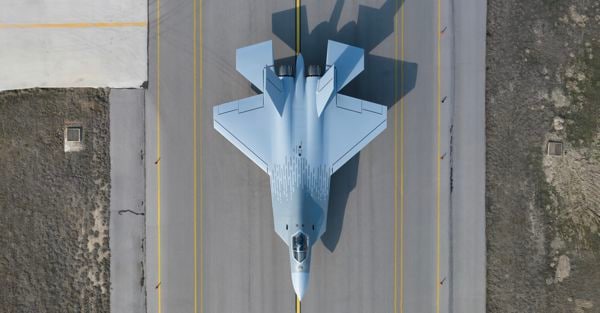
The Turkish contribution is of an entirely different nature: not troops, but industrial capacity. The 2023 Baykar agreement for the supply of the Akinci combat drone, worth approximately $3 billion and described by the manufacturer as “the largest export contract in the history of the Republic of Turkey”, included a technology transfer to Saudi Arabian Military Industries, with production lines already under construction on Saudi soil. On 5 February 2026, President Recep Tayyip Erdoğan announced that Riyadh and Ankara were ready to finalise ‘at any moment’ a joint investment in the fifth-generation Kaan fighter jet developed by Turkish Aerospace Industries.