
Musk's new Starship flight test postponed at the last minute
V3 is the third generation of SpaceX's fully reusable launch system, ranging in height from 124 upwards, depending on configurations

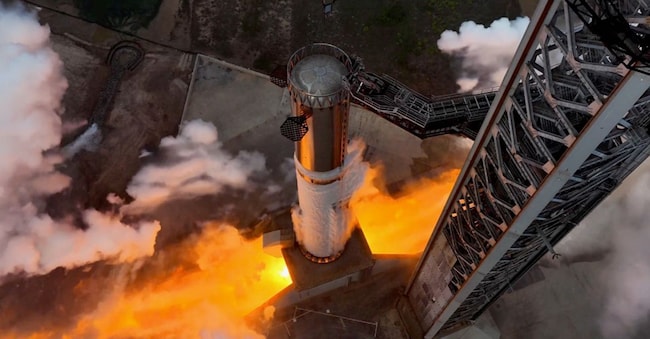
SpaceX cancelled today's launch attempt of its Starship V3 rocket due to a technical problem that occurred at the last minute before liftoff. The countdown stopped with 41 seconds to the actual launch.
"New rocket, new launch pad, we are learning a lot about these new systems as we use them for the first time," SpaceX's Dan Huot said during the live broadcast. "We expect to be able to make another flight attempt tomorrow."
If SpaceX succeeds in attempting the launch of Starship during the Flight 12 test flight, the launch window will remain unchanged. The launch is scheduled for 00:30 Italian time on 23 May, with a 90-minute window.
Nothing bad, better to be very sure: it is a very important moment for SpaceX, for its jewel, the Starlink constellation, and for all those who are interested in the Artemis lunar project, and there are 62 nations and space agencies. The forthcoming launch of Starship, the most powerful and largest rocket ever built, is all of this, and it is also a key step for Elon Musk, the richest man in the world, who wants to ask for a lot of fresh money from the stock market with the imminent IPO of SpaceX.
Third generation launch system
Previous launches have been a success at first, then a failure and then a success again, so we are waiting for safe and continuous results that make this incredible vehicle reliable. V3 is the third generation of SpaceX's fully reusable launch system, ranging from 124 upwards, depending on configuration. Compared to the previous version, it has elongated tanks, more powerful Raptor engines and, above all,a load capacity of 200 tonnes, a rather impressive number.


