

Melanoma of the head and nails: hairdressers and beauticians as ‘early warning signs’
Even non-healthcare professions can help with the early detection of skin cancers that are particularly difficult to spot

Prevention is not the result of one person’s efforts alone. It is a team effort, in which every professional can make a decisive contribution. This is the message we wanted to convey at the eighth edition of ‘We in Action’, the annual event that brings together specialists to discuss new strategies for the prevention and treatment of skin cancer, which concludes today in Naples. This message was further reinforced by the presence of Giuseppe Bergomi who, drawing on his experience as a world champion, reminded us that the most significant achievements always stem from the ability to work as a team.
This principle also applies to the fight against melanoma. There are, in fact, particularly insidious forms that develop in areas of the body that are difficult to observe, such as the scalp and the nail beds. Every year in Italia, there are around 800 new cases affecting these two areas which, precisely because they are hidden by hair or mistaken for minor cosmetic imperfections, are sometimes only recognised when the disease is already at an advanced stage.
‘Pitch-side’ sentinels
That is why we have decided to appeal to two professional groups who, every day, observe parts of the body that are often difficult to check: hairdressers and beauticians. We are not asking them to make diagnoses – which remains the exclusive remit of dermatologists – but to act as valuable observers, sentinels who can discreetly encourage their clients to seek specialist advice when they notice a suspicious lesion or changes in its appearance over time.
The risks
Melanoma of the scalp is one of the most aggressive forms. Although the head and neck account for only 9 per cent of the body’s surface area, they account for around 20 per cent of all melanomas, and over a third of these develop beneath the hair. In this location, the lesion remains easily concealed, and the rich blood supply promotes faster growth, which also affects the prognosis.
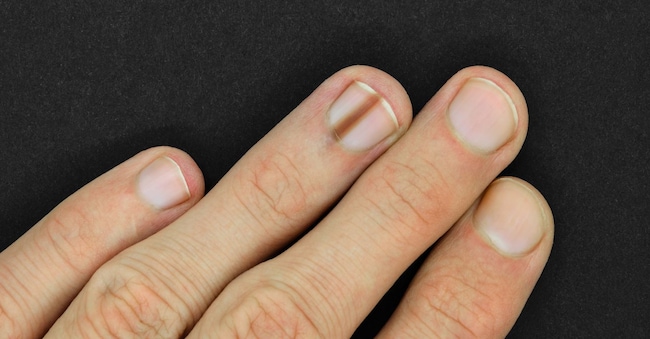
Nail melanoma also warrants special attention. Although it is a rare form of the disease, it can occur even in young people and adolescents and is frequently mistaken for trauma, bruising or a fungal infection. A dark streak on the nail that gradually changes in appearance or colour should never be overlooked.

