
Meloni in Canada for the G7: from Iran to tariffs, defence and migrants, all the games on the table
The PM will introduce the third working session on 'Secure Communities', and the topic will inevitably be policies for managing migration flows

4' min read
Key points
4' min read
The summit of the seven most influential countries on the planet is facing a series of complex dossiers: from the winds of war blowing in the Middle East, between the Israeli siege on the Gaza Strip and the clash between Israel and Iran to Putin's conflict in Ukraine, which continues with no prospect of a solution. And then the spectre of US tariffs, which continues to throw the economies of half the world into uncertainty.
It is in this tense and complicated context that the G7 Kananaskis kicks off on Sunday 15 June, amidst the Rocky Mountains and the many lakes that dot the Canadian province of Alberta. Among the dossiers of the summit, where Indian Prime Minister Narendra Modi will also be present, China's activism in the Indo-Pacific, and Trump's pressure on allies to isolate Beijing.
Iranian crisis plummets on G7
But above all, what opens is a G7 that risks being overtaken by the latest news events. With the escalation and the worsening of the crisis between Israel and Iran, the line-up prepared on the eve of the meeting already looks old. And that the road will not be downhill is made clear by the fact that there will be no final joint communiqué. Canadian Prime Minister Mark Carney, the host, in this case decided to abandon the practice of issuing a joint statement at the end of the summit, as Emmanuel Macron did at the G7 in France in 2019. Too many divisions between the US President's America First and the other allies on Ukraine and Gaza, but also on climate change or development aid, according to various diplomatic sources from the participating countries. Tensions over US tariffs are also in the background. The G7 represents a chance for the EU summits and the US president to talk to each other first, not least because the word 'stalemate' still hangs over the negotiations. Seven short statements will be issued, each relating to one of the key topics: financing for development; artificial intelligence; quantum technologies; combating fires; strategic minerals; transnational repression and combating migrant smuggling.
Meloni in Canada
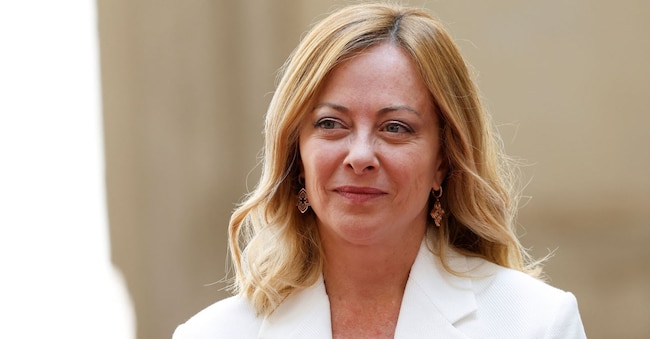
.Prime Minister Giorgia Meloni has arrived in Canada. The state flight with the Italian delegation landed at Calgary airport, then the transfer to Kananskis, which will host the leaders' summit, at the Pomeroy Kananaskis Mountain Lodge. Meloni will remain in Canada on 16 and 17 June. Sunday is devoted to informal talks among the leaders (Meloni will see British Prime Minister Keir Starmer, among others) before the start of work, which will occupy Monday 16 and Tuesday 17.
The leader of Fratelli d'Italia meanwhile remains in close contact with undersecretary Alfredo Mantovano and the ministers who are closely following the crisis between Iran and Israel, in a coordination convened on a permanent basis to ensure constant monitoring of the situation. The strategy of the Italian government is to make sure that the channel of dialogue is maintained, especially in this phase of tension, so that a negotiation phase can be restarted as soon as the military confrontation between the two countries stops.


