
Meloni’s anger does not halt the reform but serves as a warning to her allies: it is now time to clarify how to proceed
The Prime Minister is meeting with Antonio Tajani and Matteo Salvini. Clarification is expected on how (and for how long) to proceed with the parliamentary term

Key points
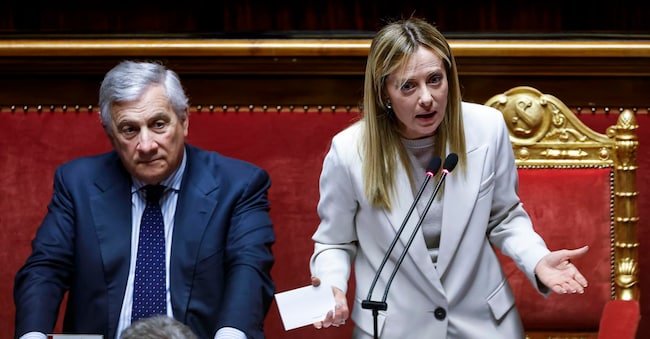
“We gave it a go. The quagmire has won out once again. A missed opportunity for Italians, but it was right to try.” A landslide in a vote has swept away the mountain of residual trust that Giorgia Meloni had in Antonio Tajani and Matteo Salvini. The Prime Minister spoke to them immediately after the Government’s motion was defeated in the Chamber of Deputies, beside herself with rage. She then publicly issued a loud and clear warning to her allies in a post commenting on the rejection of the preferential voting system proposed in the electoral law by her party, Fdi, alongside the centrist parties Noi Moderati and Udc.
The accusation: ‘The majority is several votes short’
The result of the vote on the amendment, Meloni writes, “shows that the left and the opposition voted unanimously against it, but even within the majority several votes were missing, and this calls for some reflection”. Not that the Prime Minister had not anticipated the possibility that the amendment might also be blocked by members of the League and Forza Italia, who have never been convinced by the reform as a whole, despite the reassurances that continued to pour in even yesterday: this is evidenced by the Government’s decision not to call for a vote of confidence – which, faced with a ‘no’ from the Chamber, would have forced it to resign – as well as the absences of Meloni and many ministers, whose ‘yes’ votes could have been decisive.
The futile request to be followed
However, the defeat stings, not least because it was the Prime Minister herself who, just a few hours before the defeat, who had championed the amendment, lashed out against the secret ballot and called for ‘a truth-finding exercise to ascertain whether those parties that have long been calling for citizens to be able to choose their own MPs are doing so out of conviction’. A challenge thrown down to the wider political spectrum, but also to the leaders of her own coalition: an explicit call for them to follow her lead.
Salvini’s silence, Tajani’s downplaying
That was not the case. The declarations of loyalty from the League (Salvini remained silent; as for us, ‘no mavericks’, as the group leader Riccardo Molinari put on record) do not convince anyone within Fdi. Tajani’s statements, aimed at playing down the incident (“Just a hiccup; it wasn’t a fundamental issue”), are even causing irritation. Tensions and suspicions towards the “party of the tie-breaker” – even within the centre-right – are rife. The hunt for the 32 mavericks is on.
Anger and the decision to press ahead with the law
The Prime Minister cannot contain her anger and coordinates her position with the party’s leading figures, from the Under-Secretary Giovanbattista Fazzolari to the parliamentary group leader in the Chamber of Deputies Galeazzo Bignami, the first signatory of the amendment that was rejected. It is he who makes the announcement at the end of the Conference of Group Leaders: ‘Let’s press ahead with the vote.’ For now, Fdi says it intends to see the reform through, which could be approved as early as today in the Chamber of Deputies, given that the opposition has withdrawn its amendments.


