
Search

Men and women: different risks with extra kilos, need precision treatment

Obesity is not a 'one-size-fits-all' disease: hypertensive and liver-diseased males, more inflamed and dyslipidemic women, and therapies will have to manage differences

by Maria Rita Montebelli

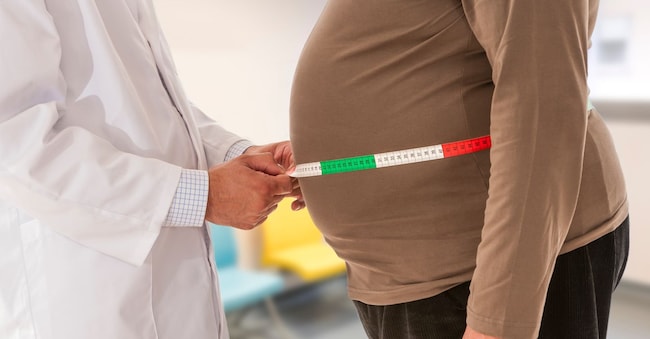
Doctor measuring obese man waist body fat. Obesity and weight to loose. JPC-PROD - stock.adobe.com

4' min read

Translated by AI
Versione italiana

4' min read

Translated by AI
Versione italiana

Men come from Mars and women from Venus also in the way they put on weight. And above all in the consequences that result. In short, extra kilos are not all the same and men and women do not play the same game on the scales. It is science, which day after day, is dismantling piece by piece the false conviction of a risk that is measured simply in extra kilos, without declining it by gender. And it is doing so with increasingly solid data, such as those that will be presented in a few weeks' time by Dr Zeynep Pekel and colleagues from Dokuz Eylul University (Izmir, Turkey) at the European Congress on Obesity (ECO 2026), which tell a much more multifaceted and, in some ways, even more intriguing reality.

Because no, it is not true that we all get fat in the same way. More importantly, we do not all pay the same price: more 'pot-bellied', hypertensive and liver-diseased males, more inflamed and dyslipidemic women with obesity.

Loading...

Gender differences

Let us imagine two people, a man and a woman, with the same body mass index (the BMI, i.e. the number that is calculated by dividing the weight in kilos by the square of the height in metres). On paper, they are similar, sharing the same BMI. In reality, their bodies are reacting profoundly differently to the extra kilos. In men, fat tends to accumulate where it does the most damage: around the internal organs, in the belly. It is the visceral fat, the metabolically most active and dangerous one, capable of impacting badly on blood pressure, blood sugar, triglycerides and even liver health. It is certainly an accumulation that can be seen, but it works in silence, increasing the risk of heart attack, diabetes and metabolic diseases.

In women, however, excess weight takes a different route. The 'pink' fat is more often distributed in the subcutaneous tissue, on the hips and thighs (the infamous pads on the hips and the culotte de cheval on the buttocks and thighs), a type of accumulation that for years was considered 'less dangerous'. But the new study, which will be presented at the ECO congress, corrects this perspective: the risk in females is not less than in males, it is just different. Women with obesity tend to have higher levels of cholesterol, particularly 'bad' cholesterol (LDL), but above all they exhibit more systemic inflammation. A risk that is certainly more insidious and less immediately perceptible than the 'belly', but just as threatening, because it involves the entire organism and paves the way for cardiovascular disease and diabetes.

Turkish researchers came to these conclusions by analysing data on 886 women (average age 45 years) and 248 men (average age 41 years) with obesity, who were followed at the Obesity Clinic of the Department of Internal Medicine at Dokuz Eylul University.

Obesity speaks two different languages

It is a bit as if obesity spoke two different languages: one more metabolic and 'visceral' in men, one more inflammatory and 'lipidic' in women. And, acting as the director, there are many distinctive biological factors in the two sexes, starting with hormones. Oestrogen, for example, influences where women's bodies store fat and how they respond to inflammation. But the immune system also plays a role: women's immune system is usually more active and this can result in a more pronounced inflammatory response. Men, on the other hand, tend to store fat precisely where the metabolism is most vulnerable, deep in the belly, around the abdominal organs.

These observations reveal the need for a paradigm shift, which goes far beyond scientific curiosity. For years, obesity has been treated as a 'one-size-fits-all' condition, to be addressed with 'standard' therapeutic approaches: low-calorie diet, physical activity, possibly drugs. But if the body reacts differently, then clearly the therapeutic approach should also change.

Obesity therapy, in short, must become increasingly customised and gender-medicated. Strategies should be designed not only according to weight or age, but also according to biological sex and the predominant type of risk. A man with abdominal obesity, a stressed liver and high triglycerides may need a more targeted approach to reduce visceral fat and protect liver metabolism. A woman with high cholesterol levels and systemic inflammation a go-go might benefit from different strategies, more focused on lipid profile and immune balance.

Data and the need for precision therapies

At stake is not only the effectiveness of the treatments, but their precision. To continue to treat everyone the same way is, in fact, to scotomise a large part of the problem.

And the obesity numbers make it all the more pressing. It is estimated that over 1.5 billion people worldwide (1 in 3 women and 1 in 4 men) live with metabolic syndrome, an explosive combination of cardiovascular risk factors that includes abdominal obesity, hypertension, dyslipidaemia (high triglycerides and low HDL 'good' cholesterol) and impaired blood sugar. But behind these gigantic numbers lurks a more layered truth: there is no single type of obesity and consequently no single answer.

The real challenge of the coming years will be precisely this: to move from 'one-size-fits-all' obesity treatment to precision medicine, capable of exploiting differences and transforming them into targeted therapeutic strategies. Because losing weight is fundamental but, on its own, may not be enough. We need to understand how and where that fat acts and why a man's body tells a different story with different risks than a woman's.

Only then will those kilos stop being a number on the scale and become a problem to be tackled in the right way, with 'pink' or 'blue' strategies.

Copyright reserved ©
Loading...

Brand connect

Loading...

Newsletter

Notizie e approfondimenti sugli avvenimenti politici, economici e finanziari.

Iscriviti