

Menarini grows worldwide and turnover soars to 4.88 billion (+6.2%)
Aleotti: 'We are a prudent and solid company but Europe will accompany the pharmaceutical industry, it is not a question of revenues but of independence'. More than half of the 17,800 employees are women

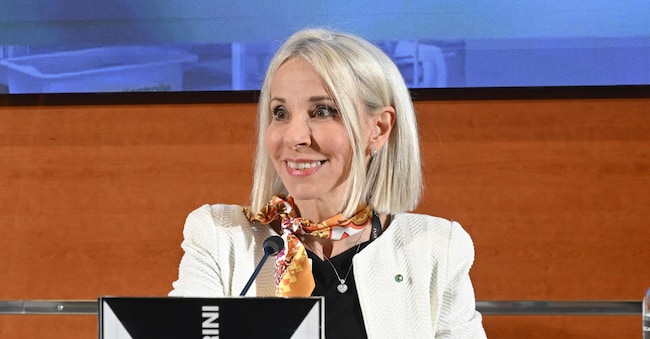
The 2025 turnover of the Menarini pharmaceutical group has reached 4.887 billion euro (+6.2% compared to 2024), with an Ebitda of between 440 and 470 million, in line with the 450 million of the previous twelve months. This was said by Lucia Aleotti, shareholder and member of the Board of Menarini, during the press conference in Florence to present the Group's financial figures as it celebrates 140 years in business, adding that 81% of turnover comes from foreign markets, the remaining 19% from Italia. "The group is prudent and solid," stressed Aleotti, "with sustained growth in western markets, particularly in the United States with the elacestrant molecule authorised for metastatic breast cancer. And it could have been even more substantial without the weakening of the dollar, which weighed 60 million between North, Central and South America". Menarini is also growing in China, where it has struggled in recent years, in the Emirates, and in South East Asia, 'leaving hope for 2026 net of developments in the Middle East crisis'.
905 million drug packages sold
Overall, Menarini has sold 905 million packs of drugs worldwide, 30 million more than last year. 'Our investments in research and development are also growing,' Aleotti added: 'In 2024 they were 500 million, in the year that closed they rose to 540 million and this indicates our determination to continue on the path of innovation through the total reinvestment of profits. Around 120 million was invested in technology, including cybersecurity. Menarini is present in 140 countries through subsidiaries, distributors and licensees, with 18 production plants mainly in Europe. "And for the first time," stressed Aleotti, "more than half of our 17,800 employees are women".
In the Florence plant, the group's historical headquarters, a new investment in the ampoule department was recently given the green light for the renovation and acquisition of a new asepsis line. "We strongly believe in our Florentine roots," emphasised Aleotti, "so even though we are literally 500 metres as the crow flies from the Duomo of Florence, we are pushing for this investment to make this plant more efficient and in step with the times. We are talking about 14-15 million euro'.
'We want to create a flagship company in oncology,' added CEO Elcin Barker Ergun, 'an innovative company: but Europe must accompany us and not succumb to the war for leadership between the US and China.
Europe changes course on anti-industrial policies
And it is precisely on the international markets, which are currently unstable, that the future of the pharmaceutical industry is at stake. "Alongside the traditional competitors in the pharmaceutical field, governments have now taken sides, starting with the United States and China," Aleotti stressed. "This is why the European Union must stop anti-industrial policies and support competitiveness, which is not only linked to turnover but also to the independence of our economies. The new EU rules on pharmaceutical patents and the waste water directive ended up in the crosshairs. "The duration of intellectual property in Europe should be increased," Aleotti explained, "because in pharmaceuticals, intellectual property is the number one incentive for industry to invest in research and development, and it is also what enables the return on investment, so investment is still growing by increasing innovative therapies for patients. The wastewater directive, on the other hand, is described as 'a pee tax' because it forces the pharmaceutical industries to purify rivers for pharmaceutical residues excreted by patients. "According to Farmindustria Germany," he said, "the cost is EUR 12 billion per year. Considering that an investment of about 1.2 billion is needed for the development of one drug, this means ten drugs will not be developed every year'.

