
Merz to Trump: more pressure needed on Russia to end the war
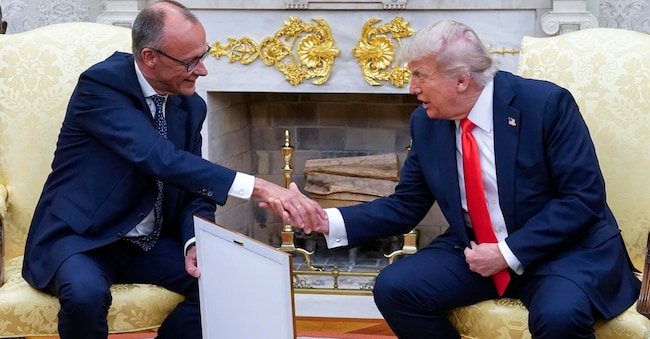
Exchange of courtesies and evidence of understanding in the first face-to-face meeting at the White House between the German Chancellor and the US President. Ukraine, NATO and tariffs among the topics at the centre of the press conference

3' min read
3' min read
The United States is in a very strong position to bring an end to the war between Ukraine and Russia', but to achieve this result requires 'stronger pressure' on Moscow. In the same Oval Office where the Ukrainian President, Volodymyr Zelensky, was publicly humiliated only a few months ago, yesterday the German Chancellor, Friedrich Merz, appealed to Donald Trump to put his full weight behind the resolution of the conflict. President Trump, Merz emphasised, 'is the key figure' in putting an end to the bloodbath.
Pressions on Moscow
.War in Ukraine, NATO and tariffs were at the centre of Merz's agenda in his face-to-face meeting with Trump in Washington, which was carefully prepared in Berlin. In the meeting in front of the press, most of the journalists' questions, however, concerned American domestic political issues, in particular Elon Musk's break with the White House and the most recent accusations against Joe Biden. And Trump obviously did not shirk, taking the cue for lengthy tirades in defence of his actions. And leaving admittedly little room for the host.
In response to Merz's call for more pressure on Moscow, Trump said he had asked Putin not to react to the recent egregious attacks by Kyiv. "I told Putin: don't do that, you should stop," reported Trump, who then admitted the difficulty of finding mediation, however, because of "the hatred between Putin and Zelensky" and between their countries.
Shrugging off simplistic resolutions to arrive quickly at peace, Trump said it might be necessary to let Ukraine and Russia "fight a little longer, like you do when two kids are fighting, before separating them". The US president said Putin might have to "suffer a little longer" and said he was also ready to decide on sanctions against both countries. "We're going to be very tough, whether it's Russia or anybody else."
'My personal opinion,' Merz said, 'is clear that we are on the side of Ukraine and we are trying to make it stronger and stronger, precisely to push Putin to stop this war'. And again: 'We are all looking for measures and instruments to end this terrible conflict. So, let's talk about what we can do together'.


