
Budget Bill, Messina: ‘Some of the measures concerning the banks are clearly unconstitutional’
The CEO of Intesa Sanpaolo on the deferral of Superbonus loans: “It’s a debt restructuring, the sort of thing you see in South American countries”

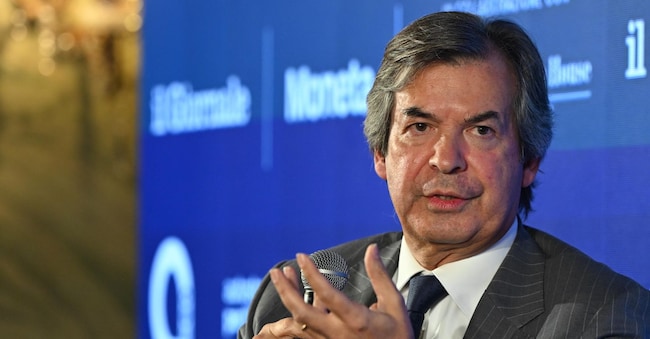
Carlo Messina returns to the subject of the measures imposed on banks under the Budget Law. And during his hearing before the Senate’s Parliamentary Commission of Inquiry into the financial system, the chief executive of Intesa Sanpaolo did not mince his words. Some of the measures imposed on banks are ‘clearly unconstitutional’ and ‘will inevitably lead to legal challenges, right up to the Constitutional Court’.
The CEO of Ca’ de Sass is focusing his attention, above all, on the ten-year deferral of the use of part of the tax credits linked to the Superbonus. Messina regards this measure as a genuine ‘debt restructuring one year before the deadline’. This refers to the tax credits that financial institutions have purchased, expecting clear repayment timelines, and which they now risk being able to recover only over the course of a decade, without interest. This will have an impact on cash flows and the economic value of assets.
‘Risk of forbearance: the South American approach’
For Messina, it is not merely a question of liquidity, but of legal certainty. The banker notes that some measures are reminiscent of the way ‘South American’ countries manage their relations with creditors. And, what is worse, this could also have consequences in terms of regulatory oversight and, consequently, a knock-on effect on the stability of the banks themselves. The real risk is that the ECB might regard the forced alteration of repayment terms as a form of ‘forbearance’, with the risk of a ‘cross-default’. ‘It’s unbelievable,’ adds the banker, ‘but is it possible that this regulation wasn’t discussed beforehand to find alternative liquidity solutions?’
On the budget measures: ‘take action across all sectors’
Messina frames it as a matter of fairness. “‘If these funds are needed, it’s fair,’ says Messina, referring to the levy provided for in the Budget Bill, but on condition that a ‘minimum threshold’ of profits to be taxed is set, applicable to all sectors: if that’s the case, ‘I’m perfectly happy with it’, but if it targets a specific sector, such as banking, ‘I won’t stand for it any longer’. The banker advocates a “different tax regime in which banks are also included”, and therefore our shareholders will not be averse to “legal action”. However, in terms of support for the Government, this is “total”.
The risk of a loss of investor confidence: ‘Help us to help the country’
Then there is the issue of investors’ rights. Messina points out that banks are accountable to an international shareholder base, which could challenge measures that alter the timing and terms of repayment agreed upon for acquisitions. Hence the clear call for compliance with the rules and the need not to undermine the relationship of trust between institutions, banks and the market. ‘Intesa is a matter of national security’ because, as Messina points out, ‘we have Italian shareholders and because we are an Italian team. And I am proud to be Italian’, but Messina asks, ‘help us to help the country’.


