
Micro Rgb, Dolby vision 2 and Ai: how TV tries to re-invent itself
From Samsung to Tcl here are the novelties presented at the Consumer Electronic Show in Las Vegas ahead of the upcoming World Cup
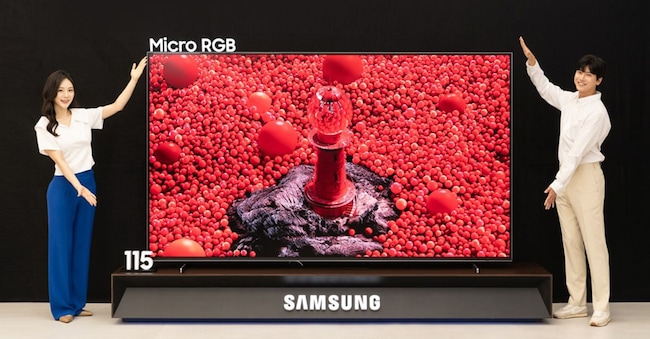
After five years, the TV sets bought during the lockdown are ready for retirement. This time, the new 'small screen' race does not start with pixels, but with colours. The technology is called Micro RGB and is the real discontinuity of the Consumer Electronic Show of 2026. It is not an improved LED, it is not a brighter Oled. The manufacturers who have adopted it present it as a paradigm shift. How does it work? In traditional TV sets, light is born white or blue and then filtered out. In Micro RGB the opposite happens: the light is already born the right colour. Red, green and blue are microscopic LEDs, each under 100 micrometres, that directly emit the colour we see. No filters, no waste. It is like going from a colour printer to three pure markers. The result is surgical colour precision, a much higher brightness than Oleds and the absence of one of their historical nightmares: burn-in. It is no coincidence that the new premium standard is no longer the 65-inch living room screen, but the 85-inch big wall.
The other mega-trend of the future is more obvious and has nothing to do with physics. The television puts aside being a passive household appliance and becomes a node in the connected home. It has to be said that it has been trying and failing for a few years now. The showcases at Ces reflect an AI that observes what we watch, how we watch it, at what time of day and in what context. In the visions of the big consumer electronics manufacturers this information can be cross-referenced with data coming from fridges, cameras, energy sensors. This means potentially suggesting content, editing audio and video in real time, moving a recipe from the screen to the oven, switching off lights and optimising consumption. So while talking to a screen in the living room is nothing new, the real bet is to interrogate it about the content it is showing, asking it to understand tastes, family compromises and even fuzzy memories of a film it saw years ago. LLMs in other words aim to become the ultimate remote control.
This is the terrain on which manufacturers are moving. Samsung has chosen Las Vegas to show its muscles. Its 130-inch Micro RGB is the world's first in this size: a wall-mounted leviathan with a metal frame and integrated speakers, more of a design object than a simple TV. Behind the wow effect is a clear strategy. The 2026 range will take the Micro RGB from 55 to 115 inches and will be accompanied by Vision AI Companion, a platform that turns the screen into a continuous home assistant. Samsung is also pushing the new HDR10+ Advanced standard, designed to respond to Dolby Vision 2, with brightness peaks between 4,000 and 5,000 nits and much finer control of light and dark zones. In direct comparisons, the company claims more saturated colours, greater energy efficiency and a number of local dimming zones that, on an 85-inch, exceeds 7,000.
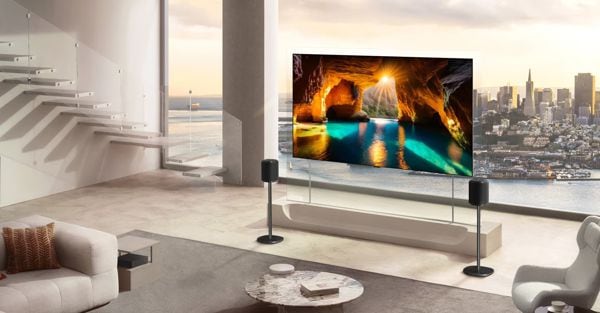
LG plays on two tables. On the one hand it relaunches the Oled as an extreme design object with the new W6 Wallpaper: 9 millimetres thick, hidden electronics and True Wireless connection to the external box. On the other it enters the Micro RGB world with the Evo line, 75, 86 and 100 inch models based on the α11 Gen3 processor. Here the aim is to reduce the distance between advanced LCDs and self-illuminating technologies, thanks to over a thousand independent backlight zones and increasingly refined dynamic Hdr control. Rounding out the picture is Gallery+, the 'auteur picture' mode that transforms the TV into an algorithmically curated digital wall.
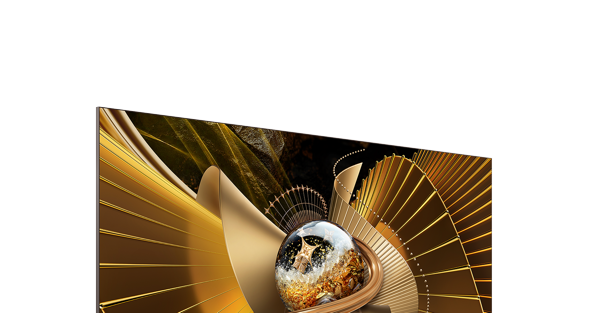
TCL chooses a different path consistent with its industrial identity. At CES, it does not chase the RGB Mini Led, but relaunches on the Super Quantum Dot with the X11L model. Here the promise is ambitious: 100 per cent of the BT.2020 colour space without RGB backlighting, up to 10,000 nits peak brightness and, on the 98-inch, 20,000 local dimming zones. Laboratory numbers, but also a statement of strength for a brand that grew the most in Italy in 2025. The operating system is Google TV with integrated Gemini AI, a sign that TCL is also aiming at an increasingly conversational television.
%20(1)-U26252484825RRB-600x313@IlSole24Ore-Web.jpg)


